Crime & Safety
Cold Case Murder Solved In Huntington Beach 52 Years Later
52 years after the discovery of 'Jane Doe's' body in a Huntington Beach ditch, DNA has given her a name and identified her killer.


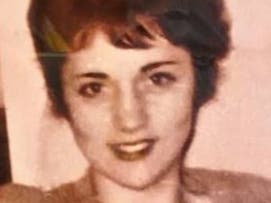
HUNTINGTON BEACH, CA — The identities of Orange County’s oldest "Jane Doe" murder victim and her killer are now known thanks to DNA, officials say.
After 52 years of uncertainty, Anita Louise Piteau of Augusta, Maine, was positively identified as the victim of Huntington Beach's longest-running cold case. Her killer, Johnny Chrisco, was also identified through familial DNA, according to the Huntington Beach Police Department. Chrisco died in 2015.
A recently formed Investigative Genetic Genealogy task force initiated by the Orange County District Attorney's Office helped close the convoluted case half a century after it began. Officials are still researching how Piteau and Chrisco's paths crossed, and what led to her brutal death at age 26.
Find out what's happening in Los Alamitos-Seal Beachfor free with the latest updates from Patch.
In the late 1960s, Piteau left her home to come to Hollywood, according to Dave Dierking of the task force. She left her home and family in Maine and headed to Hollywood.
She wanted to see where movies were made, and she kept in regular touch with her family by mail, according to Dierking.
Find out what's happening in Los Alamitos-Seal Beachfor free with the latest updates from Patch.

"She had every intention of returning home," Kimberly Edds of the district attorney's office told Patch. Her last correspondence was in February 1968, written while living in a rented room in Whittier.
Her family never heard from her again.

In March 1968, several young boys playing in a field near Newland Street and Yorktown Avenue found "Jane Doe's" body in a drainage ditch.
"She had been raped, severely beaten, and her neck was slashed," Angela Bennett of the Huntington Beach Police Department said.
As officers searched the area where she lay, investigators found a smoked cigarette butt. Among other evidence: a blood spattered floral blouse, purple pants, a pair of muddy loafers, a silver ring with a large costume jewel — all painstakingly preserved as an exhaustive search ensued, including numerous interviews.
Huntington Beach collected things they would never know would crack the case over half a century later, according to Dierking. It took an evolution of technology for the names of the woman and her killer to be made known.
Ultimately, the trail went cold.
All evidence entered the realm of "cold case," with neither the identify the victim or her killer known.

Her likeness was hand-drawn and shared in hopes someone would know her. Her body was buried in an unmarked grave in a Newport Beach cemetery.
Still, neither the boys who found her body — one of whom became a Huntington Beach police officer, now retired, according to the Daily Pilot — nor the police forgot about her, Bennett said.
As science improved, Orange County's cold case homicide task force kept working the evidence and researching leads.
In 2001, the case's rape kit was entered into the DNA database, and a profile for the rapist was identified. Still, both the killer and the victim's identities remained unknown.
In 2010, a partial male DNA profile was obtained from the cigarette butt found at the crime scene, and it matched that from the rape kit. Still, no suspect was found.
In 2011, police released crime scene photos of her body in hopes someone would recognize her. Her case was "repeatedly submitted to Cal-DOJ for familial search in CODIS," Bennett said. "No workable leads were generated."
Fast forward to 2019, a year when answers at last outweighed the questions surrounding Jane Doe's violent death.
After the highly publicized identification and arrest of the Golden State Killer, Huntington Beach detectives lobbied with the Orange County District Attorney's Office to use "investigative genetic genealogy" to both find the killer and identify his victim.
It was a "DNA miracle" that led the task force to Johnny Chrisco. There were four brothers, three deceased in the family tree. Johnny Chrisco was found to be the primary suspect.
Before that, Chrisco was never even a suspect on police radar, Bennett said.
In a stark contrast to the Golden State Killer's highly publicized arrest, police were denied that option. They learned that Chrisco died in 2015 of cancer. He was cremated, and is buried in Washington State.
Who was Johnny Chrisco?
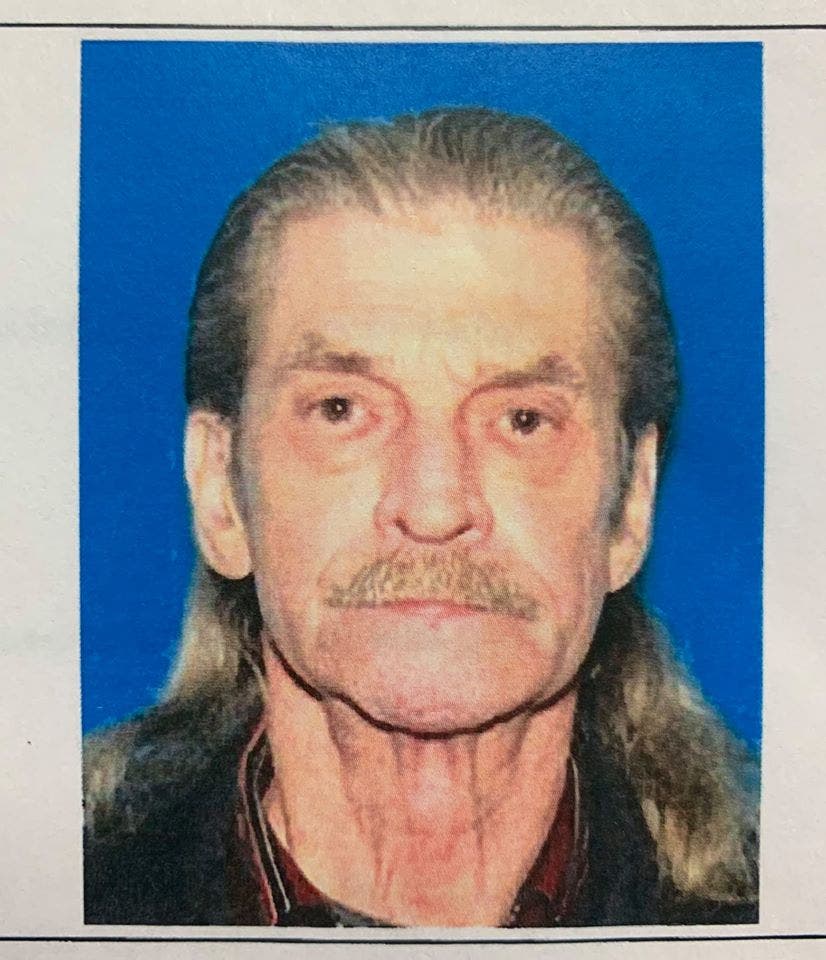
Johnny Chrisco was born in Merced. He grew up in Arizona, and was involved in a statutory rape before he was 17, according to Dierking.
He joined the army, and spent his enlisted time as a paratrooper, making 15 jumps.
After three years, following a failed psychological exam, the Army discharged him, Dierking told Patch. "He was diagnosed with 'positive, aggressive reaction,' or having a pattern of being quick to anger, easy to feel unjustly treated, chronically resentful, immature, and impulsive."

Huntington Beach Police worked with his only living brother to establish his DNA "Family Tree," according to Dierking.
His brother, not identified, denied knowing anything about the crime.
Farewell "Jane Doe" — Laying Anita To Rest
With the killer identified, in 2020, detectives, prosecutors and forensic scientists renewed their work on a possible family tree of the victim. Renowned Orange County genealogist Colleen Fitzpatrick, who runs the DNA Doe Project, was brought in for assistance.
Fitzpatrick was instrumental in identifying the victim through her family DNA and ultimately giving her a name and a history.
Anita Louise Piteau is survived by two sisters, a brother and many extended family members. Her parents both died, according to Edds.
Her family has searched for her over the last 52 years.
Upon learning of her death, they were "overwhelmed," Edds said. "They thought she'd just shunned them."
Even after all of those years, there was never a thought that her life had ended so abruptly, Edds said.
In mid-July, investigators from the Huntington Beach Police Department and representatives from the Orange County District Attorney's Office returned Anita's remains to her family, in Maine. They attended her memorial service.
Returning to California, they are not through solving the crime.
Although both victim and killer's identities are known, there are still unanswered questions, said Huntington Beach Police Chief Rob Handy.
"I am extremely grateful and proud of the extraordinary efforts of the active and retired members of the Huntington Beach Police Department and the Orange County District Attorney's Office in their tireless pursuit of justice for Anita and her family," Handy said. "The fact they never stopped working this case for more than five decades is a tremendous testament to the two departments and our law enforcement profession. There is nothing more important to a victim and their family to know that law enforcement will never give up. Although the suspect was no longer alive to face the consequences, providing the family with the information of what happened to Anita and allowing them to properly lay her to rest is of tremendous importance."
District Attorney Todd Spitzer remarked on putting the 52-year-old cold case to rest.
"Nothing, not even the death of the killer himself, will deter the pursuit of justice. The death of a 26-year-old woman who was left in a farm field raped, beaten, and her neck slashed haunted generations of Huntington Beach police officers who refused to give up on identifying Jane Doe and finding the person who robbed a young woman of a lifetime of memories," Spitzer said.
"After more than five decades, advances in investigative genetic genealogy did what old-fashioned police work could not: give Jane Doe a name and identify her killer," he said. "It is technology and the determination of the Huntington Beach Police Department and prosecutors, forensic scientists and investigators from the Orange County District Attorney's Office that allowed Anita's family to finally bring her home and lay her to rest. The death of Johnny Chrisco prevented the full imposition of justice for Anita's murder, and that is a wound that will never heal, but it was the dogged pursuit of justice that ensured that it was not if, but when, we would finally be able to tell Anita's loved ones who killed her."
Still, unanswered questions remain. Detectives are still trying to determine how their paths crossed.
Anyone who recognizes Anita Piteau or Johnny Chrisco is asked to contact the Huntington Beach Police Tip Line at 714-375-5066.
Get more local news delivered straight to your inbox. Sign up for free Patch newsletters and alerts.