Business & Tech
Eye for Beauty Draws Photographer John Dankha to Seal Beach
Main Street gallery owner's landscapes inspire and channel his spirituality. In turn, he shares his art with local hospitals to give beauty to those who are suffering.
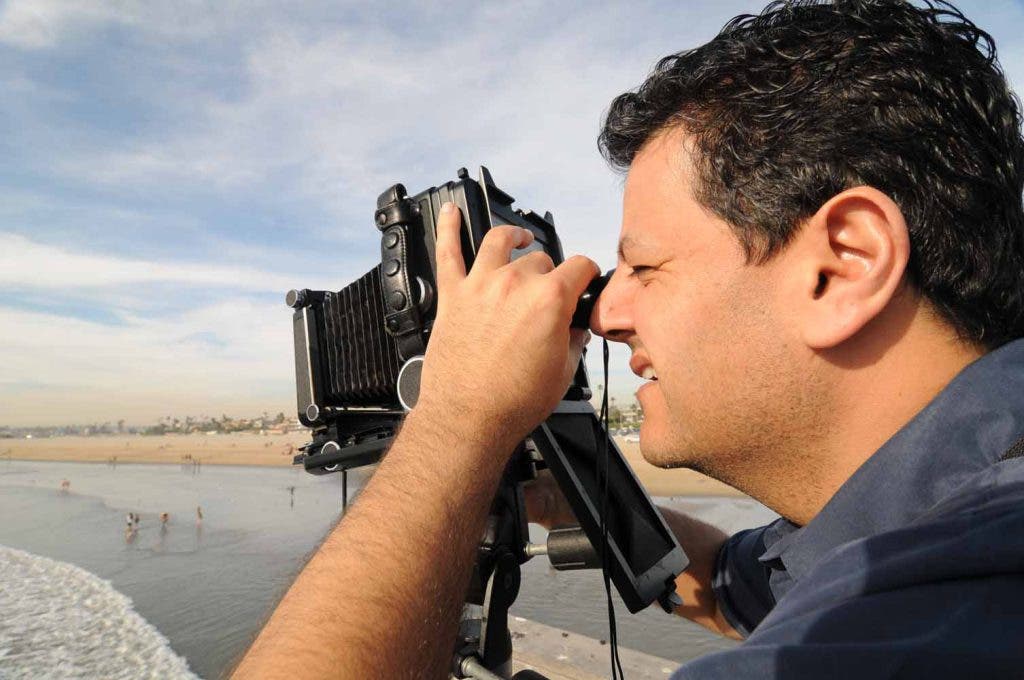

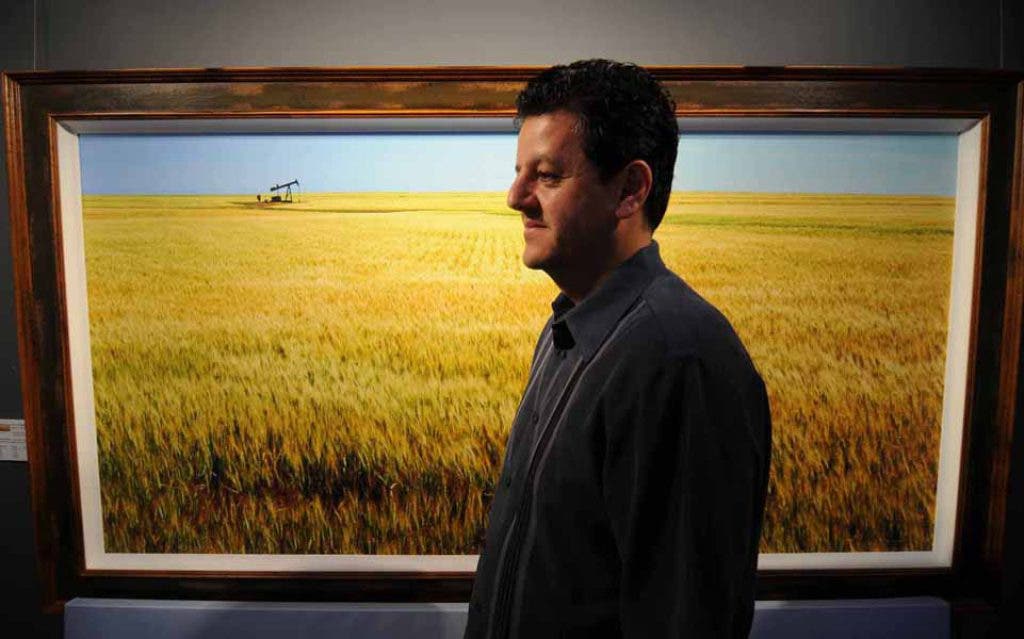

Seal Beach conjures up imagery of a quintessential California coastline—dotted with palm trees, surfers and bikini-clad sunbathers. John Dankha, of the Main Street Dankha Gallery, attempts to capture a certain Californian vibe in many of his photographs, which focus on the beauty of Orange County beaches and rural American landscapes.
Some of Dankha's photos depict a sunset or crashing wave, but the majority present an entirely different vision that contradicts the rather conventional images of Orange County. People and surfboards are seemingly absent in his photographs.
The Seal Beach Pier is a favorite subject of Dankha's. Though many of his photographs have a Californian theme, Dankha travels across the United States, hiking through tough terrain to obtain the perfect scenic shot. Some of his subjects are so secluded—a single lighthouse on an eastern shore, a church in the middle of nowhere, or a bench overlooking an unpopulated countryside.
Most recently, Dankha unveiled a new art installation at St. Joseph's Hospital in Orange. Dankha donated the photograph of a church in the Badlands in order to inspire hope in suffering patients.
“I've always looked to nature for its ability to heal the mind and rejuvenate the body,” Dankha said. He unexpectedly found the church after getting lost in the wilderness. Dankha chose the church photo because for him it symbolized rescue and safety from hours of confusion.
Dankha shared with Patch some of the emotion and process behind his art, as well as his campaign to use his art to help cancer patients:
Patch: Why do you focus on landscape photography?
Dankha: It's basically an extension of my personality. I really enjoy the outdoors. I do a lot of camping and hiking, and it started basically by going to all these trips just to see national parks. I love nature so much that I wanted to take pictures of it. It's just a natural thing to bring that beauty back into my house and into people's homes. The best compliment I can get is that somebody looks at my pictures and says, “I feel like I am there and like I am walking into the picture.”
Patch: Why did you open up your gallery in Seal Beach?
Dankha: I really liked the community in Seal Beach. It's such a neat community, such a small town type of community in the middle of Orange County—this huge metropolitan area. It just felt like a natural thing to open up in Seal Beach.
Now that I have traveled up and down the coast, I think the Seal Beach Pier, in particular, is one of the prettiest piers in Orange County, if not in California. So I kind of lucked out by being geographically located in Seal Beach. I think it's a very interesting pier and beach to photograph.
Patch: You mentioned that your store opened in 2008. Did you have any financial troubles opening up at the height of the crisis?
Dankha: The timing of opening the gallery was definitely not optimal. It's one of those things in life that when you get an opportunity you try to make it work regardless of what the circumstances are, and it was always a dream for me to have a physical gallery. I decided it was time to make my dream come true and do this on a full-time basis. I know it was bad timing. I figured, well, I might as well take that chance.
The economy is definitely affecting all the retail. I must say the response has been better than I have expected, especially from the local community, because the product and quality is so unique and high-end. It's better than what I expected. Some photographs sell for $300, and some go into the thousands. Basically, there is a price range for everybody at the gallery.
Patch: You mentioned earlier that the unveiling of a new art piece in Orange was inspired by your mother.
Dankha: We got the news that my mom had cancer in August of 2007. So being the action-oriented person that I am, I went into action mode. We started taking her to hospitals, and we ended up at the leading hospital in cancer research. Her prognosis was very bad. So she spent a lot of time there. I stayed with her there at night. I took her to all the tests and biopsies and whatever. It was a very stressful time in my life, and obviously hers.
The one thing that we really enjoyed was going through the halls. They had a lot of art donated by people. As we were wheeling her to go to another test, we would stop and look at some of that stuff and talk about it. It was such a nice diversion from the horrible things that we were dealing with day to day. It stuck in my mind. That is the important thing you can do—to give some beauty to someone who is struggling. This was so valuable at a time when we needed it the most. It became one of the things that I wanted to do.
Find out what's happening in Los Alamitos-Seal Beachfor free with the latest updates from Patch.
My commitment is to put as many art pieces that I can of my work in as many hospitals that I can, because the little bit of faith that it gave me, if I can do that for other people, then that would be my ultimate goal.
Patch: Since your art is so high-end, have you had any interesting clientele?
Dankha: An older couple walked into the gallery and just stared at one of my pictures of the Huntington Beach Pier. The gentleman picked the picture off the wall and brought it to the counter and wanted to purchase it. It turns out they were the grandparents of a young surfer that had tried to “shoot the pier,” which is a dangerous surfing practice of trying to cross under a pier from one side to another. This surfer ended up hitting the pier and passed away. The image I captured of the H.B. pier was so moving to this couple, in a strange way, I feel honored by that.
Patch: What was your most memorable experience during your travels?
Find out what's happening in Los Alamitos-Seal Beachfor free with the latest updates from Patch.
Dankha: I always make a point of striking up conversation with locals anywhere I go. In one of my many trips to the coast of Maine, I went to photograph a lighthouse. There was an old gentleman standing there with his dog just watching the ocean. He pointed out two large whales. It was one of those moments that just give me chills just remembering it. It was so peaceful and serene. I wish everyone could experience it. I always wonder if you question most people that drive the 405 freeway during rush hour if they would trade their day-to-day lives with that old man.
Patch: How come you don't name your pieces?
Dankha: I never name any of my pieces. I always think that naming an art piece gives the viewer a preconceived idea about the art. I want the viewer to look at my pictures and decide for themselves what they get out of it. So all my pictures have an ID number and the location, that’s it. No name.
Patch: It seems like you play with natural lighting in your photos. What techniques do you use to achieve that effect?
Dankha: Well, the common misconception about what I do is that I go to the location and wait for the right conditions to take pictures, which is totally not how it happens for me. The way I go about taking a picture—I have a certain thing in mind, and I go there to photograph it, and 99 percent of the time it’s not what I end up photographing.
So the process is very creative. It's kind of like painting a picture and knowing how that light is going to translate on film and through my camera. You look at different things. You look at the lighting conditions and how you feel internally, and that's what I try to put in the picture. You put 10 people in the same location at the same time and you'll get 10 different pictures. That's part of photography that sometimes is not understood, that it's just as creative and varied, even though you are using a tool, which is a camera. But you can capture things differently.
Patch: I've noticed some of your photos seem so lonely, like a photo of a bench. Do you have any specific themes?
Dankha: I like to put some emotions into a picture. I am a very spiritual person. I like to portray a certain emotion; it could be through a bench, or a wheat field or whatever. I don't have a specific thing or subject that I focus on. It could be a tree. It could be anything. Sometimes I put silhouettes of people. It really varies. As long as I can put that emotion in that photo and bring it to life. If somebody is standing in front of the picture and gets the same feeling I got when I was standing there, then I know that I've done my job right.
Patch: I've noticed that your colors are so vibrant and distinct. Do you manipulate the colors?
Dankha: I get that question a lot. That's a really tough question to answer. From the minute you buy your film and you buy certain lenses or cameras, you're starting to play with colors. If you shoot on Fuji film versus Kodak film, then right there you made a choice to play with colors. Fuji film has the tendency to be cooler with dark and richer greens. Kodak film tends to have more reddish colors, so right there you have played with colors not even having anything to do with Photoshop. It's not an easy question. The minute that you choose what paper to print the picture on plays with colors. Your exposure time plays with colors.
I try not to mess with colors. There is little bit of a lack of appreciation for the artistry of photography. For example, most people don't know that if you prolong the shutter speed, you get colors in the film that were not intended to be there. I do get people that think, “That's not possible; that purple color is not possible.”
Patch: Do you photograph internationally?
Dankha: I've done a lot of international traveling, but I don't take my serious photography camera with me. There is so much beauty in the USA that if I photograph it for the next 200 years, I’ll still have stuff to photograph.
Yes, traveling internationally is great. I have done it extensively, but I can tell you that nothing comes close to the diversity we have in the USA, and nothing comes close to the beauty we have here. We have some of the nicest beaches, mountains and diverse people as well. Just take the time when you travel and don't stick with the hot spots like Hawaii or whatever. Go to the Upper Peninsula in Michigan or some of these areas that you'll never think to vacation in. You'll be blown away by how interesting or pretty it is.
Patch: Do you have any advice to give to young photographers?
Dankha: Don't waste your time with taking art classes. Nobody can teach you art. That's something in you. You'll learn that on your own. You'll develop that on your own.
For more information on John Dankha visit his website at dankha.com