Community Corner
You and everyone you know will be touched by Alzheimer's Disease
We Are Entering the Age of Alzheimer's. You and everyone you know will be touched by the disease. How are we going to get through this?

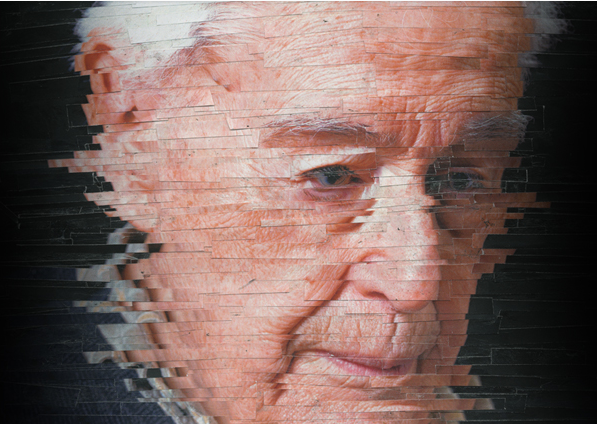
Try as we do, us Americans still croak. One and all, somehow, even today. We are done in by ten likely suspects: heart disease, cancer, stroke, diabetes. Nephritis. Suicide. Yet we can and do fight these things. We have working cures, preventive regimens, ways to halt the damage for all of these commonest causes of death.
All of them, that is, save one.
Alzheimer’s disease is practically unheard of in adults younger than 40, and very rare (one in 2,500) for those under 60. It affects 1 percent of 65-year-olds, 2 percent of 68-year-olds, 3 percent of 70-year-olds. After that, the odds start multiplying. The likelihood of your developing Alzheimer’s more or less doubles every five years past 65. Should you make it to 85, you will have, roughly, a fifty-fifty shot at remaining sane.
Eighty-five, though! That’s infinity-and-a-day away. Except that, by 2030, the population of Americans aged 65 and over also will have doubled. At that point, the number of people suffering from Alzheimer’s or related dementias around the world is expected to hit 76 million. Twenty years after that, in 2050, the number will be 135 million, including new cases in rapidly modernizing places like China and sub-Saharan Africa. The cost of their care in this country alone is projected to hit $1 trillion per annum, inflation not included.
There’s nothing new about aging. But Alzheimer’s is not simply a byproduct of old age. It is a degenerative brain disease, a fatal one. A degenerative brain disease that almost exclusively targets people who, prior to the twentieth century, were demographic anomalies.
In 1900, about 4 percent of the U.S. population was older than 65. Today, 90 percent of all babies born in the developed world will live past that age. Barring a miracle cure, or some kind of Stand-esque superfluenza, dementia will become the public health crisis of our time. A late interpolation into the shared story of human existence.
So far in the future, my guy! you might say. Who knows what medical science will cook up in the meantime? Anyway, I’ve seen the movies; I remember the dad from The Corrections. I know how this story plays out.
To the former bit of rhetoric, about the future: very true. A breakthrough may come. To the latter statements, about artistic representation—that all is great! It is great that the specter of Alzheimer’s disease (in particular) and dementia (in general) is beginning to ghost around our culture.
But this trickle of Alzheimer’s narratives will one day be an inundation. And, already, it’s ossifying into a genre. We know what to expect in a dementia tale: The devastated spouse, say, whose husband of 60 years flinches fearfully whenever she wipes at his mouth. Or else the pampered (if not little loved) child who comes of age while overseeing what age has ravaged.
I could tell you any number of such true stories. I could tell you about one or another patient at Isabella Geriatric Center in north Manhattan, which I frequented when I lived a few blocks up the street. I could tell you about the mute, smiling seniors I met on a reporting trip to Hogewey, the pioneering dementia facility just outside of Amsterdam. I could tell you my own story, about the three family members who metamorphosed into jabbering Lears before my eyes.
The thing about these stories—compelling as they can be—is that they tend to work against themselves. They have a dampening effect. Emerging from one, you feel a little stupefied, and bone-tired, as though you yourself have just swum through six feet of cemetery dirt. The reading or viewing experience is harrowing, grievous— truly scary—but also inconsequential, in a way.
Scary because dementia creates what should not be: mindless persons. Mindless, selfless, unreasonable creatures, somehow still looking like human beings. We see a metaphysical incompatibility in them, and it is deeply unsettling. They might as well be headless bodies, up and shambling around.
Inconsequential because, for all their pathos, each dementia story comes across as an individual tragedy. You read it or watch it or hear about it, and you might fear something similar happening to you, but you can’t really imagine such a thing ever happening to you. Literally—dementia is unimaginable. We can’t put ourselves in the place of the demented; we can’t wrap our minds around what it must be like to lose your mind. Instead, you and me, storytelling animals that we are—we invent confident memories of our future.
And then, of course, it happens to us.
There is no cure, preventive regimen, or way to halt the damage of Alzheimer’s. Right now, the only means for change lie within us: how we conceive of the illness, how we think of the afflicted. So many people are going to have to live with this dehumanizing disease! How do we make sure that they are able to do so with dignity, compassion? The importance of this question cannot be overstated. How are we going to accommodate the least of us—and those tasked with their care—once they become so many?
Well. Here I will humbly suggest that, before we put down this magazine to blanch the kale, swallow the softgel fish oil (mercury-free), and retreat further into the crenelated abbeys of our hot-yoga bodies—we entertain a thought experiment.
Your correspondent in this story is a youngish guy, not terribly old, maybe your same age. He, too, lives in the city and bounces around creative industries doing real au courant, new-economy-type stuff. Freelance graphic design, Web development, all manner of “content creation.” A guy who, once upon a time, preferred not to work a full-time job. Who is now getting his demented old man ready for a journey.
Come on, he’s saying. He’s using two fingers to stretch the folds of his old man’s skin. With his other hand, he’s running a razor down his neck. The abrasive sibilance calls to mind shuffleboard pucks, or skateboards on sidewalks.
Remember when you finally bought me that short board? he asks his old man. And I cracked my tailbone within the hour?
The old man’s isn’t a thousand-yard stare; it stretches past that, barren and edgeless. Searching it makes your correspondent’s own eyes desperate.
He can no longer rely on his old man to change clothes, much less shave. Hygiene is too overwhelming for him. It involves too many steps: shed the garments, turn the tap, spread the lather, blot the blood, open the drawer, match the socks, tie the tie. The last time he was left to his own devices, the old man slept in his same outfit for days, overripening.
The shaving finished, your correspondent steers his old man into one of the apartment’s bedrooms, where clothes have been laid on a bed. He picks up a pair of looser-fitting jeans and says, OK, sit at the foot for me. [Misting through the old man’s head is a lingual vapor that cannot condense into the phrase, I don’t know how to act—I’ve never been here before.]
Do you want to wear your flannel shirt? your correspondent wonders. Or maybe the vintage Starter jacket you thought was so cool?
Cool, the old man manages. Too cool. Your correspondent dusts off a little smile for him, then turns away. Out the window, he sees snow sifting in wet, neuronal clumps. He hears his super scraping the front steps. You’re right, he says. We’ll put you in something heavier.
The old man scoots to the lip of the mattress, but when the jeans start sliding up his legs, he paws languidly at your correspondent’s head. Frankly, he says, buffeting the younger man with crepey palms. Frankly. I took my eyes off of you, and a steep street. You went down.
Some days he’d be so normal that your correspondent was guilty of thinking, Could it be that he really isn’t...? But then he’d come home and find the old man attempting to repair the toaster oven, which wasn’t broken but was plugged in, saying, Call her and tell her to bring home salami for hot sandwiches, his eyes flickering like bulbs half screwed in. The truth was that whenever your correspondent became the slightest bit comfortable with the condition, his old man took the next stumble along the downhill progression of his disease.
For his sake, your correspondent has: blocked the radiators; removed the knobs from the oven, stove, and front door; hidden a baby monitor in the spare bedroom; remodeled the bathroom in blue and yellow. (His old man’s vision has deteriorated to the point where he has trouble differentiating between objects that don’t contrast. When the toilet, sink, and tub were all white... mistakes were made.) Rock bottom was when your correspondent hastily painted his bedroom door—handle, hinges, and all—the same cream color as the surrounding wall, so that, should he need a moment to himself, he could drop out.
Your correspondent isn’t one to complain. But honestly, this was some horseshit. He had been robbed of his leisure time (hard to find a pro-bono sitter), his peace of mind (turn your head, and he’s off on another obscure mission), his savings (Medicare doesn’t cover this), nearly all of his rest (old man naps in the day and then rises at night, reanimated), and any visitors or well-wishers (they’re too politely embarrassed). He has ordered a cable package for the first time in 15 years, for a periscope’s view of the outside world. He reaches for words like millstone while making too much eye contact with delivery guys. He feels himself devolving into a cipher, a nonentity, by the day, hour, minute.
Buttoning his old man up, turning down his collar, your correspondent sees something scintillate in his face. [What did I do that this guy’s so pissed at me?] Maybe cognizance, he thinks, though probably not. [Kill ’em with kindness, his old man recalls, and so decides to beam.] At this smile, your correspondent very nearly loses it.
A fiancé, some kids, a blossoming creative life—dreams deferred. Would that this grinning life-leach perceived anything about the money and man-hours and future he was bleeding dry. Your correspondent wasn’t even free enough to fear that he was missing out.
OK, stand up, he says. We’ve got a plane to catch.
Kent Russell is a contributing editor at The New Republic. Read this entire article in The New Republic at http://www.newrepublic.com/article/119265/alzheimers-disease-statistics-...