Politics & Government
Divide Over Solar Panel Installation Heats Up
A local solar panel installer says Manhattan Beach is making it difficult for homes to go solar.
In February, California Governor Arnold Schwarzenegger signed AB 510, which would, in simple terms, make it easier for the state to reach its aggressive solar power goal—one million solar roofs by 2018.
It's a noble goal, but with only 50,000 or so homes in the state generating solar power right now, it's falling short.
Brad Bartz, president and founder of ABC Solar, believes the reason the state is failing is because of stringent guidelines from the state fire marshal's office that cities have adopted. And he's speaking out.
Find out what's happening in Manhattan Beachfor free with the latest updates from Patch.
"The guidelines get adopted wholesale with no [room] for local flavor," Bartz said. "I believe that the fire marshal and cities' acceptance of guidelines have caused my company and this state great distress."
Many cities have taken on the state fire marshal's solar panel installation guidelines as a hard and fast rule, when they are just guidelines, Bartz said. The guidelines stipulate that, depending on the roof, there exists a 1.5-to-3-foot accessway between some edges of the roof and the panels to accommodate firefighters.
Find out what's happening in Manhattan Beachfor free with the latest updates from Patch.
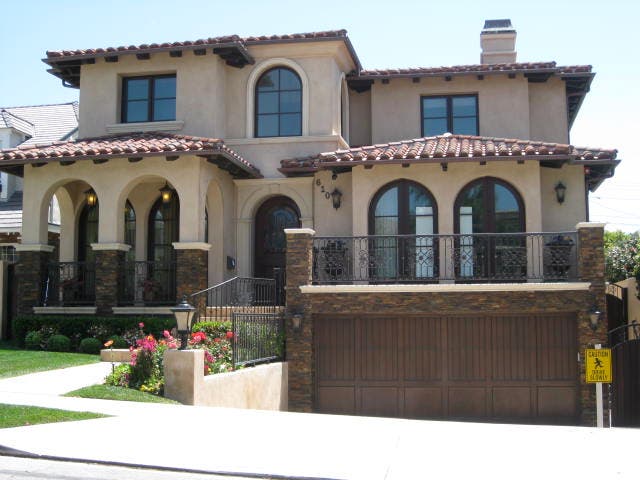
Manhattan Beach is the latest city to have drawn Bartz's ire. He has spent a month trying to install a solar panel system at 610 17th Street that would take his client off the grid—or completely independent of utility needs.
The project required some conversations with the city, Bartz said. In an e-mail to city officials last month, he made his concerns clear.
"Not to make a big deal of this, but this application of fire code has made movement into Manhattan Beach a very difficult choice for my solar company," he wrote. "The fire code interpretation of the state fire solar guidelines has now officially restricted 95 percent of your housing stock from truly going solar. Only token systems can be installed."
In the meantime—during the course of reporting this story—the 17th Street home was approved for the solar panels after a walkthrough with the city. Bartz, however, is not placated and says that the process is still overly complicated.
"Is this really necessary?" he asked of the approval process.
Sona Kalapura, environmental programs manager for the city, said in an interview last week that the city has never rejected a residential solar project. The city just wanted assurance that the plan for the 17th Street home would meet safety codes, she said.
The problem may have been with Bartz's approach, according to Carol Jacobson, building official for the city of Manhattan Beach. There were valid questions on the project, she said, and instead of going to the fire department, Bartz went directly to City Hall.
But, Bartz said he did that because he had spoken to the city before submitting his application and received assurance that his application would be fine and that the city would work with him.
Kalapura said Manhattan Beach is dedicated to helping homes go solar and go green. As of May, there were 83 homes in the city with solar installations, and at least one was completely off the grid. The city has even waived the solar permitting fees and is starting to develop a solar initiative to further that commitment.
The city recently helped showcase local homes with solar installations in a home tour. Solar experts were on hand to answer questions and homeowners opened their doors to the public.
John Grimaldi, fire marshal for Manhattan Beach, said he tries to work with every property owner on a solar installation.
"There's wiggle room," he said.
But, Bartz isn't about compromise. Too many other solar installers compromise, he said.
Bartz says that by making the process so difficult, the city violates the Solar Rights Act, which prevents cities from adopting an ordinance that would unreasonably restrict the use of solar energy systems. The act also requires local governments to use a non-discretionary permitting process for solar energy systems.
"The law is on my side," Bartz said.
Judging from his previous legal battles on this issue, he may be right. It's not just the city of Manhattan Beach's restrictions that irk him. He's none too pleased with those of Santa Monica, Torrance, Palos Verdes and a number of other cities in the county.
"Why are they stopping solar?" he said of local municipalities. "They're killing it."
Grimaldi said he is not at all out to get solar.
"I really support solar," he said, "but I have to watch out for my firefighters, too."
The space recommended in the state guidelines is required for firefighters to get on top of the roof in the event of a fire. There also needs to be at least one area where firefighters can access the home through the roof. Walking on top of solar panels is too slippery for firefighters, said Grimaldi, and cutting through could pose hazards, since the panels are electrified.
The problem for Grimaldi is that the state was taken off guard by the popularity of solar installations, leaving many cities with conflicting regulations. In response, he has proposed a South Bay fire marshals task force, which would seek a middle ground with solar companies and establish standard requirements for local municipalities.
Bartz said he often fights for clients, if they ask him to. It's not atypical for him to start the process of a lawsuit to get a single installation approved. For him, solar energy is important enough to get in people's faces about it.
"Solar is the silver bullet," he said. "It will save America."