Politics & Government
Endangered Blue Butterfly Recovery Continues at Ballona
After Many Years of Volunteers Removing Weeds and Nursing Native Buckwheat, the Endangered Species Makes a Strong Comeback at Ballona Dunes


I was privileged to be invited by Friends of Ballona Wetlands to view the rare and endangered El Segundo Blue Butterfly at the Ballona Wetlands this weekend. Friends' Manager of Habitat Restoration and Upper Education, Patrick Tyrrell, escorted many visitors over three hours on July 13, allowing us to get up close and personal with the only federally-listed endangered insect that calls Ballona home.
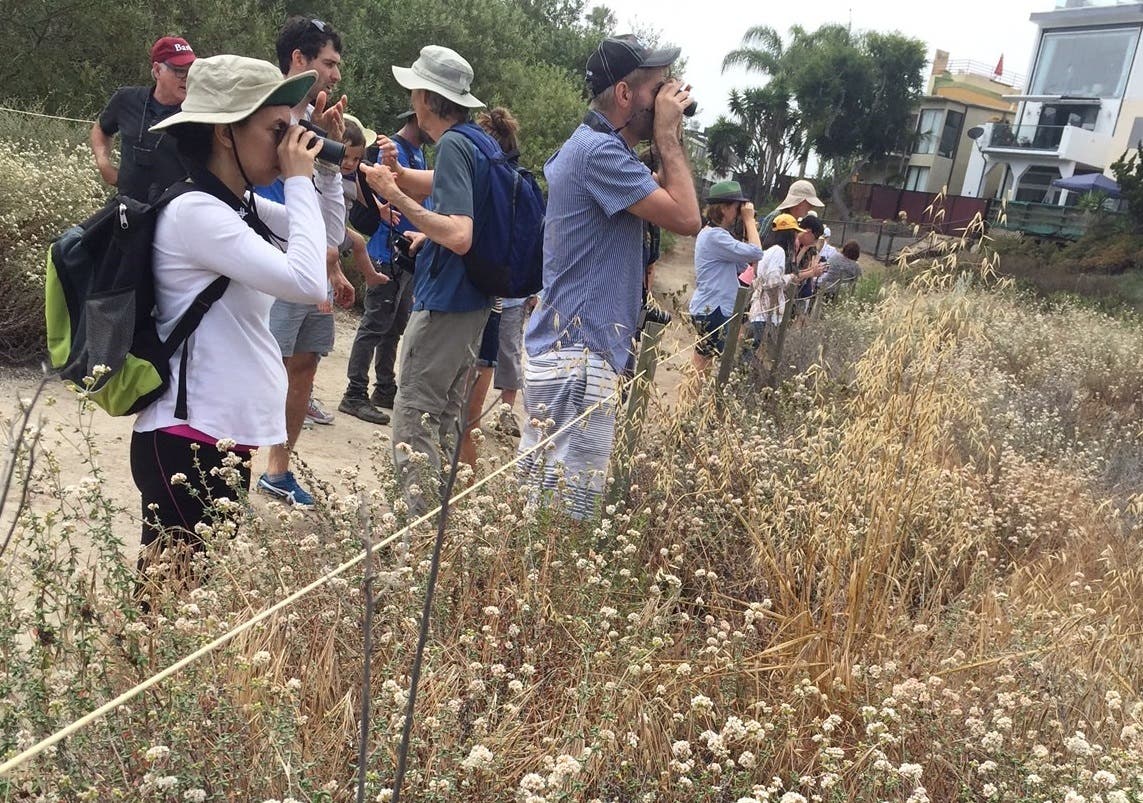
Above: Visitors escorted by Friends of Ballona Wetlands staff observe the El Segundo Blue Butterfly foraging in a thicket of coastal buckwheat plants.
An official survey in 2013 (1) first confirmed the Blue Butterfly had returned to the Ballona Dunes after decades of absence and was living and reproducing there. The butterfly’s unique habitat had degraded over the years but had been restored by the Friends' community restoration efforts. For over twenty years, Friends' volunteers cleared invasive weeds from about 13 acres, enabling native buckwheat - the life source for the butterfly - to expand into the weed-free dune areas. The Dunes will not be affected by the state’s proposed Ballona Wetlands Restoration Project, which will further expand habitat for the butterfly's recovery.
Find out what's happening in Marina Del Reyfor free with the latest updates from Patch.
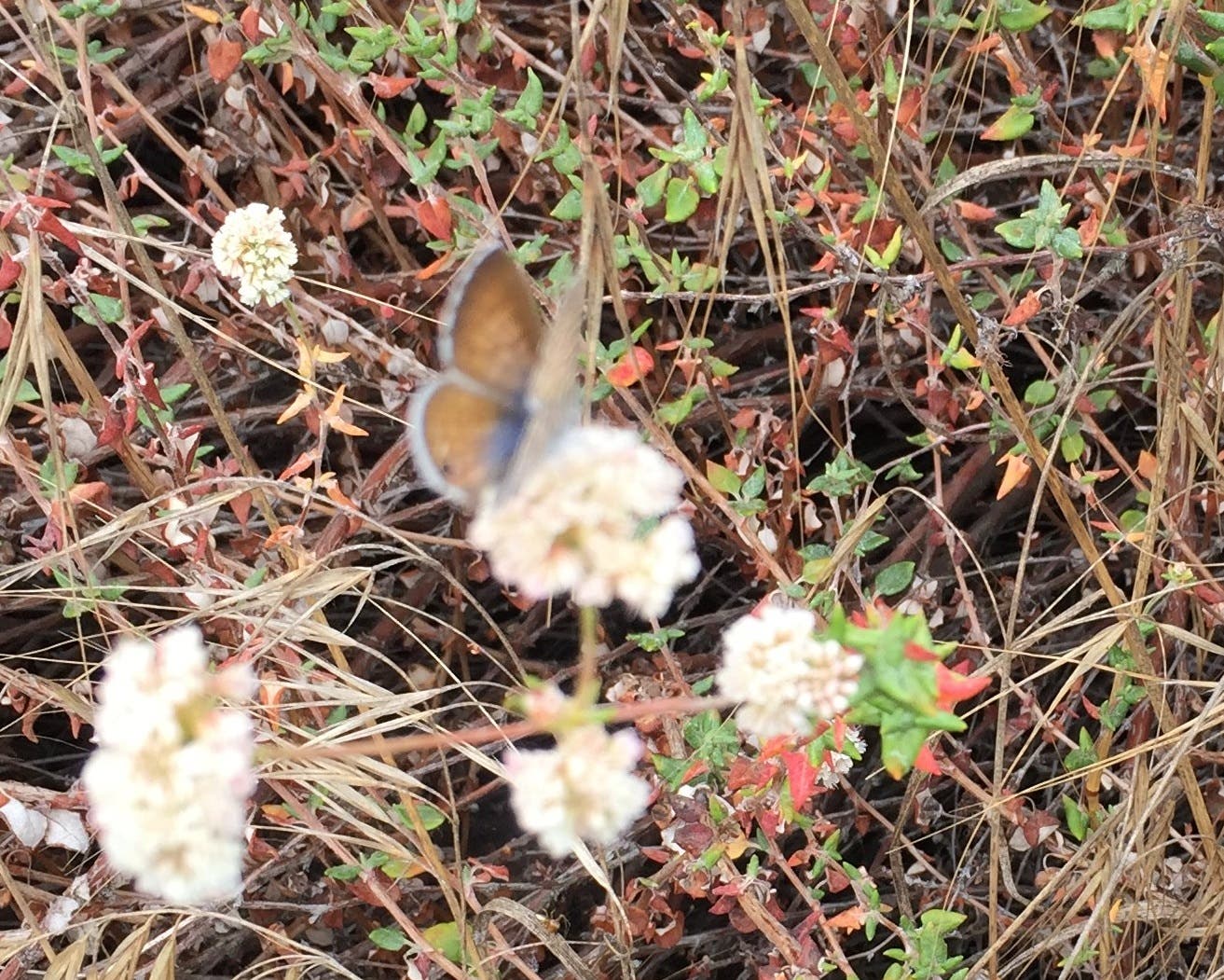
Above: The El Segundo Blue Butterfly (female), eating buckwheat nectar. Photo by an amateur photographer with his i-Phone.
Endangered species surveys may only be performed by a qualified biologist lawfully permitted by the U.S. Fish and Wildlife Service, and the surveys must follow a strict, scientifically defensible protocol that is specific to each species. While amateur observations, photographs or other anecdotal claims about endangered species and their habitat may prompt protocol surveys, they are not recognized as scientifically valid and may not be used for regulatory purposes in the United States. The 2013 and more recent surveys were conducted by Dr. Irena Mendez, a professional biologist certified and permitted by the USFWS to conduct protocol surveys for the El Segundo Blue butterfly.
Find out what's happening in Marina Del Reyfor free with the latest updates from Patch.
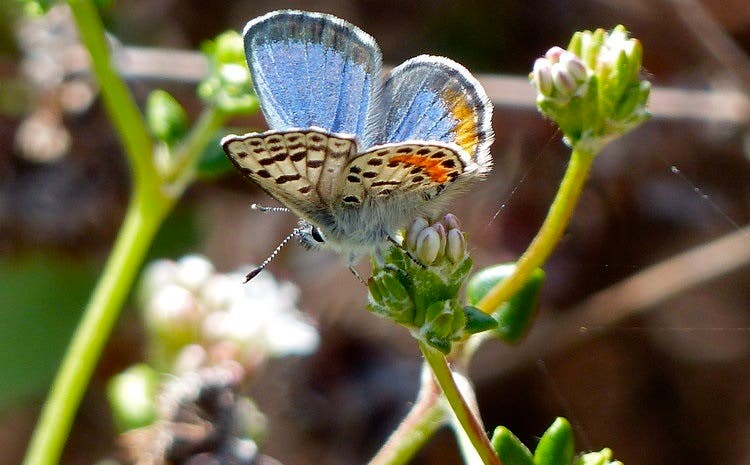
Above: A much better photo of the endangered El Segundo Blue (male). Photo by Patrick Tyrrell.
Adult Blues consume coast buckwheat pollen and nectar, then mate and lay eggs on the flowers. Eggs hatch within 3 to 5 days, and the caterpillars hide within flower heads, feeding mostly on the buckwheat seeds. As the caterpillars change to pupas, individuals fall to the ground and remain buried either underground or in the leaf litter at the base of the buckwheat plant until they emerge as adult butterflies.
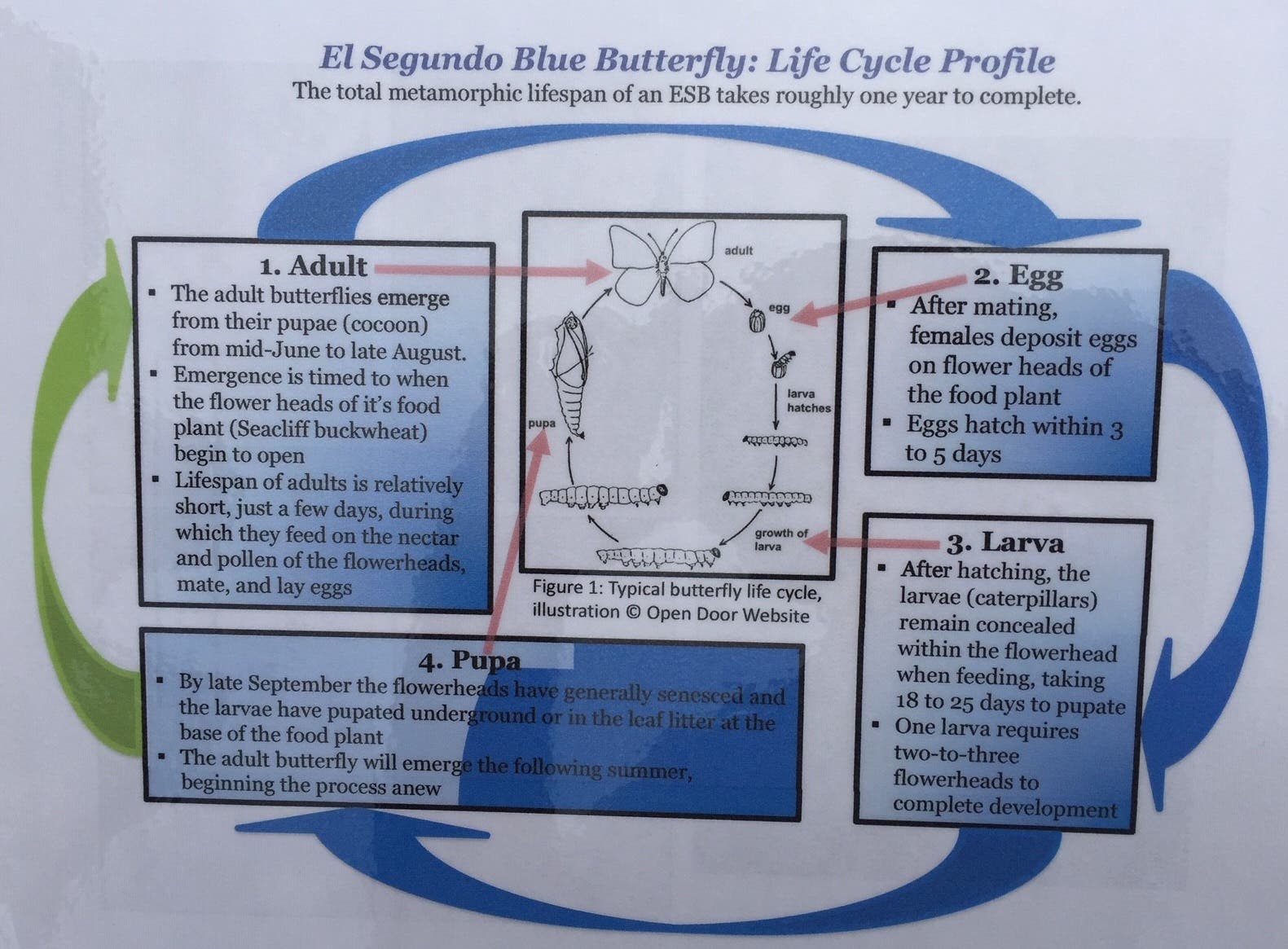
Above: The Life Cycle of the El Segundo Blue Butterfly (courtesy Friends of Ballona Wetlands).
During the 2013 survey, the numbers of adult male and female Blue Butterflies ranged from 0 to 65 on any given survey date. According to Friends’ staff, over 50 individuals were observed on a single day this month, so the population appears to be stable.
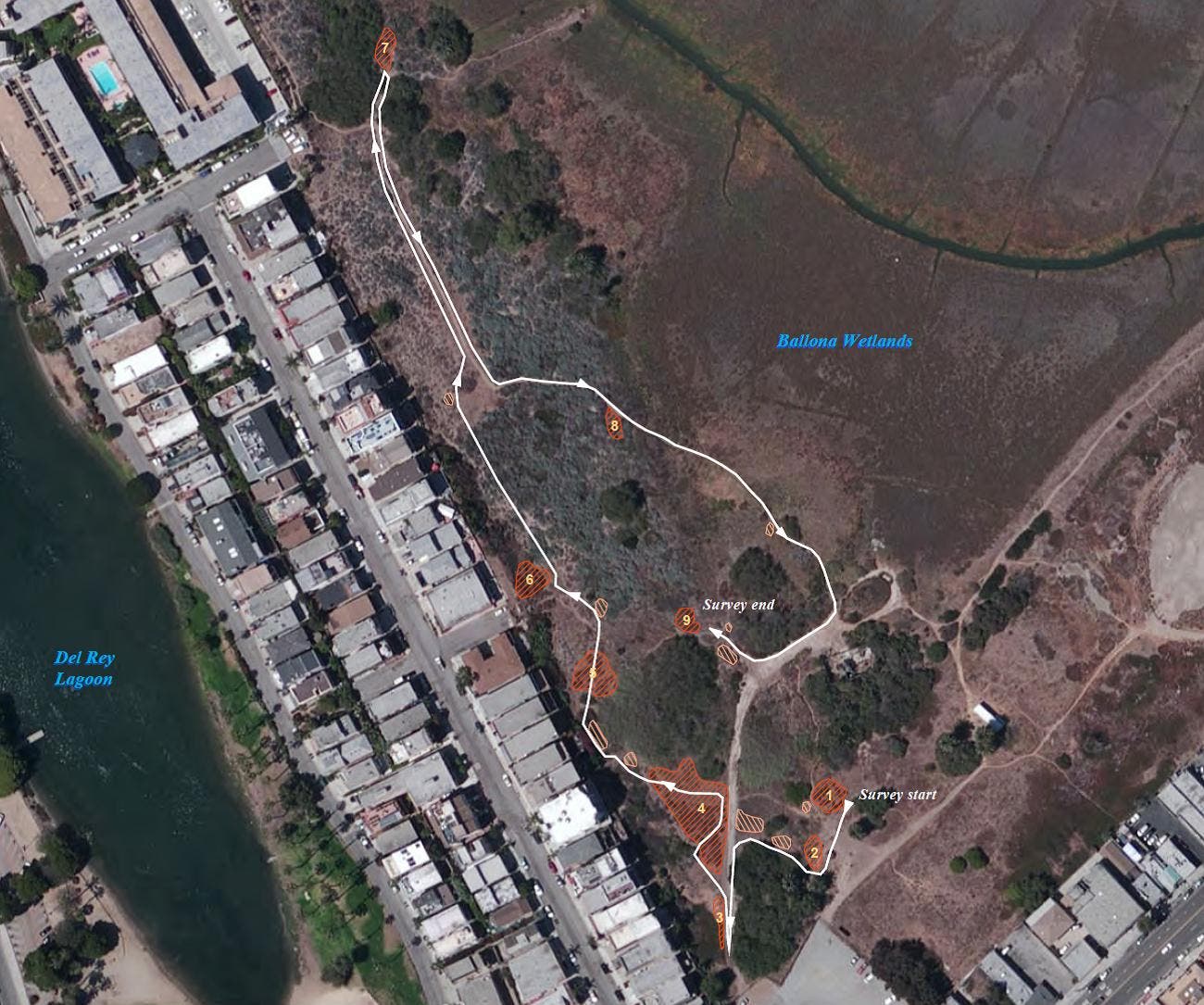
Above: The Ballona Dunes areas where the El Segundo Blue Butterfly is surveyed.
In her 2013 report, Dr. Mendez wrote, "great strides have been made in restoring the dunes portion of the [Ecological] Reserve. Plant community mapping conducted in 1990 revealed that most of the area was comprised of iceplant and naturalized stands of non-native trees such as myoporum. Today the site largely contains native coastal dune species and riparian thickets that intergrade with the marsh vegetation. Habitat restoration efforts are an on-going project for the organization, as naturalized stands of non-native trees and pockets of iceplant and other nonnative species still exist and will require removal thus making way for additional native plantings. In addition, due to the urban setting of the site with its ample sources of landscape and weedy vegetation readily adapted to the site, the organization will need to focus future efforts on resource management that will undoubtedly include a small but persistent population of El Segundo Blue butterflies. The educational opportunities for the site will be both challenging and inspiring."
Fast forward six years, and the Friends’ ongoing restoration and education programs continue to improve the Blue Butterflies’ chances of survival. :)
Enjoy your Ballona Wetlands!
1. Irena Mendez, Ph.D. Results of 2013 Presence/Absence Surveys for El Segundo Blue Butterfly at the Ballona Wetlands Ecological Reserve, Playa Del Rey, Los Angeles County, CA. November 21, 2013. USFWS Recovery Permit TE218630
2. Friends of Ballona Wetlands. https://www.ballonafriends.org/restoration