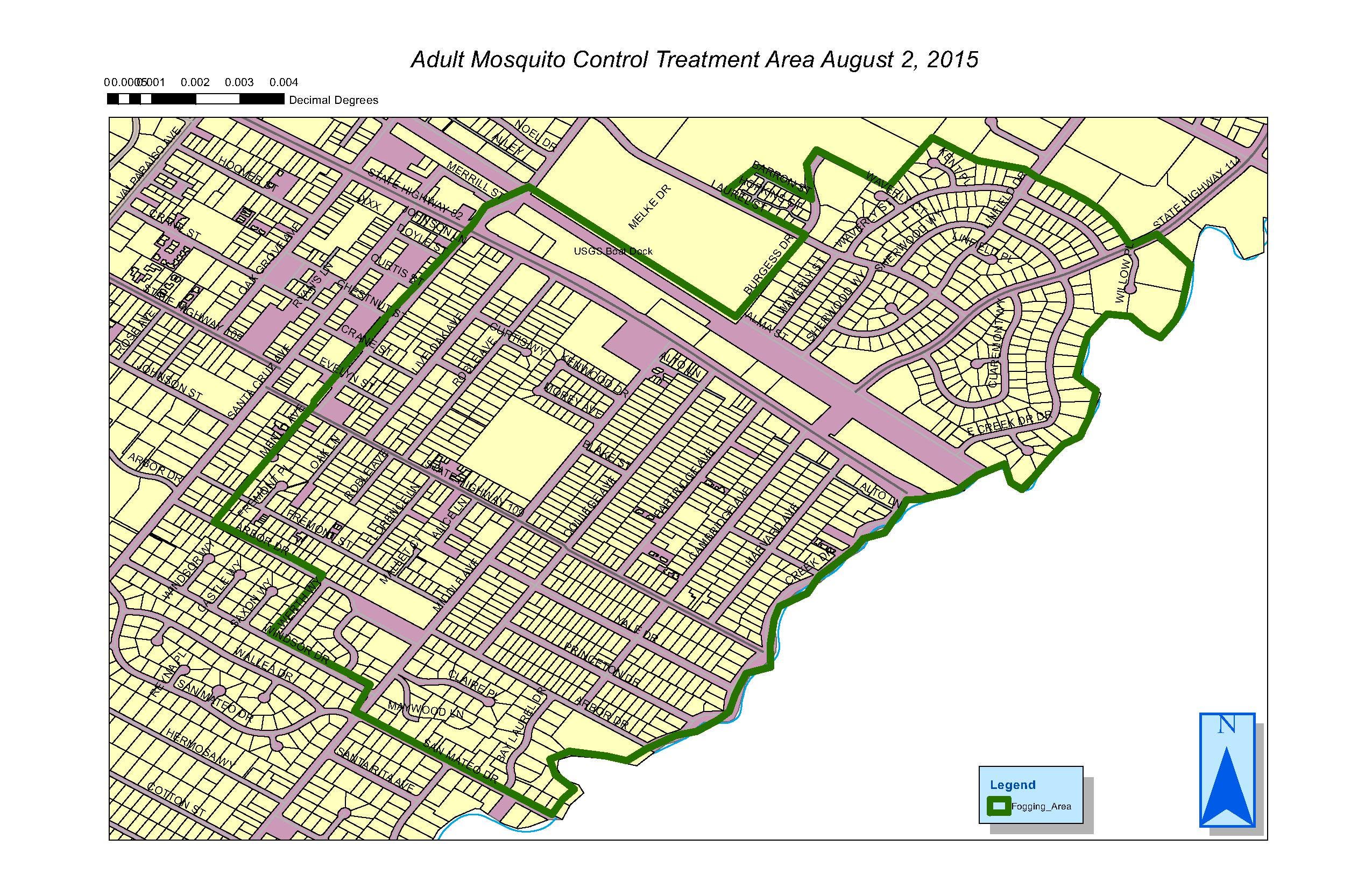
ABOVE: Map of Fogging Area
FOR IMMEDIATE RELEASE:
Find out what's happening in Menlo Park-Athertonfor free with the latest updates from Patch.
Adult Mosquito Treatment in Areas of Menlo Park Scheduled for Night of Aug. 2nd
Burlingame, CA – 30 July 2015 – San Mateo County Mosquito and Vector Control District (SMCMVCD) detected West Nile Virus (WNV) in adult mosquitoes collected on July 29th , 2015 from the 94025 ZIP code area. The District will conduct truck-mounted adult mosquito treatment around the detection site in an effort to prevent human cases of WNV. Weather permitting, the adult mosquito treatment is scheduled for the night of Sunday, Aug. 2nd between 9pm and 5am Monday morning.
Find out what's happening in Menlo Park-Athertonfor free with the latest updates from Patch.
The treatment area, which is primarily [residential/commercial/industrial], is approximately bounded by Menlo Ave. to the north, San Mateo Dr. to the west, Creek Dr. to the south, and Waverly St. to the west. A map of the treatment area and further information can be found on the district website at www.smcmmvd.org. Residents with
additional questions can call the District at (650) 344-8592 Monday through Friday from 8:00 AM to 4:30 PM.
Mosquitoes will be collected in the area after the treatment is complete. If posttreatment mosquito samples are carrying West Nile Virus, repeat adult mosquito treatments may be necessary.
Reports of dead birds are an early indication that the virus is circulating in the
environment. Residents are encouraged to help by reporting fresh carcasses of birds or tree squirrels to the West Nile virus hotline, online at www.westnile.ca.gov or by phone at 877-WNV-BIRD (877-968-2473).
West Nile Virus is transmitted through the bite of an infected mosquito. The primary hosts are birds. Humans, horses and other animals can become infected with WNV if bitten by an infected mosquito. It cannot be spread person to person. Residents can reduce their risk of mosquito bites by taking the following precautions:
· Apply insect repellents that contain DEET, picaridin, oil of lemon eucalyptus or IR 3535 and follow label instructions.
· Make sure that doors and windows have tight‐fitting screens to keep out mosquitoes and repair or replace screens with tears or holes.
· Eliminate standing water and containers that can hold water from around the home.
· Wear long sleeve shirts and long pants when outdoors.
For assistance with a mosquito problem in San Mateo County, contact the District at (650) 344-8592. For more information on West Nile Virus or District services, visit us on the web at: www.smcmvcd.org.
Contact:
Megan Caldwell
Public Health Education and Outreach Officer mcaldwell@smcmvcd.org
1351 Rollins Rd.
Burlingame, CA 94010
(650) 344-8592
Chindi Peavey, Ph.D.
District Manager
San Mateo County Mosquito and Vector Control District
1351 Rollins Rd. | Burlingame, CA 94010
Office: (650) 344-8592 ext. 12 | Fax: (650) 344-3843
###
=
Robert Riechel
For San Bruno Patch
Photo Credit: San Bruno Patch Archives
Source Credit: San Mateo County Mosquito & Vector Control District
CLICK HERE to Subscribe to News Alerts and a Daily Email Newsletter for San Bruno Patch