Schools
Stanford's King Institute Carries On The Dream
Institution combines educational programs and research to pursue King's "dream of global peace with social justice."
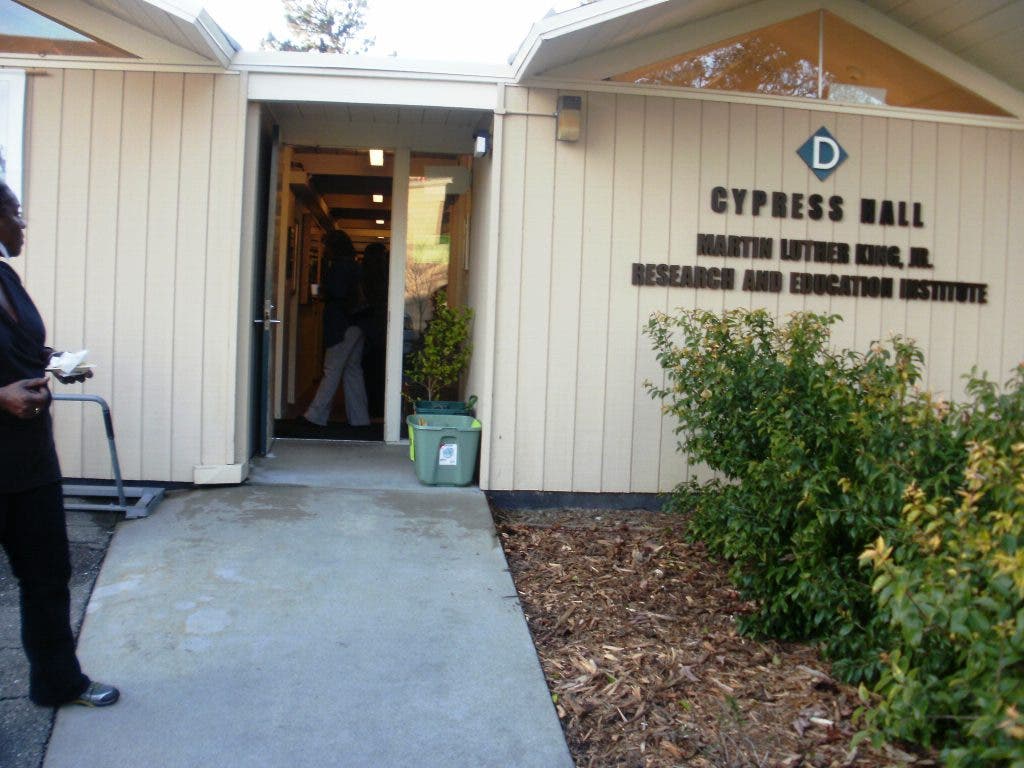


For the last 25 years, Stanford's Martin Luther King, Jr. Education and Research Institute has continued the work of the great civil rights leader who had a dream that men would one day be treated equally.
"We're the only place in the world who has permission to publish the work of Dr. King," said Tenisha Armstrong, the associate director of the institute, which is housed in Cypress Hall.
The institute was founded because of the King Papers Project, which came to Stanford in 1985, when Coretta Scott King herself invited Stanford University historian Clayborne Carson to lead it.
Find out what's happening in Menlo Park-Athertonfor free with the latest updates from Patch.
"Our main goal is to publish 14 definitive editions of Dr. King's most prolific speeches, papers and books," Armstrong said. "So far we have six. We're currently working on our 7th and 8th editions."
These editions will cover the periods from 1961 to September 1962 and September 1962 to December 1963, respectively. Given the sheer quantity of the work that Dr. King produced, it is quite a daunting task.
Find out what's happening in Menlo Park-Athertonfor free with the latest updates from Patch.
Yet the volumes have had a measurable impact on academia.
"You can see our footprint," said Armstrong. "Many books on King rely on research gathered here."
The institute hosted an open house Friday to commemorate the work of Dr. King and celebrate his legacy. Inside the inconspicuous structure hidden amongst a host of biology and technology buildings, there are dozens of photos, sketches, sculptures and all sorts of historical artifacts adorning the walls.
"We started out trying to carry out the mission of Correta [Scott King]," said Carson, who still directs the institute at Stanford. "Over the last 25 years, the project has broadened."
Aside from providing educational resources at the university-level, the institute boasts their acclaimed "Liberation Curriculum," which provides pedagogical resources to high school teachers using multimedia technology. The goal of this particular project is to "develop academically rigorous lesson plans that encourage critical inquiry and inspire civic engagement," according to their website.
According to Carson, who teaches two classes per year at Stanford, there has been an increase in student involvement in the institute in recent years. More and more students are attending lectures, seminars and presentations put on by the institute each year.
The King Institute is a jewel of information and history, but outside of the academic community it maintains a relatively low profile. Regardless, the institute has enjoyed a very influential history here on Stanford's campus.
The King Institute has a variety of events planned to commemorate Martin Luther King, Jr. Day. In addition to the editions of the institute's King Papers Project, the institute also has produced numerous other publications.