Community Corner
Quarantined Stanford Physician Shares Story of Treating Ebola Patients In Liberia
Colin Bucks, 43, now isolated at his Redwood City home for 21 days, called the West African caregivers "his heroes."


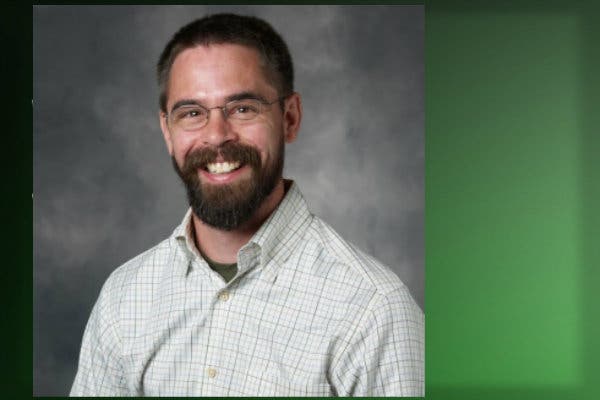
By RUTHANN RICHTER, Stanford News Service:
After spending a month treating Ebola victims in the severely stricken West African country of Liberia, emergency physician Colin Bucks, MD, returned to California with perhaps one misgiving: It was having to say goodbye to his patients.
“So much of the time was spent just helping out the nurses and providing emotional support and the connection to the patient. Being there was as much a part of the healing and recovery and demonstration of care as any medical decision we made,” said Bucks, a clinical assistant professor of surgery at theSchool of Medicine. “When my deployment was up and I needed to say goodbye to patients who were well into recovery, I told them, ‘I wish so much I could be there for the day you will be discharged.’”
Find out what's happening in Millbraefor free with the latest updates from Patch.
[Previous: California Issues Ebola Quarantine Order; One Stanford Doctor Quarantined.]
Bucks, 43, now isolated at his Redwood City home, served as a volunteer medical coordinator with the International Medical Corps, working intensive, 14-hour days in the jungle of northeast Liberia in a blue, tin-roofed clinic that was built in a matter of weeks on a bulldozed hilltop.
Find out what's happening in Millbraefor free with the latest updates from Patch.
Makeshift ambulances
Bucks, who has volunteered in more than 20 disasters in the United States and abroad, was among 43 foreign volunteers and some 125 Liberians caring for stricken patients at the site. Some were referred from the nearby Bong County hospital, which was temporarily closed for part of the summer because of multiple staff deaths from infection with the Ebola virus. Others were brought in by makeshift ambulances that had to negotiate barely passable roads, dense jungle and numerous flat tires to reach the remote site.
Bucks said between 26 and 32 patients died during his stint there, yet there were nearly as many who survived because of the care provided at the 52-bed clinic, funded by the U.S. Agency for International Development.

Colin Bucks, right, spent a month in Liberia treating patients infected with the Ebola virus.
Courtesy of Colin Bucks
“The intensity of the experience is rewarding, and getting to see the whole of human experience is valuable,” said Bucks, who also serves as the assistant medical director of the Office of Emergency Management at Stanford Health Care. “The real high point is having someone get sick and then get better and rejoin their family. We had children who had been rejected by their families and then we saw them turn around and have families welcome them back. I think it’s important as caregivers to see the really sad outcomes and say, ‘You’ve got to push harder to find answers and to provide the best support.’ But you lose a lot in this one. At best you’re saving half of those who are ill.”
‘My heroes’
He recalled one patient in particular: a 45-year-old nurse who had been infected at home. “Her husband had died a very painful death, and her infant died in her arms shortly after her arrival to our clinic,” he said. “She was really, really sick for a time, got better and then developed a secondary infection because her immune system was so stressed. Then we finally got her better from that and were able to discharge her.”
Her goal, he said, was to become stronger so she could return to the clinic to help others. He called the Liberian workers at the clinic “my heroes” because of their determination in the face of daily threat of disease.
“I didn’t have to go home everyday to my family. I wasn’t worried that I would accidentally share some virus with my child,” he said. “But if you are a waste-handler or part of the burial team or an administrator, you are taking it on faith that all aspects of your safety are being considered. Every day they are showing up with a sense of responsibility and saying, ‘I have to battle through this.’ And then they have to go back to villages and towns that might be afraid of them. That gives me so much cause to give my best effort every day.”
He said the clinic had the benefit of a nearby biohazards lab, built by the U.S. Navy, to quickly diagnose cases, but that most of their care-giving tools were fairly rudimentary: replacing lost fluids and electrolytes, treating malaria and bacterial infections, controlling symptoms of vomiting and diarrhea, and providing general pain control. The caregivers were constantly vigilant with regard to infection control, covering themselves from head to toe with yellow protective suits, beige and gray aprons, goggles and black boots.
Because of the intense heat, which created a sauna-like environment in the suits, doctors and nurses did not spend much more than an hour at a time in protective gear.
‘It’s funny what becomes normal’
“The concern about transmission of infection permeates everything, as you want to make sure you don’t become a transport vector,” Bucks said. “It’s funny what becomes normal. There was one time I was winding my way through the ‘sleeping soldiers’ — all the boots hanging upside down and drying and the aprons hanging from the laundry line — as I weaved my way to a pit latrine. It was 2 a.m. on a Tuesday. That felt 100 percent normal, and yet I thought what an absurd environment it was. All the time you are watching each other to make sure nothing violates protocol — watching out for each other.”
He said every space in the clinic had three spigots that dispensed water and two different doses of chlorine, an effective killer of the virus. All surfaces were regularly wiped down, and gear routinely bathed in chlorine or disposed of, while patient clothing and bedding was incinerated, he said. Because of these intense precautions, no caregiver became infected, he said.
You need an organized response in West Africa. Otherwise, we will be fighting a much bigger battle in the United States and around the globe.
A veteran of many disasters, including providing critical care to victims of the 2010 Haiti earthquake, Bucks is somewhat sanguine about his experience in West Africa, saying it’s not unlike caring for critically ill patients elsewhere.
“You see these tough stories, but at the same time, I know my colleagues are seeing tough cases all the time at Stanford,” he said. “In this setting [West Africa], there is an additional barrier because you have one physical degree of separation, as your head, your face and your hands are completely covered. But it doesn’t preclude the same level of connection to the patient and the same sense of responsibility and caring. There is maybe a higher percentage of sad cases because Ebola has a high case fatality rate, so there is an added burden there. But there is a similarity to working a tough case in rural Liberia to working a tough case in a U.S. critical care unit.”
Home again, in isolation
Bucks headed home to California on Oct. 22, after a brief stop in New York, and is cooperating with Stanford requirements and public health guidelines that recommend 21 days at home. He is now surrounded by his books, his remote control and his ever-present cell phone. As an added precaution, his wife and dog are now staying at a hotel. He is continuing to be paid by Stanford during this period.
Bucks has been consulting with local hospitals and the state Department of Public Health on Ebola preparedness and hopes to work as an adviser to the federal Centers for Disease Control and Prevention.
He remains frustrated with governmental policies that discourage much-needed personnel from volunteering to help contain the epidemic in West Africa. “The notion that the borders can be ‘locked down’ is ludicrous,” he said. “You just have to fight the infection there. And closing the borders to flights sounds productive, but it would have negative consequences. It would spread the disease rather than contain it” by limiting the flow of aid workers and supplies.
“There needs to be a rational policy that facilitates health-care workers going to and from the United States,” he added. “Policy should help this — not impede this. You also need an organized response in West Africa. Otherwise, we will be fighting a much bigger battle in the United States and around the globe.”
Get more local news delivered straight to your inbox. Sign up for free Patch newsletters and alerts.