Neighbor News
3D Short Flicks for Kids at The Mill Valley Film Festival
The 3D Sideshow is one of the many innovative programs showing in the Children's Festival portion of this years Mill Valley Film Festival.

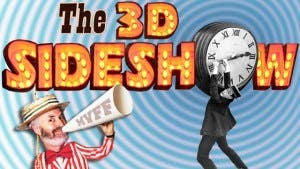
The 3D Sideshow
Age Recommendation: 6+
Saturday, October 4, 11am, Smith Rafael Film Center, San Rafael, Q & A after the program with Robert Bloomberg, Bob Venezia (“Pieces of the Fair”), Jeff Boller (“A Geek Like Me”), Eric Kurland (lead stereographer for “The Longest Day Care” and OK GO videos), and Patrick Osborne (“Feast”).
Sunday, October 12, 11am, Sequoia Theatre, Mill Valley, followed by a bonus screening of Jeff Boller’s “The making of “A Geek Like Me“, followed by a live presentation by Patrick Osborne on the making of his film, “Feast”, from conception to final product.
Find out what's happening in Mill Valleyfor free with the latest updates from Patch.
The Mill Valley Film Festival runs October 2-12. In addition to The 3D Slideshow, this years children’s selection features innovative family films including a FREE outdoor screening of the classic Mr. Bug Goes to Town at the Old Mill Park Amphitheatre in Mill Valley and a selection of nonverbal foreign films including Miniscule: In the Valley of the Lost Ants, The Boy and the World, and This Bird’s Gonna Fly.
PLUS a free Children’s Film Festival Celebration on October 12, 3-5pm, including live entertainment, Oliver Twist, The Family Bug Band, Glitter Tattoos, short films and more at the Microsoft Store in the Village at Corte Madera.
Find out what's happening in Mill Valleyfor free with the latest updates from Patch.
The 3D Sideshow is one of the many innovative programs showing in the Children’s Festival portion of this years Mill Valley Film Festival. It includes many shorts from around the world in a wide variety of styles. I’m extremely excited to share an exclusive interview with the producer of “The 3D Sideshow” and one of the world’s leading contemporary stereo photographers, Robert Bloomberg.
I’ve been involved with the National Stereoscopic Association (NSA) for decades and was the Northern California director for over 20 years. Each year the NSA hosts a convention called 3DCom, and a main feature of the convention is the Stereo Theater, which showcases the works of both amateur and professional photographers and filmmakers. I thought it was a shame that the general public, especially kids, had little opportunity to see these innovative 3D films. So I had the idea to put together The 3D Sideshow.
Can you tell me more about the variety of shorts a family will experience?
Included in this collection you will see innovative shorts showcasing both big budget films as well as low to no budget films. There is a wide variety of distinctly different approaches to 3D, including computer generated imagery (CGI), hand drawn animation, stop motion, time lapse, as well as live action. There are different genres including music videos like OK GO’s “All Is Not Lost” and “White Knuckles” and Jeff Boller’s “A Geek Like Me”, two submissions from Disney, “Get a Horse” and “Feast”, an amazing historical film by Georges Méliès, an incredible 2D to 3D conversion of the classic sequence from Harold Lloyd’s “Safety Last”, a Simpson’s short “The Longest Daycare”, and the world premiere of “One Night in Hell” from Queen guitarist, Brian May’s London Stereoscopic Company.
What were some of the challenges you faced in bringing this culmination of short films together?
Deciding which films to include in the program was a big challenge. There are so many great films out there, and I wanted to choose not only my favorites, but ones that complimented each other and made for a good program. It’s like planning a dinner party where you want all your guests to get along and have a good time.
Then there was making sure all the films were in the proper format to show on the theater’s projection system. This DCP (Digital Cinema Package) system usually requires expensive conversions by a large production house. Fortunately, there are now several free shareware programs online, such as OpenDCP, which I used to convert those films that were sent to me in other formats.
Just keep encouraging them and give them the space to create. If you can afford it – get them equipment and help with whatever they need to pursue their dream, watch their work and be positive. The nice thing about growing up today is that there are so many opportunities, inexpensive software and computers available. At one time this software and hardware was only available to large studios and was very expensive. Now, people are shooting movies with iPhones and editing movies on their laptops.
Also, watching films together with your kids, talking about them, the editing, camera positions, sound and music, etc. The more films you see with your kids, the more you can talk about them in that way. Ask what they think makes them good, what they don’t like about them, and help them look at what they’re watching more critically.
I’m old school in terms of filmmaking. The last film I did for the Mill Valley Film Festival was “How to Draw a Cat” which I did in my living room with a one man-one cat crew. Ask what she is interested in and what is out there in the world that she would like to share with other people. Perhaps she likes visiting the animals at WildCare or enjoys a particular sport or activity; this could be the perfect subject for her film. That way she is out there and not sitting in front of a computer but engaging with a subject she’s excited about. These days the computer is a necessary part of the process for editing, but the actual experience of making and sharing the film doesn’t have to involve sitting in front of a computer all day.
Unfortunately, there is a lot of prejudice about 3D because of its hit and miss history. It was often done by people who really didn’t understand the 3D process or care enough about the final product to put the effort in. It does require attention to detail. In the past there were limitations with technology. The big 3D films in the 50’s involved having 2 projectors lined up on the screen in exact registration and synchronization. The sad fact was many of the projectionists were not trained or familiar with the process.
How does 3D change the type of story you can tell?
Movie making is fairly young, only a little over 120 years old, and filmmakers have had a chance to experiment and learn their craft and develop a film language. 3D has existed in some form since 1915 but filmmakers haven’t had the time to develop the language of 3D filmmaking they way they have with 2D. To me, Avatar was the first big 3D success because James Cameron is interested in doing 3D the right way. Now, several Academy Awards have gone to both animated and feature films in 3D. Films like “Life of Pi” and “Hugo” and prominent directors like Ang Lee and Martin Scorsese are using 3D in an intelligent way, and not just using it as a gimmick. Ideally, 3D should become a natural thing so that people don’t even think about it. For me, I have to ask “Is 3D important for the subject?” You have to have a reason for using it.
How does 3D lend itself to the overall experience of the 3D Sideshow that you would not get from 2D?
We see in 3D. Everyone is walking around shooting 3D all the time. Your 2 eyes are like 2 lenses of a camera that your brain is fusing into 3D. So it’s a natural way of seeing the world. Hopefully in the near future you won’t be thinking about whether a film is in 3D or 2D, the way you don’t think about a film being in color as opposed to black and white. 3D can really add to a film. In Werner Herzog’s film, “Cave of Forgotten Dreams” the 3D lets the audience see how prehistoric painters incorporated the surface of the cave into their art. 3D brings you into their world, and makes it so much more immersive.
I’m positive they would both love it! Harold Lloyd was a 3D buff and was the inaugural President of the Hollywood Stereoscopic Society. He had access to the most elite Hollywood’s stars and shot many of them in 3D. He would be amazed at how his granddaughter, Suzanne, has converted his iconic clock sequence from his 2D film, “Safety Last,” into 3D.
The 3D Sideshow also features a remarkable discovery and rare treat from the father of special effects filmmaking, Georges Méliès, whom many people may know from Martin Scorcese’s 3D film, “Hugo”.