Schools
Students Look To The Capistrano Unified School District And Local Cities To Resolve Student Parking Issues
How Are Students Supposed To Get To Class If There Is No Where To Park?
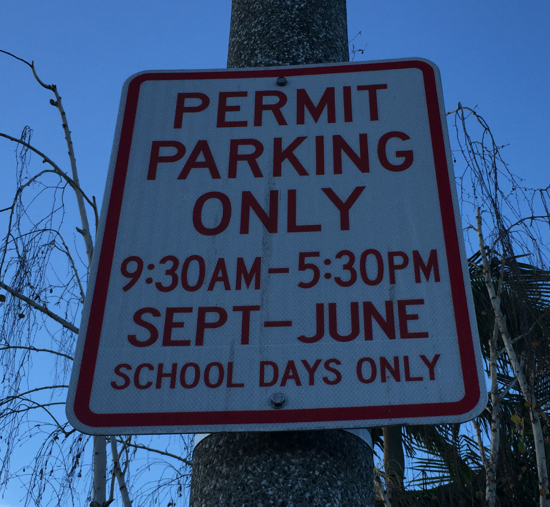
The Capistrano Unified School District has a growing student parking problem that must be addressed by working with individual Cities within the District to ensure that there is adequate FREE parking within a reasonable distance to campus for every student.
Capistrano Valley High School
Capistrano Valley High School has 600 spots for students to park. There are roughly 600 students per grade which means that most of the students holding a valid California driver license (Sophomores, Juniors and Seniors) will not be able to park on campus.
Find out what's happening in Mission Viejofor free with the latest updates from Patch.
The situation wouldn’t be so bad if there were adequate off campus parking within a reasonable walking distance to the school. Many high schools in CUSD do not have public parking within walking distance to campus because on street parking during school hours has been banned on most public roads adjacent to CUSD campuses.
At Capistrano Valley High School, the situation has gotten so bad that students have resorted to paying daily parking fees at Saddleback Community College so that they only have a half mile walk to campus everyday. Saddleback charges a daily parking fee of $5.00 (that is $100 per month, and almost $1,000 per school year) for a single student. Source: http://www.saddleback.edu/spo/fees
Find out what's happening in Mission Viejofor free with the latest updates from Patch.
The parking problem raises several legal issues that need to be considered.
Students are entitled to a Free and Equal Public Education
The Free School Guarantee, Article IX of the California Constitution requires the State of California to provide a FREE and EQUAL education to every student. California’s compulsory education law (Education Code Section 48200) requires all children between the ages of six and eighteen years of age to attend full time school. The question becomes how can the State mandate school attendance without providing adequate facilities? How can the District charge a fee for some students to have the “privilege” of parking on campus, and deny others any reasonable place to park?
Is It Legal For Private Housing Communities To Control Public Road Ways?
Public roads are paid for and maintained by taxpayers. Do Private Housing Communities have the right to prevent taxpayers from using public’s roadways?
In 2007, Coronado Homes, a community adjacent to Capistrano Valley High School requested a “No Stopping or Parking Except by Permits on School Days” restriction. Their goal was to eliminate school traffic related to the existing drop-off/pick-up activities at the Oso Rojo pedestrian easement at the back of CVHS without closing the gate to the students who lived in the community from walking to school (creating a residents only access).
The City hired traffic consultants Fehr and Peers to study traffic and pedistrian activity at Osso Rojo and Mirar Vista. See: City of Mission Viejo Planning and Transportation Commission Staff Report dated June 5th, 2007http://ibobs.org/reading/TrafficStudy_20070611.pdf
The City of Mission Viejo granted the homeowners a “No Parking Except by Permit” restriction on Oso Rojo Lane, La Quilla Lane, De La Luna Drive, Consuelo Place, Boleda Drive and Olivia Place.
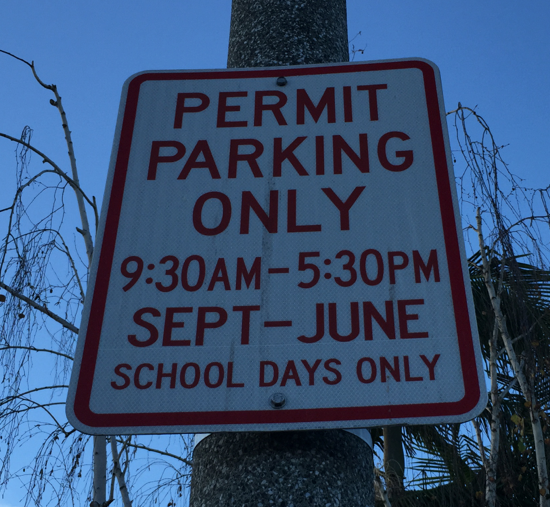
These roads are public roads, built and maintained by taxpayers. Homeowners inn Coronado Homes pay around $6.00 per resident for the privilege of controlling public street parking for their sole benefit. Was the City Council within the law to grant private citizens control over a public roadway?
Is It Legal For Public Schools To Profit From Student Parking Fees?
California Law AB 1575 Prevents Public Schools From Charging Students Illegal Fees To Participate In What Is Suppose To Be A “FREE” Public Education
More information about the “Free School Guarantee” and the legality of specific type of fees see:
http://www.cde.ca.gov/re/lr/fm/
http://wwwstatic.kern.org/gems/fcmat/StudentfeesguidelinesTulareC.pdf
“Assembly Bill 1575 ensures the ‘free schools’ guarantee is applied equally to all children in our state and remains a meaningful protection in our Constitution.” Author of the bill, Assemblyman Ricardo Lara of Bell Gardens http://www.leginfo.ca.gov/pub/11-12/bill/asm/ab_1551-1600/ab_1575_bill_20120929_chaptered.pdf
A Public Records Request shows that the Capistrano Unified School District collected $337,225 in illegal parking fees in 2013-14 and is on track to collect over half a million dollars in illegal parking fees in 2014-15. 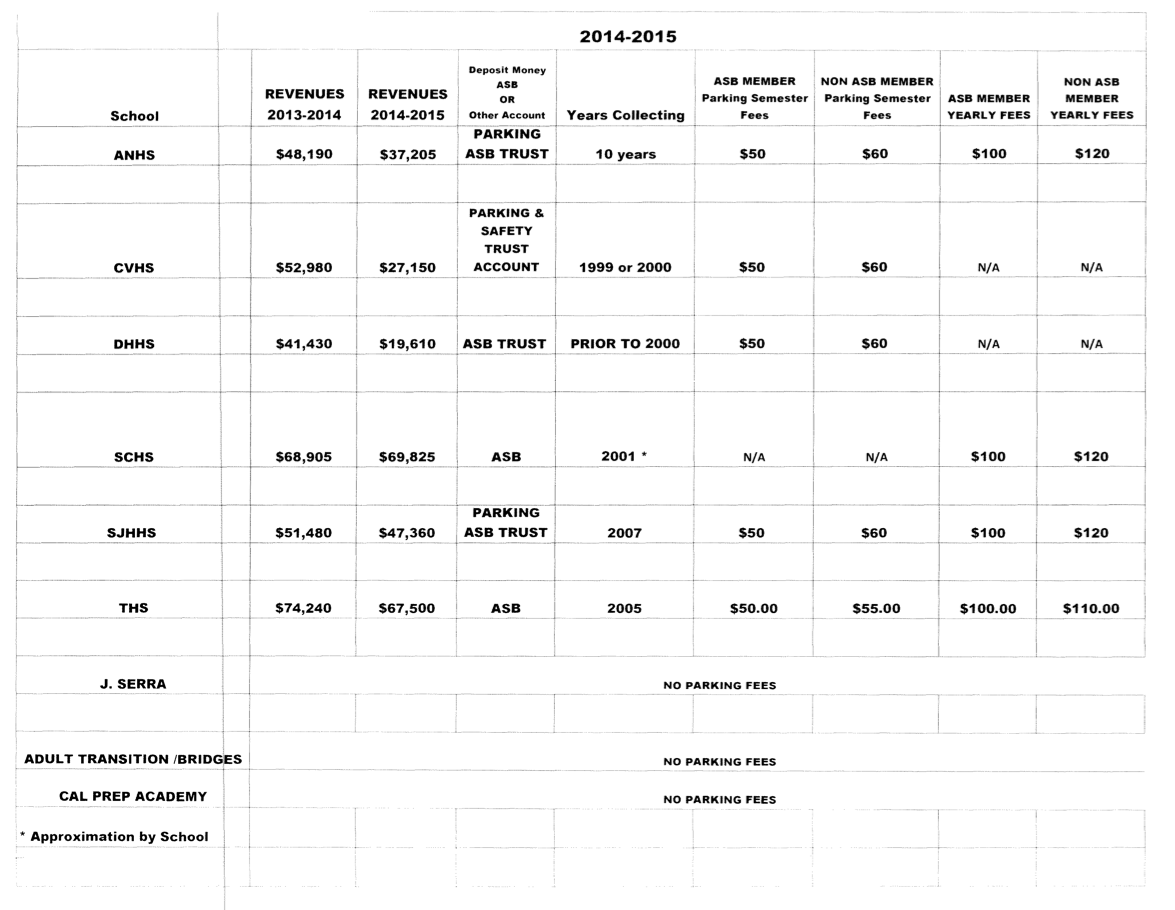 Why School Districts Do Not Have The Legal Authority To Charge Students A Fee To Park On Campus:
1. California Education Code prohibits schools from charging students a fee unless the fee is specifically authorized by law.
California Code of Regulations, Article 3. Privileges of Pupils. § 350. Fees Not Permitted.
“A pupil enrolled in a school shall not be required to pay any fee, deposit, or other charge not specifically authorized by law.”
Source: https://law.resource.org/pub/us/ccr/gov.ca.oal.title05.html
Capistrano Unified School District sites California Vehicle Code § 2113 as the law that authorizes the District to charge students a fee to park on campus.
”(g) A public agency, including, but not limited to, the Regents of the University of California and the Trustees of the California State University, may adopt rules or regulations to restrict, or specify the conditions for, the use of bicycles, motorized bicycles, skateboards, and roller skates on public property under the jurisdiction of that agency.”
Source: http://www.dmv.ca.gov/portal/dmv/detail/pubs/vctop/vc/d11/c1/a3/21113
California Vehicle Code § 2113 gives School Districts the authority to establish “rules and regulations” governing parking; it does not specifically give Districts the authority to “charge fees” for parking.
2. The Equal Protection Clause of the 14th amendment of the U.S. Constitution prohibits states from denying any person within its jurisdiction the equal protection of the laws.
- Only students at certain schools are required to pay a fee to park on campus. It should be noted that Adult students are not charged. Students at J.Serra are not charged. Visitors to campus are not charged. Employees are not charged.
- The fees that are charged are different at each school.
- The “Privilege” of parking on campus is based on a students academic performance. Under Capistrano Unified’s current practice, students have to maintain a certain grade in order to receive the “privilege” of parking on campus.
3. California Education Code § 49011 (4) Prohibits School Districts from offering “privileges” to students in exchange for money.
49011. (a) A pupil enrolled in a public school shall not be required to pay a pupil fee for participation in an educational activity.
(4) A school district or school shall not offer course credit or privileges related to educational activities in exchange for money or donations of goods or services from a pupil or a pupil’s parents or guardians, and a school district or school shall not remove course credit or privileges related to educational activities, or otherwise discriminate against a pupil, because the pupil or the pupil’s parents or guardians did not or will not provide money or donations of goods or services to the school district or school.
Source: http://www.leginfo.ca.gov/cgi-bin/displaycode?section=edc&group=49001-50000&file=49010-49013
The District’s current practice is to offer the “Privilege” of parking on campus for a fee which is a violation of California Education Code § 49011 (4).
4. Taxpayer Funded FacilitiesSchool Property is paid for by taxpayers for the benefit of students.
It is unconscionable that District employees, certain students and visitors are allowed to park on campus for free while certain students are not.
5. Punishing Students by revoking parking Privileges is morally and ethically wrong.
When a student looses the privilege of parking on campus because of poor academic performance it exposes that particular student as being “academically challenged”. That brings up right to privacy issues. To add insult to injury, students who’s permits are being revoked as a result of poor academic performance are charged an additional processing fee to revoke the permit.