Neighbor News
TNR Feral Cat Volunteer Meeting on November 16, 2014 at 3:00PM
TNR Feral Cat Volunteer Meeting at Pasadena Humane Society on November 16, 2014 at 3:00PM
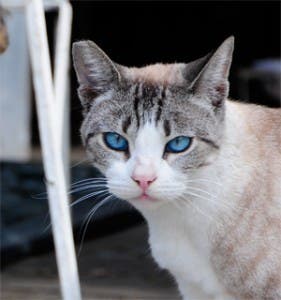
What: Pasadena TNR Volunteer Group Meeting
When: Sunday, November 16, 2014 @ 3:00 PM
Where: Pasadena Humane Society Board Room
Pasadena Humane Society has covered Monrovia since January 1, 2014
RSVP: Please RSVP to Gabbi Banovac if you can attend the meeting
Find out what's happening in Monroviafor free with the latest updates from Patch.
Email: misskittygabs@yahoo.com
DIscussing: The feral cat issues within our communities and volunteering to help curb the issue by using TNR available to us through Pasadena Humane Society. So what are you waiting for? It’s time to TNR!
Find out what's happening in Monroviafor free with the latest updates from Patch.
What is TNR? - Trap-Neuter-Return, or “TNR” for short, is the humane approach to controlling feral cat overpopulation. It’s a community-based program that involves concerned citizens like you trapping free-roaming cats in your neighborhood, bringing them to Pasadena Humane Society to get them spayed or neutered, and then returning the cats to the exact location where you trapped them so they can live out the rest of their natural lives, ideally with a caregiver also providing food, water and shelter for them.
There exists in the Los Angeles area a very large population of homeless stray and feral cats. San Gabriel Valley & San Pedro were just named as having the biggest problem and it’s growing daily. Given their strong survival capabilities and prolific breeding, if nothing is done, this population will simply continue to grow. If the population is left unchecked, it will only lead to more and more cats living in unmanaged colonies, a decrease in public tolerance of homeless cats, and increased pressure on the environment, animal control agencies and our society as a whole.
Trap and remove doesn’t work.
The old approach to controlling free-roaming cats was repeated extermination attempts. Capturing feral cats and turning them in to animal shelters, where they will be killed, may temporarily reduce their numbers, but this doesn’t solve the problem for long. Cats are living there in the environment because of two main reasons: 1) there is a food source (intended or not) and 2) there is some sort of shelter. When cats are removed from a location, it creates a “vacuum” effect — meaning the surrounding cats can sense it and they breed rapidly to fill in the gap, plus new cats move in to take advantage of the natural food and shelter sources. This vacuum effect is well documented. Trapping and removing cats often results in having even more unsterilized cats in the location than when you started. Catch and kill is very costly, doesn’t work, and ultimately it’s inhumane.
Trap-Neuter-Return is a proven and humane solution.
On the other hand, Trap-Neuter-Return programs are a very successful method of decreasing feral cat populations. TNR programs succeed at the least cost to the public and provide the best possible life for the cats themselves.
Are you feeding outdoor cats? You’ve also got to fix them!
Providing food, water and shelter for outdoor cats is important, but it’s also equally important to make sure all of the cats in the group or colony are spayed and neutered. If not, your small colony of today will soon be a very large colony tomorrow! Cat colonies can quickly quadruple in size in a very short period of time, as cats can have two to three litters per year of five to six kittens each. And then those kittens can become pregnant at about six months of age…and so the cycle continues. Spaying and neutering the cats will not only stop the breeding cycle, but it will also eliminate problematic behaviors such as howling, fighting and spraying.
WHAT IS A FERAL CAT?
A feral cat is an outdoor, free-roaming cat who has never been socialized to humans and is living in a “wild” state. This could be a formerly domestic cat who has been abandoned and has reverted back to a “wild” state, or a cat who has been born on the streets and has never had any contact or interaction with humans. (Even though feral cats are wild, they should not be confused with “wildcats” like lynx or bobcats, who are not domestic animals.)
Feral cats are not handleable. They look like regular domestic house-cats, but because they have never been socialized, they are very fearful and distrustful of humans. Generally they come out at dusk or at night. Some arch their backs and hiss and show aggression, others just avoid eye contact and run. With true ferals, you can’t pick them up or handle them without getting extremely bit or scratched. Very often you can’t even get close to them.
Feral cats are different from friendly stray cats. Stray cats are former pets who have either been abandoned or “strayed” from home and got lost. These cats used to be cared for by an owner, but are now trying to survive on their own on the streets. Stray cats are generally tame, friendly and handleable, although they still may be skittish or frightened and run away from people. Generally, though, stray cats exhibit temperaments similar to pet cats, can be picked up and touched easily, and can be rescued off the streets and re-adopted into homes again.
Both feral cats and stray cats are un-owned. These are the cats out in our streets, alleys, yards and parking lots. They are considered un-owned cats or “community cats.” Ideally, with a little work and care, friendly stray cats can be re-adopted into homes. Feral cats, however, live their lives outside on the streets of our communities. The outdoors IS a feral cat’s home.
Feral kittens are kittens who have been born to a feral or stray mother. Feral kittens can generally be tamed down and adopted into homes, but only if they are socialized within the first couple months of their lives. A kitten around 6-8 weeks old may take just a day or two to tame down. Normally kittens under 12 weeks of age can be easily tamed with a little time and attention, but the older they get, the harder it becomes. Even then, some kittens never quite tame down. If they are not handled at an early age, they will remain feral and therefore unadoptable.
Feral cats are usually found living in large groups called feral colonies. Feral colonies usually spring up when there is shelter and a food source present in the environment. Sometimes cats will live alone, but most form feral colonies.