Community Corner
A Notorious Bandit's Final Exploits Took Place Near La Crescenta
In April 1874, legendary California outlaw Tiburcio Vásquez was pursued through the mountains above La Crescenta by a Los Angeles sheriff's posse after a robbery in present-day Monterey Park.
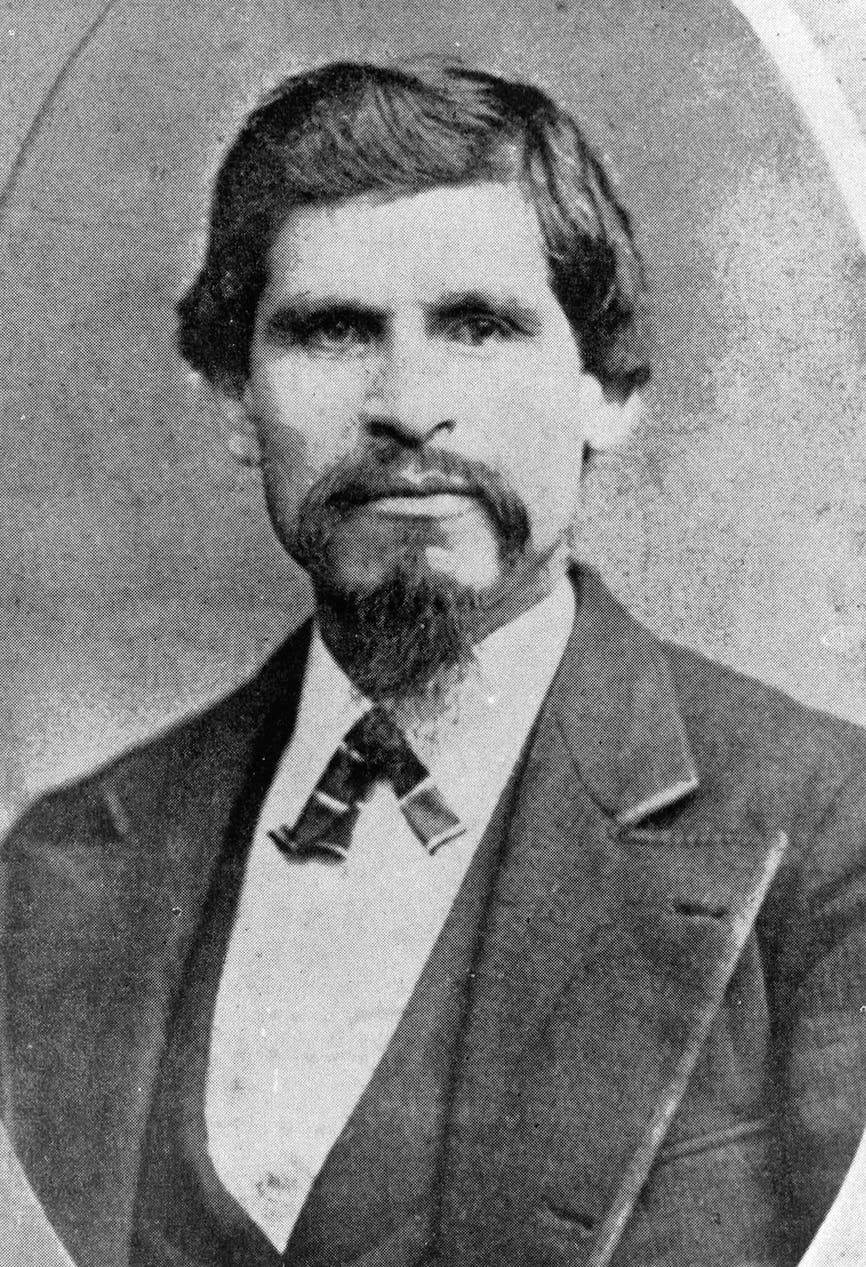
In late March 1874 Mike Madigan, an Irish-American tax collector, was riding his horse through Verdugo Canyon when he spotted a lone man on horseback. Approaching the man, Madigan asked if he had paid his poll tax. The man replied that he hadn't, but would gladly pay if Madigan would write him a receipt. Madigan obliged and withdrew a ledger, asking the stranger's name. "Tiburcio Vásquez," the man replied.
Madigan was shocked. If the man was indeed who he claimed to be, then Madigan had just crossed paths with the most wanted man in California, who had a $1000 price on his head for the murder of three men in Tres Pinos. Surprisingly, Vásquez paid the two dollar tax obligingly and rode off on his horse, leaving Madigan unharmed.
By May of that year Vásquez would be in police custody, but over the next few weeks, he pulled off some of the most daring robberies of his career and was pursued for days through the Arroyo Seco and the nearby San Gabriels, giving rise to local legends that would endure for decades—including reports of buried treasure.
Find out what's happening in Montrose-La Crescentafor free with the latest updates from Patch.
According to local historian Mike Lawler, one of the odder legends surrounding Vásquez that sprung up over the years was that he had used the Le Mesnager Barn in as a hideout. "That myth actually culminated in a plaque being placed at the barn back in the '70s stating that it was his hideout," explained Lawler. (This conveniently ignored the fact that the barn wasn't built until 1915, and Vásquez was executed in 1875.) "When the city began restoring the park and barn a few years ago, the embarrassing plaque was quietly put in storage."
Another legend endured that Vásquez had hidden treasure somewhere in the San Gabriel Valley while being pursued by a sheriff's posse. As late as 1952, a Los Angeles Times article reported on a new subdivision being built in Monterey Park, where Vásquez made one of his final robberies. Developers were genuinely excited that bulldozers might uncover stolen loot Vásquez had hidden.
Find out what's happening in Montrose-La Crescentafor free with the latest updates from Patch.
Several reports of questionable validity over the years involved the discovery of artifacts purportedly belonging to Vásquez.
In 1883, Phil Begue, a Tujunga resident who later became an early forest ranger, claimed to have found a pistol and saddle with the initials "T.V." carved into them. In the 1920s, La Crescenta resident Harold Dawson came across two rusted guns in the foothills and felt sure they had been discarded by Vásquez and his cohorts years earlier.
Aside from Madigan the tax collector, and the posse that pursued Vásquez, few ever crossed paths with the bandit when he was in the Crescenta Valley. There were scarcely any settlers present at the time, though one early pioneer, Samuel Hunter, who settled in the Glendale area in the 1850s claimed to have run across Vásquez on several occasions.
"I've seen him play poker many a night at Elizabeth Lake when I was ranching there along about 1868," recalled Hunter in a 1922 interview published in History of Glendale and Vicinity by John Calvin Sherer. "They were not very exciting times ... He did not commit many depredations in this section, mostly working up north."
The true story is this: in April 1874, Vásquez and several associates robbed an Italian rancher, Alessandro Repetto, who lived in the area that later became Monterey Park. Escaping with more than $500, they also stole two shotguns and a spyglass before fleeing up the Arroyo Seco, with a posse in hot pursuit.
For the next several days, they were pursued through the mountains, eventually coming out in Big Tujunga Canyon in modern-day Tujunga. Vásquez's gang split up, and Vásquez rode to the San Fernando Mission where he found refuge with former California state senator Andrés Pico.
His exploits lasted about another month, but on May 14th, he was arrested by Los Angeles Sheriff William R. Rowland, and was transported to Northern California, where he stood trial and was executed in San Jose in 1875.
Though he probably never set foot in La Crescenta, Vásquez nevertheless left his a strong mythical impression on the region, and local fascination with him continues to this day.