Community Corner
What to do if Your Child Has Lice
Unfortunately, lice are sometimes a childhood rite of passage. Taking these preventative steps now is key to avoiding an outbreak in your home.
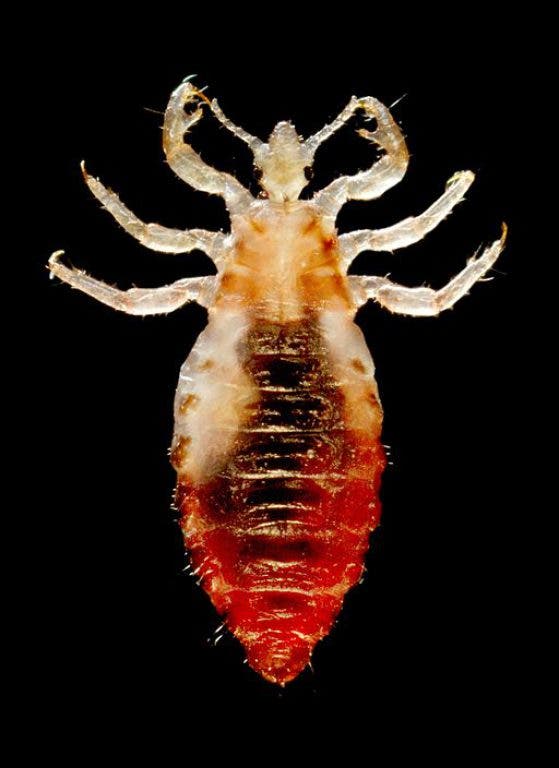
First, here are some lice facts:
- Head lice are parasitic insects that live in the hair and scalp of humans. They do not infect animals. The scientific name (for your next Jeopardy Tournament) is Pediculus humanus capitis.
- Head lice develop in three forms: nits, nymphs, and adults.
- Nits: Nits are eggs. They are hard to see and are often mistaken for dandruff or lint. However, unlike dandruff or lint, nits are found firmly attached to the hair shaft. They are oval and usually yellow to white. Nits take about one week to hatch.
- Nymphs: Nits hatch into nymphs. Nymphs are immature adult head lice. Nymphs mature into adults about seven days after hatching.
- Adults: An adult louse is about the size of a sesame seed, has six legs, and is tan to grayish-white. Adult lice can live up to 30 days on a person's head. If a louse falls off a person, it dies within two days. Two days doesn’t quite seem short enough for us.
- Head lice do not jump or fly, and cannot be transmitted from pets. They literally crawl from one person to another. Children spread lice easily between themselves because close contact is common during recess, play dates and classroom activities. Also, children often share hair accessories, hats, and sports helmets. One can even become infested by lying on a bed, couch, pillow, carpet, or stuffed animal that has been contaminated.
Here’s What to Do: The most important thing to do right now is to prevent your child from obtaining lice from a friend at school.
1. Teach these habits to your child:
Find out what's happening in Montrose-La Crescentafor free with the latest updates from Patch.
- Don't Borrow (or Lend) Anything That Will Touch the Hair-- This includes caps, hats, helmets, brushes, combs, headbands or hair clips. Also avoid sharing towels that are used to dry hair.
- Keep Your Hair Clean-- Hair should be washed regularly with conditioner. Soft, smooth hair can sometimes be too slippery for the nits.
- Don't Touch Anyone Else's Hair-- Don’t play with friends' hair--not even for beauty or hair style makeovers.
- Use your own Brush and Comb-- Now would be a good idea to purchase personal brushes and combs for each family member.
- Use a Special Shampoo-- Consider using a shampoo with one of these oils: tea tree, thyme, lavender, aniseed, sassafras, rosemary, coconut or olive. Spraying your bed linens with tea tree oil and water is another way to prevent lice.
2. Check Your Child’s Hair for Lice on a Regular Basis
- Watch for signs of lice, such as scalp scratching.
- Even in the absence of scratching, check your child's hair regularly.
- If you see an infestation, act quickly for treatment and also be sure to notify your school so recurrences will be minimized.
3. Treat Quickly when you see signs of Lice
Find out what's happening in Montrose-La Crescentafor free with the latest updates from Patch.
- We strongly recommend: **Combing: a safe, non-toxic method of lice control
- We recommend: **Hair-Clean-1-2-3®: This is a mixture of anise oil (flavoring in black licorice), coconut oil and ylang ylang oil.
- We recommend: **Pyrethrins (permethrin): Pyrethrin products currently on the market are NIX®, RID®, A-200®, Clear® and store brands with similar active ingredients. These products are very safe.
- We do NOT recommend:**Ovide®: The active ingredient in this lotion is malathion, an insecticide. It is flammable, a toxin and supposed to stay on the scalp for up to 12 hours. Flammable, toxin, child? Three words we generally avoid using in the same sentence.
- We do NOT recommend:**Aerosols: These are sprays intended to be sprayed on surfaces, but they are insecticides and thus contribute to indoor pollution. Frequent vacuuming is a much safer alternative.
- We do not recommend: Remedies such as cooking oil, mayonnaise, vinegar and other combinations as studies have shown these treatments are ineffective at killing lice.
4. Try not to spend the rest of your day today scratching all over—Seriously, just reading about creepy crawly bugs is enough to you make you think you have them on you… Trust us, our med school text books had us thinking we had a new disease every day. So… we apologize in advance if this article has given you the creepies and has you scratching your head ALL day.
Your Neighborhood Docs,
Drs. Alexis and Madhu Anvekar
Do you have a medical conundrum? Every week, local doctors will answer a medical question. Submit your question in the comment box!