Business & Tech
Is Mountain View Saying Goodbye to the Plastic Bag?
Some say, the organization Green Mountain View's 'Bring Your Own Bag' campaign is just a precursor to the City banning the use of plastic bags in grocery stores altogether.




Plastic—it surrounds us. It’s in the water bottles we drink from, the containers we store our food in, the pacifiers our babies suck on.
It’s also in the bags we carry our groceries in—for now. If the organization Green Mountain View gets its way, that won’t be true for long.
Did You Remember to Bring Your Reusable Bag?
Find out what's happening in Mountain Viewfor free with the latest updates from Patch.
Through research and advocacy, the volunteer members of Green Mountain View (GMV)–a citizen-run organization that aims to educate Mountain View residents, businesses and public officials about better practices for a more sustainable future and healthier planet–work to encourage the City Council to set policies for a “greener” Mountain View.
Ellen Lee Gibson, a volunteer coordinator for GMV, said GMV wants to partner with the City of Mountain View’s Public Works Department on the effort to create a "Bring Your Own Bag"campaign.
Find out what's happening in Mountain Viewfor free with the latest updates from Patch.
“We are trying to encourage the local grocery stores, and eventually retail stores and pharmacies as well, to come on board with the campaign and put up signs all over the stores and in the parking lots, reminding customers to bring their own bags,” Gibson explained.
Currently, GMV is in the early stages of its campaign, which involves reaching out to grocery stores to try and gain their support and their agreement to participate.
“Right now, what I’ve been doing as the volunteer coordinator, is to gather citizens of Mountain View to go to stores and talk to managers and ask them if they are willing to put on a campaign in their store,” Gibson said. “Then, hopefully, in the next month or two, stores will begin their campaigns.”
Gibson said, once a store agrees to participate and hold a campaign, then GMV orders signs and other materials for the store to hang up, both inside and in the parking lots, reminding customers to bring in their own reusable bags. She also hopes employees will wear buttons bearing the question, “Did You Remember to Bring Your Reusable Bag?”
“This campaign is all about changing behavior,” said Gibson.
The Evils of Plastic
Gibson said, there are many reasons to hate plastic.
“Plastic never biodegrades. It photodegrades, meaning it just breaks up into tiny little pieces,” she said, and further explained that those little pieces eventually end up in the ocean, are eaten by fish, and then we buy that fish at a market and eat it.
“So, basically, we’re eating the plastic—and the problem with that is, there’s a lot of chemicals in plastic,” she said. “Since I started down this road, I’ve learned a lot of disturbing things about plastic.”
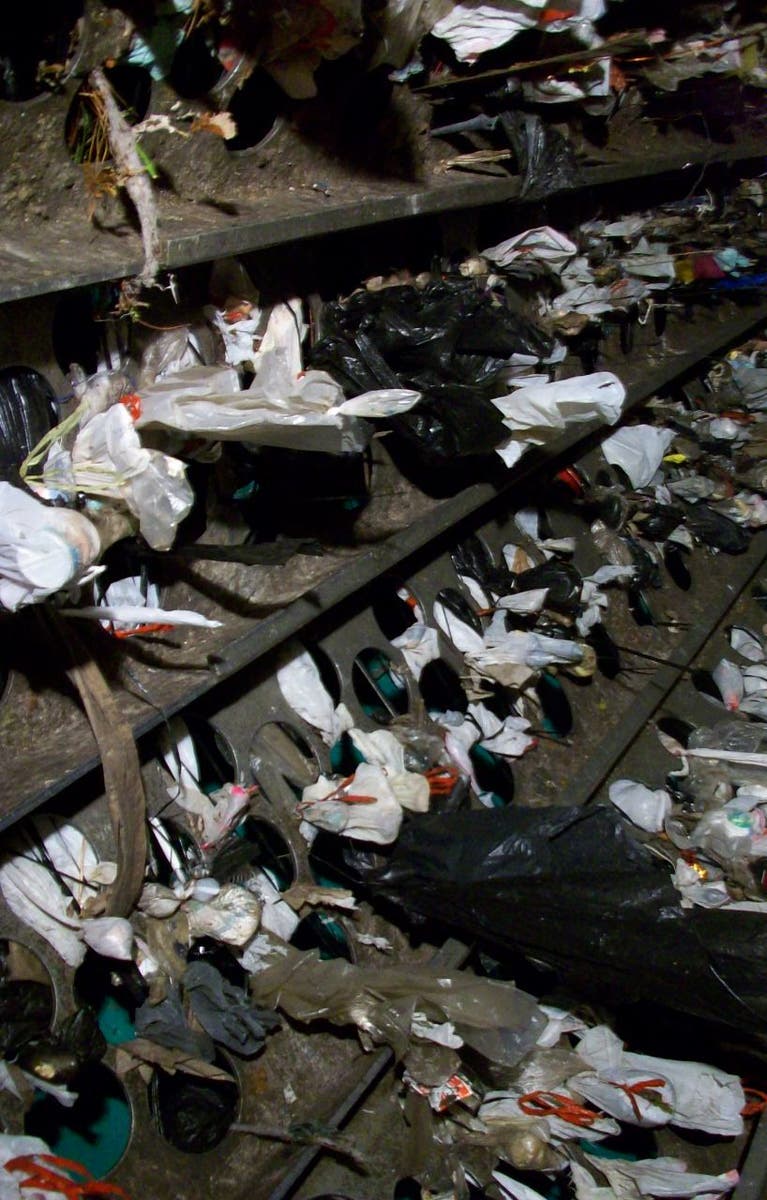
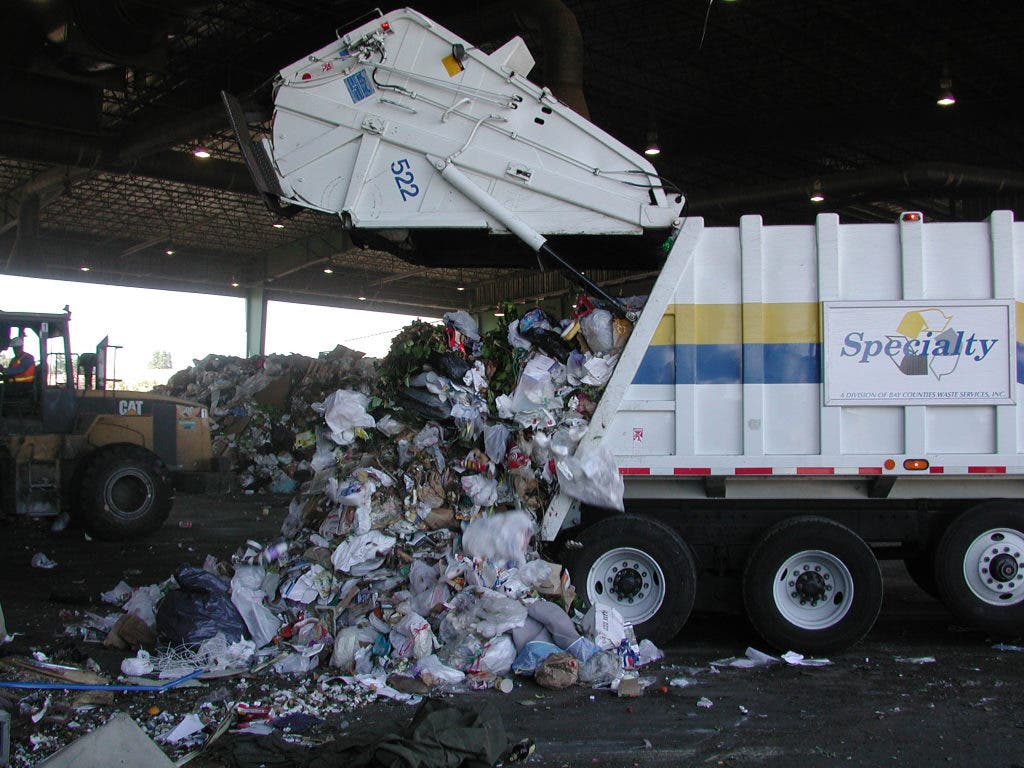
Plastic is not only bad for our bodies and for the environment, but is bad for our cities as well, said John Pilger, a communications officer for the City of Sunnyvale, who spoke with Mountain View Patch recently about how plastic bags are causing damage to the sorting machines used by the recycling teams at the local SMaRT Station.
Pilger explained that plastic bags are almost impossible for the machines to sort, and end up getting stuck in the machines, constantly clogging them up. Pilger sent Mountain View Patch the photos that accompany this article, showing a large number of plastic bags stuck in the machine, versus a photo of what the machine should look like when it is operating smoothly, with no plastic bags.
Gibson further discussed how plastic water bottles are harmful to both our health and the environment, even when they are recycled.
“The problem with recycling is—yes, that’s better than throwing it out, but—if you start with a plastic with a lot of chemicals and harmful elements in it, as you keep recycling it over and over, it keeps getting worse, with downscaling of all the toxins,” she said. “You can tell sometimes—if you smell a piece of plastic and it smells like petrol, and smells pretty bad, that’s because it has been downscaled too many times.”
Gibson said, it’s a lot easier than people think for the chemicals in plastic water bottles to leak into our water and be drunk, or for the plastic in a food container to leak into our food, and be eaten.
She admitted that it can be very difficult to eliminate plastic from our everyday lives, but said there are small ways we, as a society, can start, such as by carrying reusable bags everywhere we go for our groceries and other purchases, and by carrying reusable water bottles with us, that are made from a material other than plastic.
“I have found it quite a challenge to rid plastics from every area of my life. They are everywhere,” she said. “So, it’s been quite an interesting journey, personally.”
Following Palo Alto’s Example
Gibson said GMV’s campaign is modeled after a similar campaign that took place in Palo Alto recently. There, the campaign started as an “encouragement” toward local shoppers to use reusable bags and for grocery stores to stop offering plastic bags to their customers. Eventually, though, the campaign led to a complete, city-wide ban on plastic bags in grocery stores.
Phil Bobel with the City of Palo Alto’s Public Works Department, said there were many reasons for Palo Alto to take such an action.
“We had been, for many years, trying to encourage people to use reusable bags, to cut down on waste in general, whether it be plastic bags or paper; to reduce that waste, and reduce that energy,” Bobel explained. “Then, a slightly different angle started to emerge as we found plastic bags in our creeks, in our bay, and a buildup of plastic particles in our ocean. That led us to take a slightly more dramatic action.”
Bobel said, those discoveries led to the city-wide ban.
“With that kind of buildup in our ecosystem, we decided that action [of using plastic bags] should go, immediately.”
The City decided that grocery stores was the right place to start.
“So, we took that action, to eliminate them,” he said.
One unforeseen side affect, he said, is that many stores have simply been switching to offering paper bags, instead.
“So, we are considering banning those, too,” he said. “At this time, that action is still under consideration.”
Will Mountain View Ban Plastic Bags Too?
Does all of this mean Mountain View will eventually take similar action? Gibson said, it’s too early to tell, but that’s certainly where she would like the campaign to lead.
“We really need to stop using so much plastic—because, the fact is, we live in this throw-away society,” she said.
Lori Topley from the City of Mountain View Public Works Department said that actions similar to Palo Alto’s are not being considered at this time and are not a current goal for the City of Mountain View.
However, Topley said, she would certainly like to see residents’ dependence on plastic bags lessened—both from an environmental perspective, as well as a financial one, since dispensing of used plastic bags and sorting of them for recycling is a costly and inefficient process for the City.
“It’s not a good use of the world’s resources, from a waste and resource protection perspective, to use something once and then throw it away,” she said. “So, we would like people to bring their own bags and reuse them, again and again.
What would such an action mean for businesses in Mountain View?
Surprisingly, few around the city would comment on the issue—representatives from grocery store chains like Nob Hill, Safeway and Trader Joe’s did not return calls for comment, and Oscar Garcia, CEO of the Mountain View Chamber of Commerce, replied only to say that the Chamber would not take a position on the issue at this time.
However, not all businesses are against the idea. Michael Tucker, president of Books Inc., which has locations all across California including in and , said the company is very receptive to the idea, and in fact, is already trying to move in that direction all on its own.
Tucker said, at this time, Books Inc. employees do not offer customers plastic bags unless they ask for them, and offer customers reusable bags instead—at no cost to the customer.
“We’re trying to, at this point, rather than try to charge for them, just give them away,” he said.
Tucker said, although Books Inc. stores do still use plastic bags at this time, that their use has gone way down, and that they hope to, eventually, move completely to reusable bags, and be able to offer one for free to any customer that makes a purchase.
“So, we still use plastic, but less and less so,” he said. “Our customers are really on the cutting edge and really want to [support this effort.] So, just with public perception, our use has gone down about 30 percent.”
Right now, Tucker said Books Inc. is looking into different suppliers and cost models to find a way to make it financially feasible to be able to offer reusable bags exclusively to their customers, for no charge, with every purchase.
“Pricing on reusable bags varies so much from community to community, but pricing will go down on reusable bags as more and more businesses move to them,” he predicted.
As expected, the one thing that typically prevents more and more people from switching to reusable bags is that tricky memory of ours—remembering to carry them with us in our cars and to bring them into stores with us. Tucker said, he thinks if more and more cities and businesses stop the use of plastic bags, eventually, people will simply have to remember.
“I think when it becomes so inconvenient not to have your bag with you, more people will remember,” he predicted. “Hopefully, a dialogue such as this one will make more people aware and think about it.”
For more information, visit http://www.greenmountainview.org.
Get more local news delivered straight to your inbox. Sign up for free Patch newsletters and alerts.