Crime & Safety
L.A. Prosecutor Wants Parole Revoked For Santa Clara County's 'Pillowcase Rapist'
The serial rapist failed to comply with ankle-bracelet monitoring conditions, officials said. Defense attorney says his client simply forgot


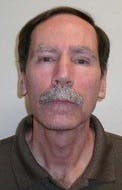

A convicted serial rapist took the stand Wednesday in Santa Clara County Superior Court where a prosecutor from Los Angeles argued that his parole should be revoked because he failed to fully charge his GPS ankle bracelet in September and January.
Christopher Evans Hubbart, 64, dubbed the “Pillowcase Rapist” and convicted of dozens of rapes in Southern California in the 1970s and San Francisco and Sunnyvale in the 1980s, is facing revocation of his parole for violating the terms of his conditional release to a small home in Lake Los Angeles in northeast Los Angeles County.
Hubbart, standing at 6 feet 4 inches with a gray mustache and wearing a black short-sleeve shirt and slacks, appeared in court in the custody of security guards and took the stand as the first witness for Los Angeles County Deputy District Attorney Karen Thorp.
Find out what's happening in Mountain Viewfor free with the latest updates from Patch.
Prosecutors in Los Angeles County argued that Hubbart should be sent back to a state mental hospital because he negligently permitted the battery that powers the GPS ankle bracelet tracking his movements to briefly run out twice, once in September and again in January.
Hubbart, who spent two terms in prison for forcible rape, forcible sodomy, sexual assault on a minor under 14, burglary and false imprisonment, has admitted to more than 100 rapes and had more than 50 known female victims on Los Angeles, San Bernardino, Riverside, San Francisco and Santa Clara counties, according to the Los Angeles County Sheriff’s Department.
Find out what's happening in Mountain Viewfor free with the latest updates from Patch.
He often stalked his victims alone at night, entering their residences and raping them after putting a pillowcase over their heads, according to the department.
- Previous:
- L.A. Doesn’t Want Santa Clara County’s ‘Pillowcase Rapist’
- Virus Behind Bars Delays Release of ‘Pillowcase Rapist’ in Los Angeles County
- ‘Pillowcase Rapist’ of Santa Clara County Ordered to Live In L.A. by Judge
After his release from prison in 1996, he was committed by the Santa Clara County District Attorney’s Office as a mental patient to Coalinga State Hospital. Hubbart remained in the hospital until 2014, when he was released after a Santa Clara County Superior Court judge ruled he could live under supervision in rural Los Angeles County despite opposition from some nearby residents.
Six members of the Little Rock AV Community Against Sexually Violent Predators, a community group opposing Hubbart’s release, traveled from Los Angeles County to attend Wednesday’s hearing.
Under questioning by Thorp, Hubbart testified that he had been living at the Lake Los Angeles house, with a secured perimeter linked to his GPS device and security guards working in shifts inside the home 24 hours a day, since July 7, 2014. Hubbart said that before he was released from the state hospital, he met with personnel from Liberty Healthcare Corp., the organization contracted by the state to supervise him, and reviewed a 16-page document listing the terms and conditions of his conditional release.
He said he received instructions on how to use his GPS ankle bracelet from his first regional coordinator with Liberty Healthcare. He was instructed to charge the bracelet, which his regional coordinator uses to remotely monitor his movements, twice a day and informed that he could face violating the terms of his release and even his parole if the battery was low on power and he failed to recharge it, he said. When the device’s light turned green, he knew that the bracelet was charged enough for him to unplug the device from an outlet, Hubbart testified.
If the bracelet vibrated, Hubbart said that meant he must charge the device immediately and he did plug the battery charger in for about an hour at a time.
Hubbart was later assigned a new regional coordinator, Timothy Fletcher, who he said explained the charging procedures, electrical perimeter at the house and boundaries where he could not cross without permission and the supervision of security guards.
Fletcher, assigned to oversee Hubbart last August, said he was employed by Liberty Healthcare since 2007 and his duties as regional coordinator include planning Hubbart’s day-to-day activities, facilitating Hubbart’s community safety team and setting up the GPS tracking device. On Sept. 27, 2014, a low battery alert went off on the ankle bracelet at 11:20 a.m., but Hubbart claimed he was unaware of it until 30 minutes later when he received a phone call from a regional coordinator filling in for Fletcher, who was on vacation at the time. The GPS device then went dead, meaning that he could not be tracked.
Hubbart, who charged the device after Liberty Healthcare notified him, said at the time he didn’t know how to give the device a full charge. Two days later, he received a letter from Liberty Healthcare on the violation and more details on how to use the device, Thorp said.
Fletcher said that Hubbart apologized, said that he “forgot” to charge it and that he believed him. Fletcher said the battery should last for at least 10 to 12 hours, and some of his clients have had problems charging the device. Hubbart said he was restricted for one week after the violation and was limited to going only to necessary places such as group therapy and the grocery store. Thorp pointed out that despite the first violation, Hubbart received a second one for again permitting his battery to fail on the morning of Jan. 6, after he was notified that it was low on power.
The device alerts the user with a vibration when the battery life is ending, but in both instances, Hubbart claimed he didn’t feel it, possibly, he said, because he was wearing work boots while doing some landscaping outside of his home. He talked over the phone with Fletcher, who told him the importance of keeping the device charged, and received another one-week restriction.
Hubbart’s lawyer, Santa Clara County Public Defender Christopher Yuen, in his cross-examination of his client, established that Hubbart had not received any additional violations since the one on Jan. 6. It was difficult to determine if the GPS device was fully or partially charged because it had no indicator showing the level of power that was left, Yuen said.
Yuen’s first defense witness was John Perry, founder of Sunset Protective Services, a security company that contracted with Liberty Healthcare to provide 24-hour supervision over Hubbart. Perry said two security guards were always present at Hubbart’s home and Perry personally worked some shifts. He said that Hubbart was “considerate” and is not the same person he was when he committed the crimes years ago.
Sunset Protective Services was relieved of its contract from Liberty Healthcare because of problems related to staffing and from guards being harassed by protesters outside the home, Perry said.
During an afternoon break in the hearing, Norma Valentin, part of the group from Antelope Valley in Los Angeles County against Hubbart’s release, said she still considers him to be a danger to the community.
Valentin said she has been among the protesters who have demonstrated outside Hubbart’s home since he was released in July. She said Hubbart appears to be smug and she has seen his guards sleeping in their cars while on duty.
The guards have even thrown rocks at protesters and in one case “antagonized” a protester with special needs, Valentin said.
She hopes that Hubbart’s probation is revoked because it would be a “big win” for members of the community who have had to live with a sexually violent predator near their homes.
Another defense witness, Alan Stillman, executive director of Liberty Healthcare’s conditional release program, said he has been involved in six probation revocation cases and thinks Hubbart’s probation shouldn’t be revoked based on the two infractions with the tracking device.
Hubbart is the most closely supervised sexually violent predator, or SVP, in the state, Stillman said. Hubbart was the first person to be committed under the Sexually Violent Predator law, according to the Los Angeles County Sheriff’s Department. Stillman also said he was concerned that Hubbart might be lying about whether or not he charged the GPS tracking device.
Thorp then had another prosecution witness, Jose Cisneros, an investigator with the Los Angeles County District Attorney’s Office assigned to Hubbart’s case, take the stand. Cisneros said he was suspicious of Hubbart’s first violation because he saw it as Hubbart’s attempt at testing the system.
After the public hearing ended, Santa Clara County Superior Court Judge Richard Loftus said that the case would enter closed session for discussion about Hubbart’s medical treatment. There has been no date set for when Loftus will rule on the prosecution’s request to revoke Hubbart’s parole.
--Bay City News
Also on Patch:
- Peninsula Man Arrested As Suspect Accused Of Groping Child In Market
- Two Arrested After Shots Fired At Police, Pursuit Across Dumbarton Bridge
- Summer Arts Camp for Teen Girls in Silicon Valley
- $10,000 Fines For Water Wasters? Governor Proposes Drastic Measures Amid Drought
- Your Travel Expert On: Salzburg, Austria
- Gilroy is Selling Tickets for Art and Wine Stroll
- California Sets Aggressive New Greenhouse Reduction Target
Get more local news delivered straight to your inbox. Sign up for free Patch newsletters and alerts.