Community Corner
Shark Watch: Lurking With Leopard Sharks
Part of a series on the sharks of the San Francisco Bay and the Pacific Ocean by Shark Stewards


Like many people who dive, I love sharks, but maybe I love sharks just a little more than most. I like to dive with sharks, swim with sharks and photograph sharks. I also commit most of my waking time working to protect sharks and throughShark Stewards, I do a lot of education and public speaking about sharks. Invariably I am asked if I have ever been bitten by a shark (yes, but that’s another story.)
Another common question is: “What is my favorite shark?” It is it seems like a kind of Sophie’s choice: I love them all. But there is a shark I have a soft spot and that’s the leopard shark, the first wild shark I ever observed. Growing up surfing in Southern California I was exposed to fish and whales and the denizens of the kelp forest early on, but when I saw my first leopard shark swim beneath my feet I was mesmerized. This was in the 70s during the hysteria created by JAWS, when surfers were afraid to take a bath, much less go out where the Great White Menace lurked to gobble us whole.
A surfer shouted an alert, “Shark!” others scrambled away in panic. I followed the shark until it slithered into the shadows and out of sight. Thus began my fascination with sharks.Leopard Shark Aggregation
The leopard shark, Triakis semifasciata, is easily recognized by its elongate body and bluntly rounded snout, and by the black spots and cross bars across a silver or brown body giving its name. Belonging to the Hound shark family, these sharks range from Mazatlan, Mexico north to Oregon, and frequent estuaries like the San Francisco Bay. These sharks also range along the Pacific coastline generally in depths less than 5 meters, living in rocky habitat, eelgrass beds, kelp forests and sandy bays, but can also be found in water less than 1 meter. During the spring through fall, large numbers may be found in San Francisco and Monterey Bays.
Find out what's happening in Mountain Viewfor free with the latest updates from Patch.
The leopard shark eats a variety of fish like herring and anchovies, and invertebrates like fatty innkeeper worms, squid and crabs. Not considered dangerous, the teeth are like coarse sandpaper, good for crushing their prey. One of my quests has been to photograph these sharks up close, but they are very shy and I end up with a picture of a shark swimming away. Shark tails.
Filming in the Bay provides shadowy images at best, so each year I visit La Jolla Cove where large groups aggregate in the clear warm waters and I can revisit what feel like my family. Leopard shark females move into other areas along the coast where they can be observed and birth unharassed like at Catalina Island, Elkhorn Slough, and in the San Francisco Bay. Large aggregations occur in the summer months in the bay, where females seek shallow waters to gestate and give birth. These sharks are ovoviviparous, hatching eggs internally and giving live birth to 1-37 pups. Mating occurs soon afterwards and the gestation is estimated to be about a year.
Find out what's happening in Mountain Viewfor free with the latest updates from Patch.
Recreational fishermen regularly catch these sharks in the Bay and along the Pacific shore. This year an angler applied for world record for a female caught off San Diego, weighing in at 51 pounds 3 ounces (or 23.22 kg ) and 72 inches. TheDepartment of Fish and Wildlife lists the largest recorded leopard shark at 7 feet and 70 pounds.
Like many species of west coast shark, leopard sharks were fished commercially in California during the 1980s with over 100,000 pounds caught annually, until the population crashed. Like other species of shark, leopard sharks were listed as “shark” so accurate landing data are difficult to compile. New rules and less commercial pressure have allowed the population to return to a healthy level and these are one of our most abundant sharks along our coastline.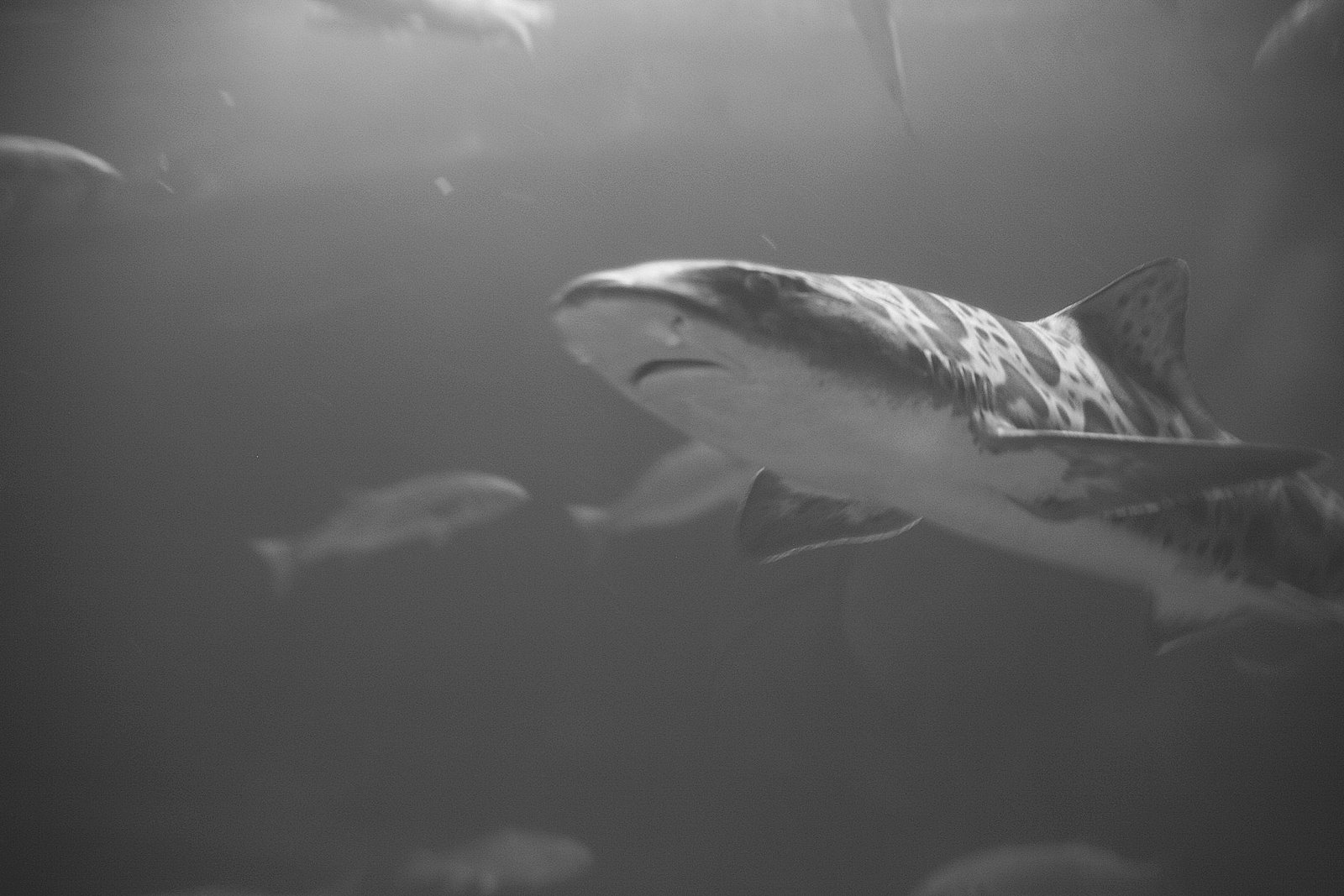
Considered a good eating fish, the Department of Fish and Wildlife estimates over 50,000 sharks are caught by California recreational fishermen annually. Like many predators, the toxin methylmercury bio-accumulates in the flesh of these sharks. In the San Francisco Bay the Office of Environmental Health Hazard Assessment (OEHHA) recommends women ages 18-45 and children 1-17, who are most sensitive to mercury, should avoid eating San Francisco Bay sharks.
Leopard sharks are also popular among aquarists. A poaching ring lead by a Reverend of the Ocean Church in San Leandro (part of the Unification Church) was busted by NOAA in 2007, where over 10,000 Bay leopard sharks had been illegally caught and sold over 13 years to aquarists.
Hear the NPR story. The good Reverend received a year in jail and over 1.5 million dollars were negotiated to support a wetland restoration fund, over half by donations through the church.
In late spring and early summer I join our students and volunteers walking the shoreline recording observations of birthing leopard sharks along the tidal wetlands in the San Francisco Bay as part of our Shark Watch citizen science program. Each time I see a leopard shark it makes me smile, remembering my first shark, and dreaming of future experiences watching sharks in the wild.
©2014 David McGuire, Shark Stewards is dedicated to conserving our ocean resources by saving sharks. Shark Stewards is a non-profit project of the Earth Island Institute.
Please volunteer or consider donating so we can keep fighting for sharks.
Select References
Girard, C.F. (April 13, 1855). “Characteristics of some cartilaginous fishes of the Pacific coast of North America”. Proceedings of the Academy of Natural Sciences of Philadelphia 7: 196–197.
Ebert, D.A. (2003). Sharks, Rays, and Chimaeras of California. University of California Press. pp. 144–147. ISBN 0-520-22265-2.
Ebert, D.A. and T.B. Ebert (2005). “Reproduction, diet and habitat use of leopard sharks, Triakis semifasciata (Girard), in Humboldt Bay, California, USA”. Marine and Freshwater Research 56 (8): 1089–1098. doi:10.1071/MF05069.
Webber, J.D. and J.J. Cech (Jr.) (1998). “Nondestructive diet analysis of the leopard shark from two sites in Tomales Bay, California”. California Fish and Game 84 (1): 18–24.
Hopkins, T.E. and J.J. Cech (Jr.) (2003). “The influence of environmental variables on the distribution and abundance of three elasmobranchs in Tomales Bay, California”. Environmental Biology of Fishes 66 (3): 279–291. doi:10.1023/A:1023907121605.