Health & Fitness
Napa County Moves Into 'Moderate' COVID-19 Tier
Wineries in Napa Valley will now be able to serve patrons inside at limited capacity as the county moves into a less restrictive tier.


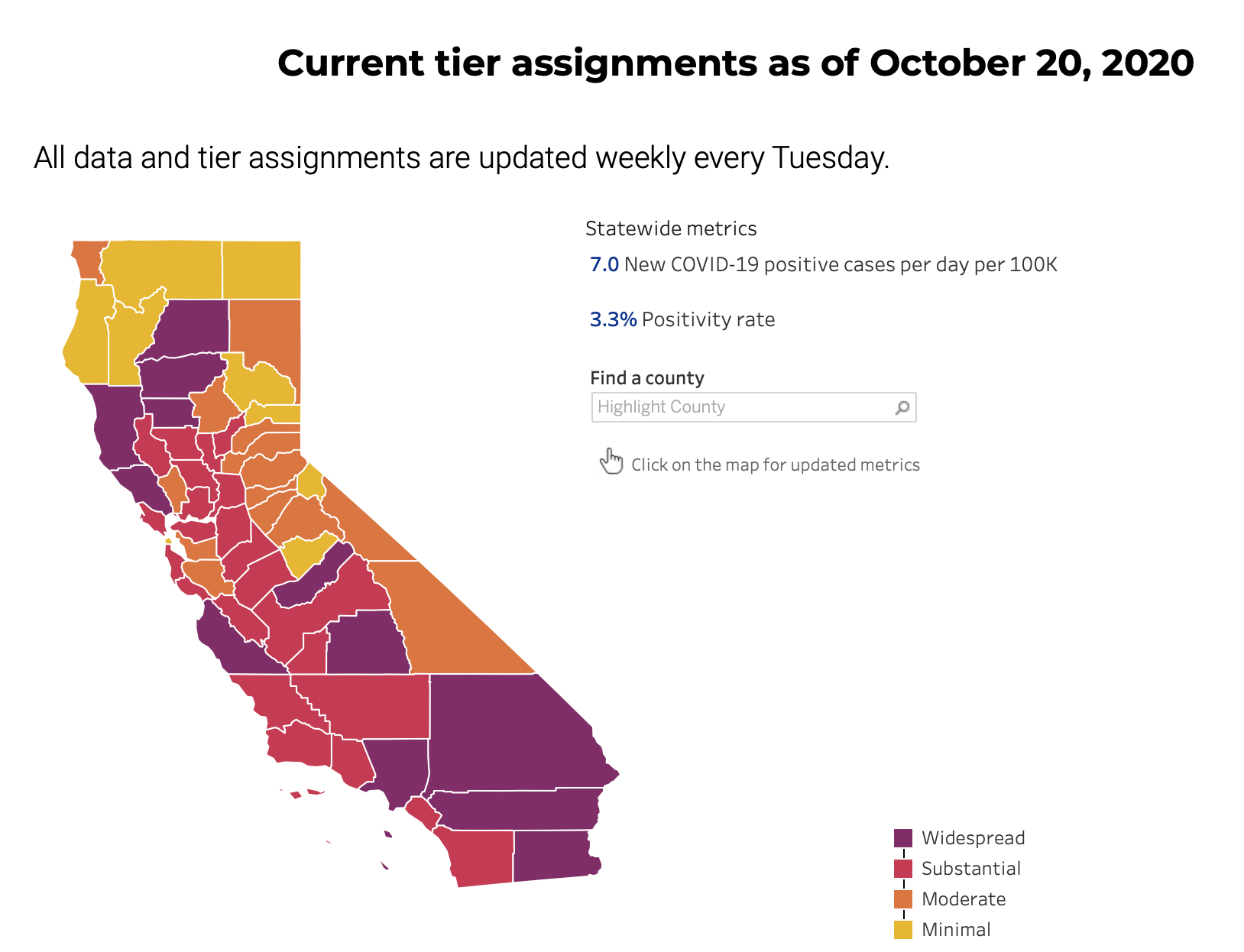
NAPA COUNTY, CA — Napa County was downgraded into a less restrictive tier Tuesday. Moving into the orange or moderate tier, the county will be able to reopen and expand numerous businesses, California Health Secretary Dr. Mark Ghaly announced Tuesday.
The famed region of California's wine country will be able to reopen doors to wineries, which will now be able to serve customers inside, with restrictions.
Restaurants will now be able to double indoor seating to 50 percent, or 200 people, whichever is fewer. The orange status will also allow indoor fitness centers to increase capacity from 10 to 25 percent.
Find out what's happening in Napa Valleyfor free with the latest updates from Patch.
“I want to thank our residents and visitors for their diligence in helping fight this pandemic,” said Napa County Health Officer Dr. Karen Relucio in a statement Tuesday. “I am keenly aware of the sacrifices so many have made to help get us to this next tier and I am optimistic that we can continue on our path forward if we remain vigilant through the upcoming holiday season.”
The orange tier allows bars to serve drinks without meals outdoors, schools to reopen fully for in-person classes and movie theaters to reopen at limited capacity. Restaurants may open indoors at 50 percent capacity or host 200 people — whichever is fewer.
Find out what's happening in Napa Valleyfor free with the latest updates from Patch.
Counties must remain in their tiers for at least three weeks before moving forward. Napa County was one of the first counties in the Bay Area to move into the red tier and has remained there since since Aug. 31.
Napa County met the orange tier status for one week with a test positivity rate of 1.7% per 100,000 population, adjusted case rate of 3.6 new positive cases per day per 100,000 population, and a health equity test positivity rate of 2.1 percent per 100,000 people.
San Francisco became the first major city in California and the first in the Bay Area to move into the least restrictive tier on the state's COVID-19 risk-assessing blueprint Tuesday.
READ MORE: San Francisco Moves Into The Least Restrictive COVID-19 Tier
The Golden State also introduced long-awaited guidelines for theme parks and sporting events Tuesday, along with some modifications to existing guidelines for personal services. The state health secretary also announced that three new counties had moved into lower tiers on the state's COVID-19 risk-assessing blueprint.
READ MORE:
Highly anticipated guidelines on theme parks were released, revealing that Disneyland would remain shut until Orange County moved into the minimal or yellow tier, and even then the park would only be able to open at 25 percent capacity.
Smaller theme parks however, will be able to reopen in the orange or moderate tier with limited capacity of 25 percent or 500, whichever is fewer.
Disneyland and any other large theme parks won't be open in the orange tier because they tend to draw tourists from outside communities, said California Health Secretary Dr. Mark Ghaly.
"They're really local activities they don't draw people from other communities," Ghaly said.
READ MORE: Disneyland Reopening Schedule, Restrictions Announced
Ghaly further announced guidelines on sporting events at outdoor stadiums. These events may resume in the orange tier at 20 percent capacity and the yellow tier at 25 percent capacity. Ticket sales are also restricted to customers within a 120 mile radius to avoid mixing different communities.
No day of ticket sales are allowed and all seats will be assigned. Face coverings will also be required throughout the stadium unless eating or drinking.
Ghaly also announced a big change for the state's tiering system: After months of closure, tattoo, massage parlors and all personal care services may resume operations indoors with modification in the purple or widespread tier.
The state also remained at a 2.6 percent positivity rate over a two week period Tuesday. The 7 day average was up slightly this week, topping 3,096 cases.
The state had also previously predicted an 89 percent increase in hospitalizations in October, and Ghaly confirmed Tuesday that that prediction did not materialize as hospitalizations have remained down.
"Thankfully through our hard work...we have avoided those high projected numbers," Ghaly said. "But we do show even today with our cases and our hospital trends that we predict a 46 percent increase a month from now."
Earlier in October, Ghaly introduced the state's new equity metric, which was added as a benchmark for the state's largest counties to meet before advancing through the blueprint's tiers. Counties will not be able to reopen further unless they reduce transmissions in marginalized communities.
READ MORE: CA's Coronavirus 'Equity Metric' Could Impact Reopening Timeline
This measure could potentially slow reopenings or help push counties through the tier system depending on how widespread cases are in that particular county's most "disadvantaged" neighborhoods.
This week, the metric aided San Francisco in its progression into the lowest and minimal yellow tier.
Get more local news delivered straight to your inbox. Sign up for free Patch newsletters and alerts.