Community Corner
Why This Famous Winery Is Reinventing Itself Now
A 3-year renovation reshapes a historic winery while trying to restore its reputation for quality and innovation.


NAPA VALLEY, CA — The risk is real in a market that feels like it’s holding its breath. U.S. wine consumption has leveled off after decades of steady rise, with per-capita drinking no longer climbing the way it once did.
While some producers are pulling back, cutting costs, and waiting for demand to return, one of Napa's modern tastemakers decided now is the time to relaunch an iconic estate and put out a high-end vintage.
After three years behind construction fencing, Robert Mondavi Winery has reopened, betting that a sweeping redesign and renewed focus on vineyard-driven wines can restore its standing in a region the name once defined.
Find out what's happening in Napa Valleyfor free with the latest updates from Patch.
The April 20 reopening marks the winery’s 60th anniversary and the most significant overhaul of the Oakville property since Robert Mondavi built it in 1966 as Napa Valley’s first destination winery.
Breathy announcements of the reopening are tempting. But for the industry, Mondavi's move points to a wine industry that’s splitting in two, and Napa Valley is where the divide is most visible.
Find out what's happening in Napa Valleyfor free with the latest updates from Patch.
For decades, Mondavi set the tone for wine tourism, introducing tastings, tours, and a visitor experience that became a global model.
Industry shifts and corporate pressures reshaped that legacy. After going public in the 1990s and being sold to Constellation Brands in 2004 for about $1 billion, the winery leaned heavily on volume-driven brands and mass tourism.
Now, Mondavi executives are trying to reinvent the winery again — this time toward a curated, reservation-based model in line with Napa Valley trends, where tasting fees have surged, and walk-in access has dwindled.
At the center of the shift is To Kalon Vineyard, the estate’s flagship site, now certified organic.
Head winemaker Kurtis Ogasawara said upgrades sharpen decisions at every stage, from farming to fermentation, with the goal of producing wines that reflect both place and longevity. “The reopening reflects the evolution happening behind the cellar doors,” Ogasawara said in a statement.
Inside the commemorative Cabernet Sauvignon and redesign
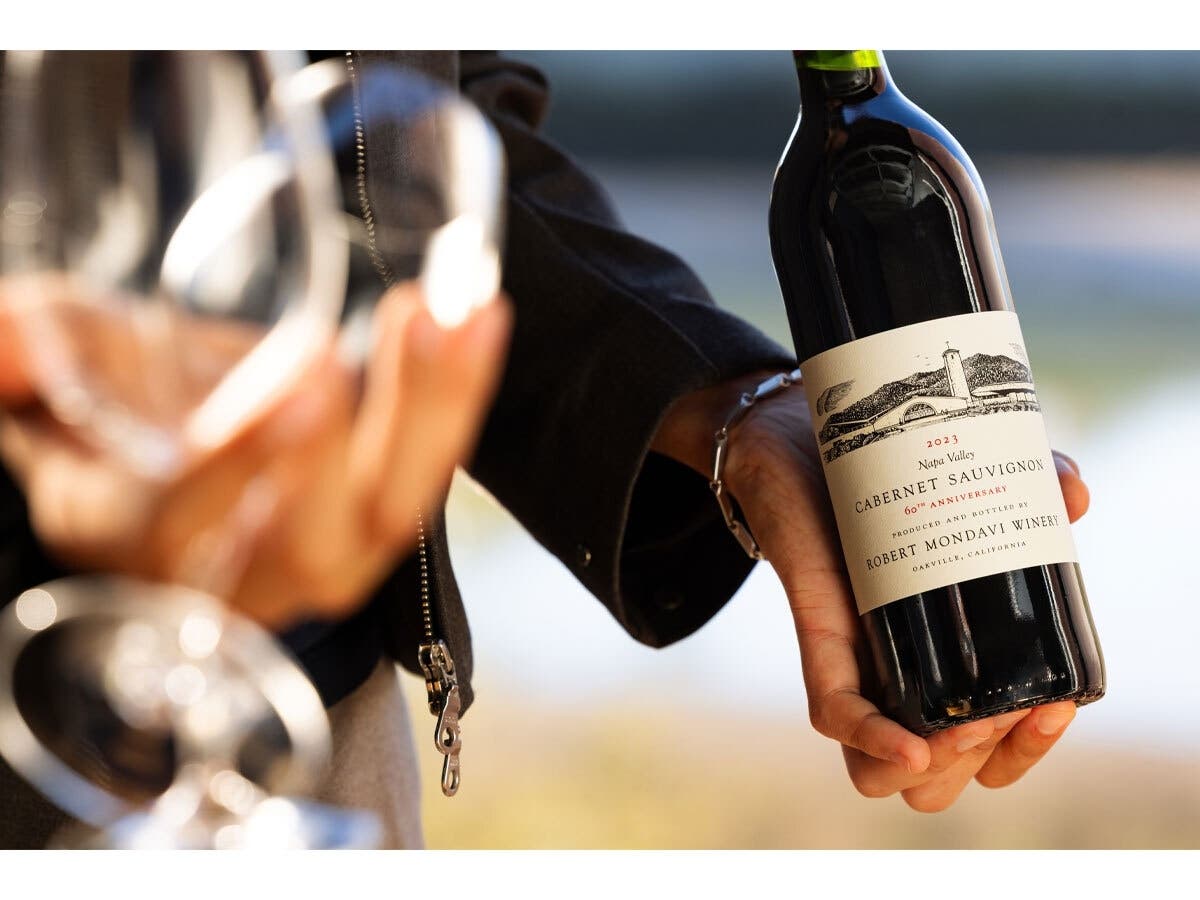
To mark the milestone, the winery released a limited 2023 Napa Valley Cabernet Sauvignon sourced from To Kalon and Wappo Hill vineyards.
The 2023 commemorative vintage is designed to anchor the reopening by bridging the winery’s past and future.
Winemakers sourced the limited release from To Kalon Vineyard in Oakville and Wappo Hill Vineyard in the Stags Leap District, blending fruit from two of the estate’s historic sites into a single bottling.
Harvested between Sept. 27 and Oct. 18, the wine benefited from an unusually long growing time and optimal weather before spending 19 months in French oak.
The bottle itself reinforces the anniversary theme, pairing design elements from the winery’s original 1966 packaging with cues from the newly renovated estate, positioning the wine as both a collectible and a marker of transition.
At $125, the release sits within Napa Valley’s premium tier, but its limited production and symbolic role tie it more closely to the winery’s goal of reasserting its identity — not simply as a destination, but as a measure for Cabernet Sauvignon in the region. The wine will be available beginning April 20th at the winery, online, and through select U.S. wholesale and wine retail partners.
The winery's architects preserved hallmark elements of the original mission-style design, including the arch and tower conceived with midcentury designer Cliff May, while opening the property with terraces, gardens, and vineyard-facing gathering spaces. The arch and tower now house a welcome lounge and wine library.
Landscape designers reshaped paths and plantings to highlight the land’s geology and farming roots.
The reopening rolls out tiered visitor options, from entry-level tastings to private reserve-focused tours, moving away from the large-scale crowds that once defined the estate.
The overhaul adds a new hospitality wing, expands indoor-outdoor tasting spaces, and upgrades production facilities to enable tighter cellar control.
Get big or get out?
The move could be seen as risky. Earlier this month, Constellation Brands announced a sharp drop in net sales—down 51 percent for the full fiscal year and 58 percent in the fourth quarter—primarily due to steep declines in shipment volumes tied to the company’s wine and spirits divestitures, shifts in distributor contracts, unfavorable product mix, and selective price increases, according to the April.
Industry experts point out that big names can reinvest and reposition. Smaller wineries often can’t. As costs rise (labor, water, land, marketing) and entry-level demand weakens, consolidation tends to follow. That’s already reshaping ownership patterns across Napa and Sonoma.
Constellation Brands, the New York-based owner of California’s Robert Mondavi Winery, expects the high-end wine market to decline as its CEO Bill Newlands announced he was stepping away from the company.
This week four of the most influential local grape and wine trade groups outlined a set of policy recommendations to the Napa County Board of Supervisors meant to help its ailing industry, according to reports.
The short-term and long-term recommendations included Napa County’s groundwater management fees, the planning process, and conservation policies. They also want to maintain the definition of agriculture and allow by-appointment-only wineries to host walk-in customers, according to reports.
Tourism revenue is unpredictable and fragile. Napa may be shifting, according to reports, from a broad consumer destination into a premium luxury enclave where success depends less on how many people drink wine, and more on who those people are and what they’re willing to pay for the experience around it.
At least those are the interpretations of the industry as it stands. Whether the changes at Mondavi will shift public perception of the brand, or Napa more broadly, is a big ask for one winery. But with a redesigned estate, modernized cellar, and renewed focus on its flagship vineyard, Mondavi is courting a different kind of Napa Valley visitor while reconnecting with its origins.
Get more local news delivered straight to your inbox. Sign up for free Patch newsletters and alerts.