Neighbor News
Bob Klein Founder of Medici on the Origin of the Pound Sterling
Bob Klein describes the history behind the pound sterling.

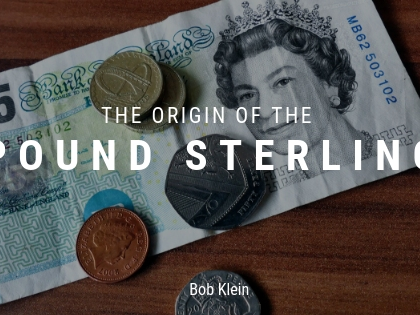
The pound sterling (commonly called the "pound", symbol: £) is the official currency of Great Britain and is the oldest currency still in use today. The pound first originated in Anglo-Saxon England, but its original roots can be traced all the way back to the Roman Empire.
From 43 AD to 410 AD, most of modern-day Britain was occupied by the Roman Empire. Residents of Roman Britain used the Roman monetary system, which consisted of gold 'solidi' and silver 'denarii' coins. One gold solidus was equivalent to 12 silver denarii, and 240 silver denarii coins could be minted from one Roman pound (or 'Libra') of silver.
After the fall of the Roman empire, Britain was eventually organized into several Anglo-Saxon kingdoms. The rulers of these kingdoms recognized the utility of the Roman system and copied it. Silver pennies (or 'sterlings') were introduced to England by King Offa of Mercia in the 8th century, and the concept soon spread across all of Anglo-Saxon Britain. Like the Roman system, 240 'sterlings' could be minted from one pound of silver, which at the time was a large fortune. Large transactions were counted in terms of 'pounds of sterlings', which was eventually shortened to "pounds sterling".
Find out what's happening in Newport Beach-Corona Del Marfor free with the latest updates from Patch.
During the middle ages, Latin was adopted as the language of law and written record in Britain. British records, therefore, referred to British currency with the Roman words ‘libra’, ‘solidi’ and ‘denarii’. This gave rise to the so-called L.S.D. system (referring to pounds, shillings, and pence respectively) of pre-decimal British currency. Indeed, the symbol for the pound sterling (£) comes from the ornate "L" in "Libra", which meant a pound, and the word "pound" also originates from the Latin word "pondus", meaning "weight".
This system continued until the 17th century when the Bank of England was founded in 1694. The Bank of England began to issue paper money, and in 1816 Britain officially defined the value of one pound sterling in gold rather than silver (the so-called 'gold-standard'). The government debased the money more rapidly into the 20th century. Finally, in 1971 Britain "decimalized" the pound, defining one penny as the modern value of 1/100th one pound sterling. The pound is still widely used today and is currently the 4th most traded currency in the world and the 3rd most popular reserve currency. Unfortunately, due to debasement by governments, the pound has lost all most all of its value compared to its original value.
Find out what's happening in Newport Beach-Corona Del Marfor free with the latest updates from Patch.
This blog was originally posted on BobKleinNewportBeach.blogspot.com