Newport Beach-Corona Del Mar, CA|Local Classified|Announcement|

Why Irvine Commercial Buildings Need Electrical Maintenance Before Something Fails
An electrical system does not need to shut down completely to be creating risk. In an Irvine office building, medical suite, retail center, or multi-tenant property, early warning signs often appear long before a major outage. Breakers begin tripping more often. Lights flicker under load. Panels run unusually warm. Tenants report intermittent power problems that disappear before anyone can inspect them.
Treating each symptom as an isolated repair can hide the larger problem. Preventive electrical maintenance gives property owners and facility managers a structured way to find developing faults, prioritize repairs, and reduce avoidable disruption.
Small electrical issues can become expensive operational problems
Commercial buildings place sustained and changing demands on their electrical infrastructure. A suite that once supported desks and basic lighting may now power additional HVAC equipment, servers, specialty devices, kitchen appliances, or electric vehicle charging. Tenant changes can also leave behind altered circuits, incomplete labeling, and equipment that no longer matches the building's current use.
When these changes accumulate, the result may be nuisance trips, overheated connections, voltage irregularities, or overloaded equipment. The direct repair cost is only part of the risk. An unexpected shutdown can interrupt employees, tenants, appointments, transactions, refrigeration, security systems, and other essential operations.
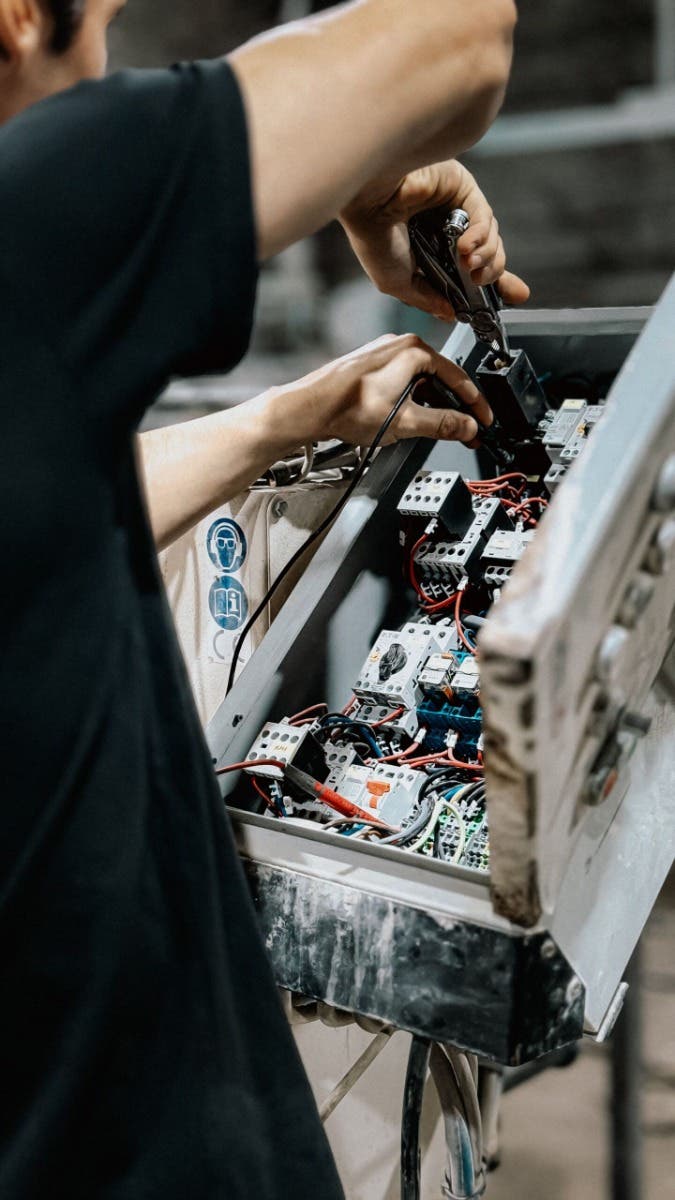
What preventive electrical maintenance should examine
A useful maintenance visit is more than a quick visual check. The scope should reflect the property, equipment, operating hours, and consequences of downtime. Depending on the facility, a commercial electrician may review:
- Service equipment, distribution panels, disconnects, and switchgear
- Loose, damaged, discolored, or overheated connections
- Breakers that trip repeatedly or show signs of wear
- Circuit directories and panel labels that no longer match actual loads
- Emergency lighting, exit signs, and other life-safety electrical components
- Visible wiring damage, improper modifications, and open electrical enclosures
- Load conditions that may require correction or additional capacity
- Maintenance records and recurring trouble areas
The goal is not to sell unnecessary replacement work. It is to identify what is unsafe, what is likely to fail, what should be monitored, and what can be scheduled during a controlled service window.
Planned work is easier to manage than an emergency shutdown
For a property manager, timing matters almost as much as the repair itself. Planned electrical work can be coordinated around tenant hours, building access, sensitive equipment, and required shutdowns. Owners can obtain a defined scope and budget before the issue becomes urgent. Facility teams also gain documentation that helps them track recurring defects and make better capital-planning decisions.
This is especially valuable in multi-tenant buildings, where one electrical problem can affect several businesses and create confusion about whether the fault is inside a suite or part of the shared building system.
Warning signs that justify a professional review
Commercial property teams should not wait for smoke or a total loss of power. Schedule an assessment when you notice repeated breaker trips, buzzing or crackling from electrical equipment, hot or discolored panel surfaces, burning odors, unexplained flickering, damaged covers, unreliable emergency lighting, or recurring power complaints from tenants.
Any condition involving abnormal or excessive heat, arcing, or exposed conductors should be treated as urgent. Keep people away from the affected area and contact a qualified commercial electrician. If there is smoke, visible fire, or an active burning smell, leave the affected area and call 911 or the fire department first. Contact an electrician only after emergency responders have addressed the immediate fire risk.
Build maintenance around the property, not a generic checklist
The right maintenance frequency depends on the building's age, occupancy, electrical load, equipment condition, environment, and service history. A lightly used professional office will not have the same needs as a restaurant, medical facility, warehouse, or property with aging distribution equipment.
Pelican Coast Electric provides electrical preventive maintenance for commercial buildings and broader commercial electrical services across Orange County. The team can assess current conditions, document priorities, and help schedule corrective work around business operations.
For an electrical maintenance assessment at an Irvine commercial property, call (949) 989-4404 and describe the building, current symptoms, and any recurring outage history.