Newport Beach-Corona Del Mar, CA|Local Classified|Gigs & Services|

Backup Power Planning for Orange County Commercial Buildings Before PSPS Season
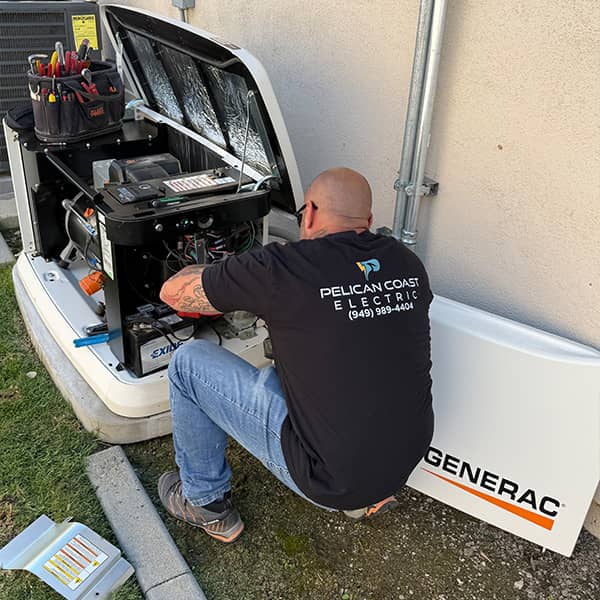
Orange County commercial buildings lose power the same way every year. A summer heat wave strains the grid, Southern California Edison calls a Public Safety Power Shutoff during fire weather, or an aging transformer fails under peak load. For a medical office, a cold-storage warehouse, or a restaurant on a Friday night, the question is not whether the power goes out. It is whether the backup generator starts, carries the building, and keeps running.
Pelican Coast Electric services commercial and industrial backup generator systems (https://pelicancoastelectric.com/services/industrial-diesel-generator-services-orange-county/) across Newport Beach, Irvine, Costa Mesa, Santa Ana, Anaheim, and Huntington Beach.
Most generator problems we get called for in July and August are not dead generators. They are generators nobody tested since the day they were installed. Here is what property owners and facility managers should confirm before the next outage:
1. The transfer switch actually transfers. A generator is only as reliable as the automatic transfer switch (https://pelicancoastelectric.com/services/transfer-switch-installation/) in front of it. The ATS senses the utility drop, signals the generator to start, and moves the building load over, usually within 10 to 30 seconds. Transfer switches fail from corroded contacts, failed control boards, and dead batteries far more often than the engine does. If your only proof it works is a sticker from the install date, it has not been proven.
2. The generator is sized for today's load, not the day it was installed. Buildings add tenants, EV chargers, server rooms, and HVAC over the years. A generator sized for a 2015 load can trip on overload the moment it picks up a 2026 building. Before PSPS season is the time to compare nameplate kW against your actual peak demand, not during the outage.
3. It has run under real load, not just idled. A monthly no-load exercise cycle proves the engine turns over. It does not prove the generator can carry the building. Diesel standby units that only ever idle develop wet stacking, unburned fuel and carbon that fouls the exhaust and cuts output. The only way to know a unit holds its rated capacity is load bank testing (https://pelicancoastelectric.com/services/load-bank-testing-services/) it at full load.
4. Fuel, coolant, and batteries are current. Diesel degrades. Batteries die on a 3 to 5 year clock. Coolant and oil have service intervals that get ignored on equipment that sits in a closet 360 days a year. A commercial generator maintenance contract (https://pelicancoastelectric.com/services/commercial-generator-maintenance-contracts-oc/) keeps these on a schedule instead of a surprise.
For facilities running manufacturing, cold storage, or medical operations, all four of the above move from good practice to code requirement under NFPA 110. Insurance carriers and authorities having jurisdiction increasingly ask for the documentation. Our guide to commercial and industrial generators for Orange County property managers (https://pelicancoastelectric.com/blog/commercial-generators-orange-county/) breaks down sizing, diesel versus natural gas, and transfer switches in more detail.
The buildings that ride out a summer outage without a service call are the ones that scheduled the check in spring or early summer, not the ones that found out during the shutoff. If your Orange County property depends on backup power and it has not been tested this year, now is the window.
Schedule at https://pelicancoastelectric.com/ or call (949) 706-4957. License #C10-1133193. Lifetime warranty on all work. Serving Newport Beach, Huntington Beach, Irvine, Costa Mesa, Santa Ana, Anaheim, and all of Orange County.
