Health & Fitness
Don’t Ignore that Nagging Neck Pain During COVID-19
Here's How to Get Elective Medical Care & Surgery Safely


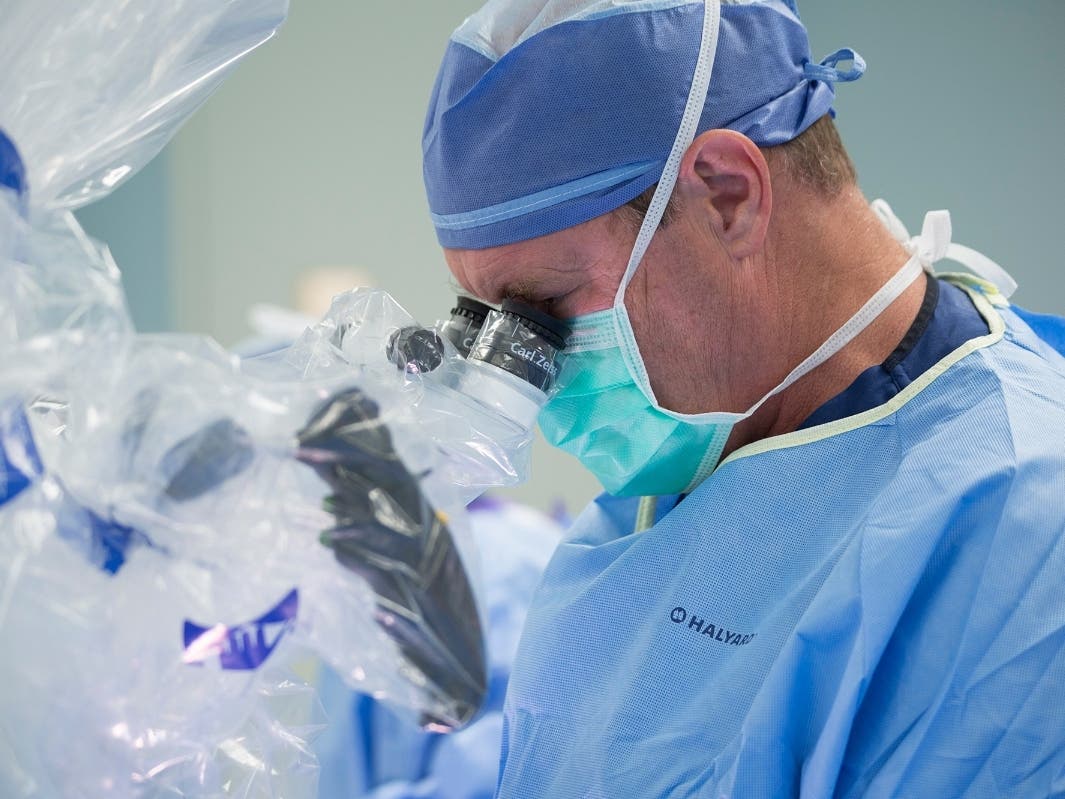
James T. (52) had always considered himself an active guy, so when he first felt a tingling or slight numbness in his fingertips, he wrote it off as effects of a workout pushed too far. Then COVID-19 threw the nation into lockdown and James pushed that initial discomfort out of his mind. He hunkered down, did his best to keep exercising at home and hoped it would simply go away like the virus.
By the time he began experiencing weakness in his arms and a sharp pain at the turn of his head, he knew something was up, but James – like many others – was uncomfortable with the thought of seeking help during a pandemic, even as Orange County had begun its phased reopening. Instead, he waited through nagging, increasingly uncomfortable symptoms until a friend forwarded him a Health.com article that eased his concern.
The story highlighted the numerous protocols medical providers were putting in place to keep their patients from being exposed to COVID-19, including rigorous cleaning, testing, screening and social distancing measures. But what stood out for James was the idea of having treatment in an ambulatory surgery center (ASC), which would allow him to avoid a potentially crowded hospital setting entirely.
Find out what's happening in Newport Beach-Corona Del Marfor free with the latest updates from Patch.
Dr. Robert S. Bray, Jr., the neurological spine surgeon quoted in the article, described his Newport Beach-based ASC: “This type of facility in a protected environment provides a very safe available option… We have the capability of overnight stay, 24-hour nursing, and all necessary follow-up. And we are going to maintain our limited visiting and limited outside-world contact until this crisis is adequately resolved.”
James weighed his risks and ultimately sought help for what he would learn was a cervical radiculopathy (or pinched nerve) in his neck. The relief after a minimally invasive procedure was almost immediate, and he remained COVID-19 negative.
Find out what's happening in Newport Beach-Corona Del Marfor free with the latest updates from Patch.
Unfortunately, far too many others in James’ position keep suffering silently, their fear of contracting the virus preventing them from seeking what could be mobility-saving care. What they don’t realize is that some forms of neck or back pain, if left untreated, can actually cause permanent damage, impacting motor skills and decreasing quality of life.
As they continue putting off care, they ignore major warning signs for issues like cervical radiculopathy, spinal cord pressure and herniated discs, among other potential diagnoses.
“If you’re suffering through discomfort or ignoring health warning signs while you ride out the pandemic, I want you to know one thing: the risk of not obtaining timely care far exceeds the risk of COVID-19 exposure,” Dr. Bray wrote in a recent guest column for the Newport Beach Independent, which also offered up questions patients should ask of their healthcare providers if they’re concerned about safety during the pandemic.
For anyone considering an elective procedure or surgery, these are the most important things to know, according to Dr. Bray. First, find out what surgeries are performed at the ASC because there are different types. High-acuity centers are preferable because they tend to be more specialized and able to provide a higher quality of care. If you’re experiencing neck pain, look for a spine and orthopedic-focused center.
Once you narrow that down, try to determine how many patients the center treats daily. To keep your contacts and risk as low as possible, you’ll ideally want that daily patient volume to be less than 10 to 15 patients.
Ask about the center’s air filtration and cleanliness protocols. The safest environment is 100% high-flow, HEPA filtered and UV-treated, and all high-touch areas should be regularly and rigorously cleaned. Every staff member should also wear a mask at all times, with appropriate use of N95 masks during surgery or intubation.
You’ll also want to make sure that the center is testing all pre-op patients for COVID-19 using nasal swabs and performed by a CLIA-certified lab. Staff members should be routinely tested as well, and the center should screen anyone entering with temperature checks.
Social distancing protocols are a must, find out what the center is doing to keep waiting to a minimum and properly space out waiting areas. Ideally, patients should have private rooms for pre/post-operative care and designated restrooms that are not shared by others between cleanings.
Finally, check to see if telemedicine is an option for clinic visits or routine follow-ups to further minimize contact where it makes the most sense.