Home & Garden
Selling to or Buying from a House Flipper: The Pros and Cons in Newport Beach
Selling to or Buying from a House Flipper: The Pros and Cons

When it comes time to sell a property, many homeowners default to the traditional real estate market. However, an alternative route—selling directly to a house flipper or real estate investor—has become popular for some. While this path offers distinct advantages in terms of efficiency, it also comes with financial trade-offs that every seller should weigh carefully.
For many, the appeal of a house flipper lies in the simplicity of the transaction. Unlike traditional buyers who may be looking for a "forever home," flippers are looking for a business opportunity.
- Speed of Sale: One of the most significant benefits is the timeline. Flipper transactions are typically much faster than traditional sales because investors often pay with cash and do not need to wait for financing approvals. Many flippers may attempt to pressure sellers by claiming financing approvals can take a long time.
- Maximum Convenience: Selling to an investor allows you to sell the house "as-is." This eliminates the need for expensive repairs, deep cleaning, or the stress of staging the home for multiple showings. However, it is important to note that a seller can also sell to any buyer in "as-is" condition.
- Transaction Certainty: Traditional sales may fall through at the last minute due to a buyer's inability to secure a mortgage. Because flippers often use liquid capital, there is a much lower risk of the deal collapsing due to financing issues.
While the process is streamlined, it is rarely the most profitable way to exit a property. Understanding the potential downsides is crucial for protecting your financial interests.
Find out what's happening in Newport Beach-Corona Del Marfor free with the latest updates from Patch.
For the Original Seller:
- Lower Sale Price: The primary drawback is the financial "haircut" you will likely take. Investors must factor in their own repair costs and profit margins, meaning you will generally receive much less money than you would in a traditional market sale. In many cases, the offer can be as little as half of the actual property value. For instance, a home flipper recently noted a preference for the Newport Beach area, where they would routinely buy a home for $600,000 and sell it for $1.5 million or more.
- Loss of monetary compensation: You may lose the equivalent of several years of income, essentially working for free to cover the difference in sale price. Flippers will do everything possible to prevent a property they are interested in from being listed on the open market, where it would face competition.
- Conditional Professionalism: A flipper purchasing your home may seem incredibly accommodating until the paperwork is signed. For example, they may verbally agree to honor sentimental wishes, such as preserving a specific tree, only to disregard them later. One homeowner reported needing just two additional days to finish packing; the flipper threatened them with arrest for trespassing if they remained one minute past the vacating date, despite not visiting the property for another five days.
- Predatory Practices: The "we buy houses" industry is broad. While many investors are legitimate professionals, sellers must remain vigilant against scams or unethical buyers who may employ high-pressure tactics or attempt to "lowball" vulnerable homeowners.
- Lack of Emotional Consideration: For many sellers, a home is more than an asset; it is a place of history and sentimental value. House flippers are focused primarily on profit and may not offer the same respect for the home's legacy as a traditional family buyer might.
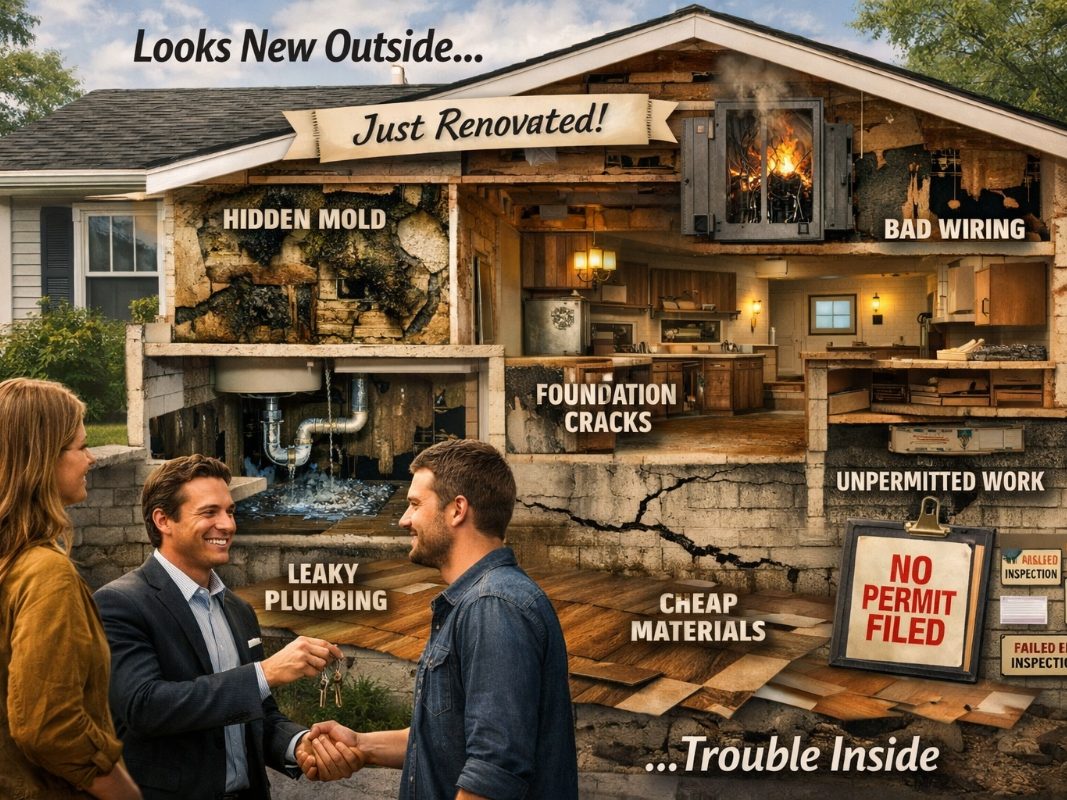
- Lack of Permits: Many home flippers avoid obtaining permits to save on costs and prevent time delays, which often results in significantly lower quality or improper work.
- Regulatory Liability: The new owner, rather than the flipper, is typically liable for paying for necessary permits, fines, or any removals requested by the city due to previous non-compliance.
- Unqualified Labor: Investors may hire unqualified workers to minimize expenses. In some cases, laborers have reportedly earned half the minimum wage, a level of compensation that rarely attracts the skilled labor necessary for high-quality renovations.
- Environmental Hazards: There have been instances where remodeling chemicals were dumped or buried in the yard and covered with dirt, creating potential environmental issues for the property.
- Concealing Home Defects: Some flippers may cover up serious issues rather than fixing them. This includes using drywall and paint to hide termite damage in garages or applying cheap spray coatings to make an old roof appear new. Such practices only delay necessary repairs and can interfere with the proper application of future sealants.
- Structural and Concrete Issues: Cracks in garage floors can be easily masked with floor coatings. Additionally, improperly installed concrete may lack the necessary thickness, rebar, or proper sloping, leading to drainage issues or structural cracking during minor earthquakes.
- Improper Tile Installation: When applying tiles to a concrete lower level, the concrete may need to be ground to ensure proper long-term adhesion. Failure to do so may cause the thinset mortar to release over time.
- Hidden Flooring Issues: Damage, mold, or asbestos-containing materials can easily be covered up with new flooring. While a typical homeowner might also conceal such issues, they lack the "corporate veil" protection enjoyed by flipping companies and could be held personally liable.
- Poor Landscaping Execution: Flippers may install new sod without properly preparing the ground or the irrigation system. In one instance, weeds grew so aggressively beneath new sod that they lifted the grass off the ground, causing it to die. Furthermore, leaking sprinklers or an improper layout can lead to excessive water costs.
- Roof damage: While having unqualified workers painting a roof to make a roof appear new, the workers can easily damage a roof resulting in water damage beginning the next time rain happens.
- Homeowners insurance: Insurance companies often consider flipped homes high-risk and may look for reasons to drop coverage. A neighbor who purchased a flipped home reported being dropped from their insurance after the flipper's workers damaged the roof by walking on it. Because lenders require homeowners to maintain active insurance, obtaining a new policy can be prohibitively expensive due to this high-risk classification.
Buyers often face significant challenges in seeking recourse when a property flipper neglects to obtain proper permits or intentionally conceals structural issues, such as termite damage. While real estate disclosure laws exist, holding investors accountable for hidden defects or non-permitted work can be complex and costly, frequently leaving the new homeowner responsible for costly future expenses related to repairs and regulatory non-compliance.
Find out what's happening in Newport Beach-Corona Del Marfor free with the latest updates from Patch.
The Government needs to pass laws protecting home purchasers from predatory home flippers. A law is needed requiring a home purchased within the last 12 months and being resold to have a warranty and be held accountable for unpermitted work.
ConclusionUltimately, the decision to sell to a house flipper depends on your specific priorities. If your situation demands speed and convenience above all else—such as during a relocation or an inherited property situation—selling to an investor may be a solution, provided you are comfortable with a significantly lower sale price. You are almost guaranteed to receive hundreds of thousands of dollars less than you would in a competitive market. However, if your goal is to maximize your equity and you have the time to navigate the traditional listing process, the open market remains the better choice. Regardless of which path you choose, always perform thorough due diligence and research any potential buyer before signing a contract. Prior to selling, I recommend contacting a real estate professional to inquire about the home's value in its existing condition; ensure they are not affiliated with a flipper to avoid bias. You should also check online estimates like Zillow, which can be fairly accurate. In my opinion, both the original sellers and the future owners can be negatively impacted by the practices of unethical flippers.