Neighbor News
Let Home Cooks Build Our Future: MEHKOs Marin's Best Entrepreneurship Strategy By Marc Hunter Lewis
Let's authorize home kitchens, fix Environmental Health fees, and create a clear path from informal food work to permitted businesses.
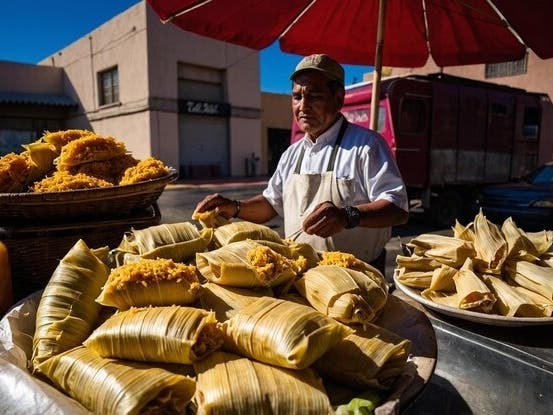
Why Marin Has a Policy Gap, Not Just a Paperwork Problem
The current situation in Marin is not the product of inattention. It is the product of inaction compounding into a structural disadvantage. Every year the Board of Supervisors declines to take up MEHKO authorization, it is effectively choosing to maintain a system in which the informal food economy continues to grow while remaining unregulated, unprotected, and invisible to the county's tax base.
Statewide, 18 jurisdictions have adopted MEHKOs since 2019, and more than 60 percent of California's population now lives in an area where MEHKOs are permitted. Sonoma County has a functioning program. Marin does not. The practical consequence is that entrepreneurs who might have built businesses here instead cross the county line, or stay here and operate without permits, insurance, or legal protection. Environmental Health staff attempting to enforce standards against unpermitted street vendors face the additional absurdity of having no dedicated storage space for seized equipment, a basic operational gap that renders enforcement sporadic and inequitable.
The fee structure compounds the entry problem. Between a county EH permit, stall fees at a certified farmers market, and required liability insurance, a vendor starting from scratch can face $2,000 or more in fixed costs before making a single sale. For operators testing demand before committing to a commercial lease, that upfront burden is prohibitive. The result is a system that inadvertently filters out exactly the people most likely to build durable, community-rooted businesses.
Find out what's happening in Novatofor free with the latest updates from Patch.
MEHKOs as Economic Development
Why This Is Economic Development, Not Just Health Policy
MEHKOs are explicitly designed as a low-capital, income-generating on-ramp for people who lack access to traditional restaurant finance, startup capital, or commercial kitchen networks. The five-year statewide evaluation of the program confirms they function that way in practice. Among MEHKO permit holders, 73 percent reported their business helped them financially, 53 percent said it helped them afford rent or mortgage payments, 61 percent reported their business was profitable, and 32 percent said their MEHKO served as a direct stepping stone toward a larger food business such as a food truck, catering operation, or brick-and-mortar restaurant.
Those downstream businesses, the food trucks, the catering companies, the neighborhood restaurants, are precisely the enterprises that lease storefronts, hire local employees, support local suppliers, and generate sales tax revenue. Treating MEHKOs as an economic pipeline rather than a regulatory nuisance reframes the county's role: the cost of a modest permit fee subsidy early in the process is an investment in a more robust small business pipeline later.
Find out what's happening in Novatofor free with the latest updates from Patch.
Local food businesses also produce higher local multiplier effects than non-local competitors. Research on local independent businesses consistently shows that roughly 52.9 percent of each purchase recirculates locally, compared to less than 13.6 percent at chain stores. For labor-intensive food businesses, those multipliers are even higher because a greater share of revenue flows to local wages. Every dollar spent at a permitted MEHKO or farmers market vendor in Marin generates a chain of local spending, on local produce, on local packaging supplies, on local labor, that a dollar spent at a regional chain does not. Local food systems research consistently finds that each dollar spent on local food can generate up to two dollars in total economic activity once indirect and induced effects are counted.
How to Structure Incentives as Growth Policy
To convert MEHKO adoption into a genuine economic development strategy, the county should build incentives around three pillars: reduced entry costs, targeted financial tools, and a visible pathway to "graduation" into larger enterprises.
On entry costs, MEHKO permit fees should be set at a deliberately subsidized rate and justified in the county's budget process as an economic development expenditure rather than a pure cost-recovery line item. This framing is not new. The California Legislature allocated $8 million in 2022 to support MEHKO ecosystems statewide, with $5 million designated for nonprofit outreach, training, marketing, and preferred vendor negotiation, and $3 million directed to county health departments to develop their programs. Counties that have designed their programs around this framing have a ready institutional argument: the fee structure is a policy choice, and a choice to subsidize early-stage food entrepreneurs is a choice to invest in local economic resilience.
On financial tools, the county should formalize a partnership with a CDFI or crowdlending platform, Kiva being the most accessible given its infrastructure in California, so that MEHKO operators and shared-kitchen users can access zero-interest or low-interest microloans for equipment, initial inventory, and insurance costs. Kiva's own outcome data shows that more than 80 percent of small business borrowers report increased revenue and profitability, and more than half report hiring additional employees. If the county designates even a modest loan-loss reserve and actively refers MEHKO applicants into that pipeline during the permitting process, it can credibly claim that each dollar of public commitment leverages multiples of private micro-capital toward the same economic development goal.
On the graduation pathway, the county should commission a shared commercial kitchen, in partnership with a community college culinary program, a nonprofit kitchen incubator, or a mission-aligned private operator in an underused public facility, and structure the operating agreement around measurable outcomes: businesses launched, jobs created transitions to independent operation. That accountability structure gives supervisors something concrete to report at budget time and gives operators a visible next step when they outgrow the MEHKO cap.
MEHKOs as an Immigrant Socioeconomic Mobility Tool
Who MEHKOs Actually Reach
The demographic profile of MEHKO operators in California is not incidental; it reflects the design intent of AB 626, which was written to "support healthy, self-reliant communities by legitimizing an important lever of economic empowerment for home cooks who lack access to the professional food world". In practice, the program reaches entrepreneurs who are broadly underrepresented in traditional business ownership. Approximately 70 percent of MEHKO permit holders are women, compared to roughly 45 percent of new U.S. entrepreneurs overall. Seventy-nine percent are people of color, against a California business ownership landscape that remains majority white. Nearly half, 46 percent, are immigrants, many of whom identify the MEHKO program as their first realistic opportunity to participate in the formal economy.
In the informal food economy that MEHKOs are designed to displace, the demographic concentration is even sharper. Approximately 85 percent of workers in the informal food economy are women, 48 percent are Black, Hispanic, or multiracial, 30 percent are first-generation Americans, and 35 percent come from extremely low-income households earning less than $45,000 per year. MEHKOs do not create this population; they exist already, cooking and selling food with or without county authorization. The policy question is whether Marin prefers to acknowledge and support them or to leave them legally exposed.
Why Food Is an Immigrant Entry Point
Research on immigrant food entrepreneurship consistently documents that food businesses operate as both economic and social strategies for new arrivals. For people who arrive with deep culinary traditions but limited transferable credentials, no English proficiency, or constrained networks, food preparation is often the one domain where they hold a genuine competitive advantage. Studies of Peruvian immigrant entrepreneurs in Los Angeles, Mexican-origin vendors in California colonias, and immigrant food truck operators nationally all document the same pattern: the kitchen becomes a platform for earning income, asserting cultural identity, and building community ties in a new country.
When that work is illegal by default, because the county has declined to authorize a legal pathway, the same people who are already economically vulnerable are also denied the legal protections, access to permitted markets, and professional credibility that permitting provides. Legalization through MEHKO authorization does not change the activity; it changes the risk exposure of the people engaged in it, and it changes their ability to grow.
The Marin Context: The Canal and Beyond
Marin County's immigrant population is concentrated and economically precarious. The Canal neighborhood in San Rafael, roughly 12,000 residents within a 2.2-mile radius, is 86 percent Latino, with 75 percent of the population speaking a language other than English at home. Forty-eight percent of Canal residents are not U.S. citizens, and community advocates believe the population is undercounted. A quarter of Canal families live below the poverty line. The neighborhood is the most densely populated district in Marin. Median earnings for a Canal resident are approximately $21,272 per year.
That is a community in which the household income impact of a legal home kitchen business, averaging 53 percent of operators reporting improved ability to pay rent or mortgage, is not marginal. It is stabilizing. In a county where the cost of housing is among the highest in the state, the ability to generate even a supplemental income stream from an existing home kitchen, without the capital outlay of a commercial lease, is a meaningful buffer against displacement.
MEHKOs as a Structured Mobility Ladder
What distinguishes MEHKOs as a mobility tool is not just the income they generate but the civic and institutional skills they build. Operators go through a permitting process, pass inspections, register with the county, carry insurance, and file taxes. For someone who has never formally interacted with American regulatory institutions, that experience is consequential. The statewide evaluation found that 95 percent of MEHKO operators agreed the program helped them develop new skills or knowledge. Once someone has navigated a county permitting process in a managed, low-stakes environment, the psychological and practical barriers to a food truck license, a commercial kitchen lease, or a catering permit are substantially lower.
The statewide data also documents that immigrant operators face disproportionate barriers that a well-designed Marin program must directly address. While 49 percent of U.S.-born MEHKO operators reported difficulty affording permit costs, 66 percent of foreign-born operators did. While 47 percent of U.S.-born operators reported difficulty knowing how to get started, 65 percent of immigrant operators did. And while 73 percent of U.S.-born operators reported challenges finding customers, 86 percent of immigrant operators faced the same issue. These gaps are not inherent to the population; they reflect the absence of targeted outreach, translation, and financial support. They are design problems that a well-structured county program can solve.
Program Design: The Three-Stage Ladder
Stage One: MEHKO Authorization
Marin's MEHKO ordinance should adopt the state statutory framework and layer it with a program manual written at an accessible reading level and translated into Spanish and other prevalent languages in the county's immigrant communities. The application should be available online and through in-person assistance at libraries and community centers in the Canal, Marin City, and other immigrant-concentrated areas. The fee should be set deliberately below full cost recovery, with the subsidy justified as an economic development investment, and supplemented by phased payment options and a fee waiver for operators below a defined income threshold.
The enforcement philosophy for Stage One should be explicit and public: first-time, good-faith noncompliance triggers a corrective action process, not a punitive one. Operators who disclose, engage, and complete a punch list of corrections should receive a clear timeline and a presumption of continued operation during remediation. This is not about lowering public health standards; it is about recognizing that the goal of the program is maximum participation by people who currently operate outside the legal system, and that punitive first responses drive people back underground rather than into compliance.
Stage Two: Shared Commercial Kitchen
The county should issue a competitive solicitation for a shared commercial kitchen operator, targeting an underused public or quasi-public facility. The College of Marin culinary program, underused county-owned properties, and nonprofit kitchen incubator models are all viable starting points. The operating agreement should specify affordable membership and hourly rates, a priority admission policy for MEHKO operators who have outgrown the statutory cap, and minimum service commitments for residents from low-income and immigrant communities. Business coaching, food safety training, marketing assistance, and microloan referrals should be embedded in the membership model, not offered as optional add-ons.
The shared kitchen also solves the enforcement gap. If Environmental Health staff can refer an unpermitted street vendor to a facility with a clear, affordable compliance pathway and on-site support, enforcement becomes constructive rather than punitive. If the county also equips enforcement staff with basic storage for seized equipment and clear protocols for equipment return, it can conduct consistent, proportionate enforcement rather than the current sporadic approach.
Stage Three: Full Independent Operation
At the third stage, food truck, catering company, brick-and-mortar restaurant, the county's job is primarily to ensure that its permit processes are efficient, transparent, and risk-calibrated. That means adopting a written Environmental Health fee schedule benchmarked against Sonoma County and other Bay Area jurisdictions on a biennial basis, with a public justification requirement for any fee that materially exceeds the regional median. It also means processing times that are predictable and online-trackable, and an ombudsman or small business navigator function in the county administrator's office to help operators move between permit categories without needing a consultant to interpret the bureaucracy.
Enforcement Design
Effective enforcement requires three things currently missing from Marin's structure: basic infrastructure, a proportionality policy, and a formal compliance pathway. Infrastructure means secure storage for seized equipment and enough inspectional capacity to inspect MEHKOs and shared kitchen tenants at a frequency proportionate to their risk profile. A proportionality policy means a written, public enforcement priority schedule that distinguishes between bad-faith repeat violators and first-time operators making good-faith compliance efforts. A formal compliance pathway means that every enforcement contact with an unpermitted operator results in the delivery of clear information about how to become permitted, including referrals to the shared kitchen, fee waiver programs, and microloan partners, rather than a citation with no constructive next step.
These three changes do not require abandoning public health standards. They require recognizing that the current system achieves neither consistent enforcement nor broad compliance, and that a system designed to bring people into the legal economy will produce better public health outcomes than one designed to exclude them from it.
Conclusion
The case for authorizing MEHKOs and reforming Environmental Health fees in Marin County rests on evidence, not aspiration. Statewide data from five years of program operation shows that MEHKOs reach the people they were designed for, immigrants, women, and low-income residents and that they produce real household income, real skill development, and a real pipeline of more mature food businesses. The demographic and economic conditions in Marin's Canal neighborhood and other immigrant communities make the need for this pathway more acute here, not less. And the competitive disadvantage relative to Sonoma County is not theoretical; it is documented every week by vendors who choose to operate 15 minutes north and never come back.
The policy tools are available. The statutory authority exists. The evidence base is robust. What is missing is a Board of Supervisors willing to treat the informal food economy not as a problem to be suppressed but as an asset waiting to be formalized.