Neighbor News
Romar Court, Tenant Protections, and Why Novato’s Draft Ordinance Could Hurt Community By Marc Hunter Lewis
Novato's just‑cause proposal leaves enforcement failures untouched while creating new risks for renters and small landlords alike.
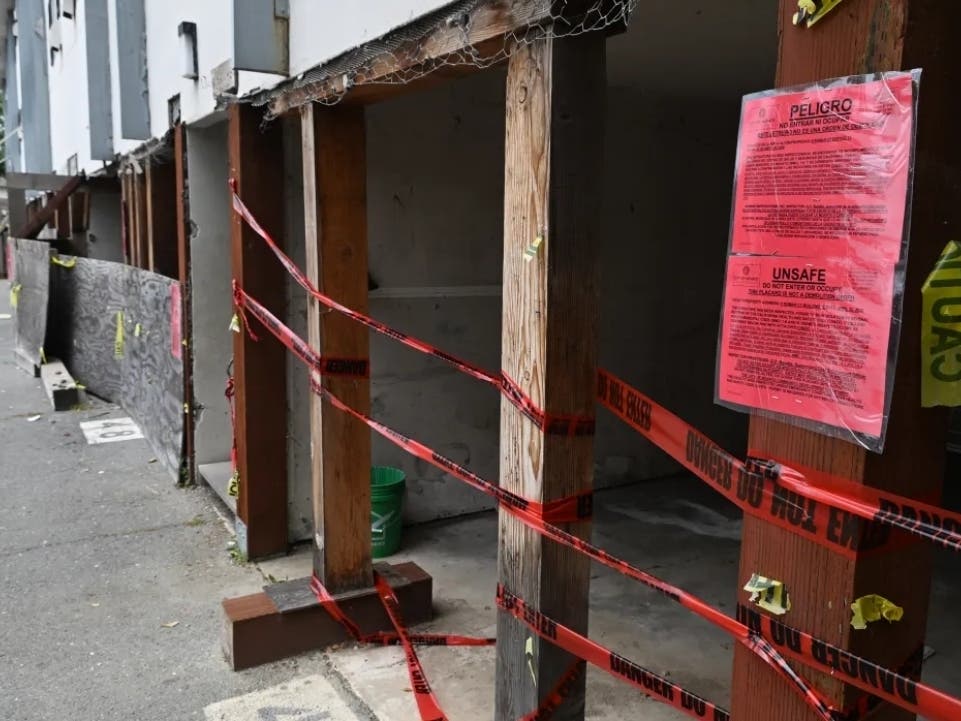
When Novato red‑tagged a 14‑unit apartment building at 6 Romar Court last April, 42 residents were told they had five days to leave their homes. Inspectors deemed Building 12 “substandard, unsafe and dangerous for occupancy” after years of expired permits, incomplete structural work in the carports, mold, and fire‑safety issues. Under state law, tenants were entitled to relocation assistance equal to roughly two months of HUD fair‑market rent and utilities, but the owner did not pay within the required timeframe. Nonprofits and donors covered tens of thousands of dollars in emergency hotel costs, and the city ultimately stepped in with public funds to make relocation payments.
City officials now point to Romar Court as the clearest example of why Novato needs a Tenant Protections Ordinance. On March 24, the City Council will hold a public hearing on a draft law, Chapter 4‑17 of the Municipal Code, that would expand local protections for tenants facing “no‑fault” displacement such as substantial remodels or government orders to vacate. The ordinance is being sold as the Romar Court fix.
The problem is that it doesn’t fix what actually failed at Romar Court, and in some key places it risks hurting both the tenants we want to protect and the small landlords many of them rent from.
Find out what's happening in Novatofor free with the latest updates from Patch.
Romar Court was an enforcement failure
According to the city’s own Order and Notice to Vacate and appeal filings, the problems at 6 Romar Court did not appear overnight. Inspectors first documented damage to the Building 12 carport and structural supports during an annual housing inspection in June 2017. The city issued a repair and seismic permit that December; the permit was never finaled, and unsafe, incomplete work remained in place. In August 2021, a second permit for repairs and upgrades was issued. It also expired in February 2024 without final inspection, with temporary shoring and open foundation excavations still exposed to the elements.
Between those permits, the city sent at least seven non‑performance notices and administrative citations between August 2021 and early 2025, and recorded a notice of non‑compliance against the property in March 2025. Only after an emergency structural inspection on April 9, 2025 found conditions “so extensive” they endangered life and safety did the Chief Building Official issue the April 23 order requiring all residents to vacate within five days. A city news release at the time stressed that the red‑tag followed “more than a year” of attempts to get the owner to correct expired permits, incomplete work, and structural hazards.
Find out what's happening in Novatofor free with the latest updates from Patch.
Those were city enforcement decisions under the California Health and Safety Code and Building Code, reviewed through Novato’s Housing and Building Codes Appeals Board and then by the council itself. They were not landlord‑initiated evictions. Tenants did not receive a “notice to terminate tenancy” from their landlord. They received a government order saying their homes were unsafe.
That matters, because the draft Tenant Protections Ordinance does not amend Novato’s building‑code enforcement rules, unfinaled‑permit timelines, or red‑tag standards. It leaves the system that actually failed Romar Court tenants untouched.
What the ordinance does, on paper
Chapter 4‑17 is a classic just‑cause and relocation ordinance that governs the private landlord‑tenant relationship. Among other things, it:
- Applies just‑cause protections to all covered tenants “on the first day of the term of rental agreements” (Section 4‑17.3(A)), instead of after 12 months as under AB 1482.
- Lists at‑fault and no‑fault just causes for ending a tenancy, including substantial renovation, owner move‑in, and withdrawal from the rental market (Section 4‑17.5).
- Requires landlords to provide a Notice of Tenant Rights, give detailed termination notices, and file copies with the city (Sections 4‑17.4 and 4‑17.6).
- Requires temporary relocation payments when tenants are displaced for substantial renovation or a governmental order to vacate, and permanent relocation payments in certain no‑fault cases, including when temporary displacement exceeds 180 days, with a right to return at the prior lawful rent plus lawful annual increases (Sections 4‑17.8 and 4‑17.9).
- Allows tenants to sue for violations and mandates treble damages and attorney’s fees for successful plaintiffs, while giving the city “the right and authority, but not the duty” to enforce (Section 4‑17.12).
In a county with some of the highest housing costs in California, families do need clear just‑cause standards, relocation assistance when they are displaced through no fault of their own, and a meaningful right to return after repairs. On paper, this ordinance moves in that direction.
The concern is that some of its details will backfire in practice.
Day‑one just cause and tighter screening
The first red flag is the day‑one just‑cause rule. Section 4‑17.3(A) applies just‑cause protections from the first day of every tenancy. AB 1482, by contrast, does not require just cause until a tenant has been in place for 12 months. That one‑year period functions as a mutual “trial run” where either side can decide the tenancy is not working without litigating “cause.”
Remove that period, and the rational response from landlords is to reduce risk on the front end. That means higher minimum credit scores, higher income multiples, more stringent background checks, and fewer second chances. Owners will still rent, but they will rent to the safest, easiest applicants they can find.
Who gets squeezed out? The same people tenant protections are supposed to help: low‑income workers, households with imperfect or thin credit files, people coming out of crisis or domestic violence, and families who’ve already experienced displacement. Day‑one just cause looks strong on paper. In the screening office, it can become a barrier to entry.
Relocation formulas that don’t fit Novato
The relocation structure raises similar concerns. Permanent relocation under Section 4‑17.9(A) is set at three times HUD’s fair‑market rent for Marin County. HUD calculates that as part of the San Francisco‑Oakland‑Hayward metro area, which includes San Francisco and San Mateo, where rents run significantly higher than in Novato. For a typical two‑bedroom, that formula yields a payment of roughly $10,800 at current HUD levels. In Novato’s own market, replacement costs for a comparable unit (first month, last month, and deposit at current rents) are more like $7,200–$8,400.
Temporary relocation is structured as a daily per‑diem. Section 4‑17.8(C)(1) sets it at $250 per household plus $50 per occupant for meals plus $30 per cat and $50 per dog. For a family of four with one dog, that is about $500 per day – roughly $15,000 per month. The ordinance allows a landlord to offer a “comparable” unit within 15 miles instead, and staff have floated pegging accommodations to HUD fair‑market rent instead of a flat $250 per day. But the text does not clearly pause the daily obligation when delays are caused by PG&E energization, supply‑chain issues, or city inspection backlogs beyond the owner’s control.
For corporate owners, these numbers are a cost of doing business. For a retiree with one rental unit or a family that owns a duplex, they can be existential. Faced with that kind of open‑ended liability, many small landlords will respond by raising rents to build a reserve, deferring optional renovations, or selling and exiting the rental market.
Tenants feel those choices too.
Penalties without nuance
The ordinance’s penalty scheme goes further than most local laws. Section 4‑17.12(B) provides that landlords who violate the chapter “shall be liable for three times the tenants’ actual damages” and that “damages for mental anguish and/or emotional distress shall be trebled when the landlord acts with willful or reckless disregard.” There is no explicit judicial discretion written into the statute to adjust multipliers based on the severity of the violation, the landlord’s good faith, or ability to pay.
That means a small owner who mis‑serves a notice or miscalculates a relocation payment by a few days or a few dollars can face the same automatic treble‑damages multiplier as an owner engaged in deliberate harassment. Legal analysts have already pointed out that California courts have struck down mandatory, cumulative penalties that operate without regard to culpability as violating due process. If those challenges succeed here, the result could be to invalidate some of the very remedies tenants are counting on.
Once again, the risk cuts both ways: tenants may end up with rights on paper that are legally vulnerable, while small landlords face litigation threats they cannot easily insure against.
Missing tools, unfinished work
There are also important gaps. Novato still has no basic rental registry, so the city lacks up‑to‑date data on where renters live, what they pay, and how often they are displaced. Section 4‑17.11 lists prohibited landlord acts like threats, coercion, and interference with quiet enjoyment, but there is no standalone anti‑harassment framework with administrative enforcement, as seen in cities like Los Angeles and Oakland. And while Novato’s Housing Element calls for a local AB 1482 enforcement and mediation program for rent increases above a certain threshold (Program 5.J), that program remains unimplemented.
Most critically, none of this touches the building‑code enforcement timeline that allowed Romar Court’s structural problems to linger for eight years. Without separate reform of inspection practices, unfinaled‑permit follow‑up, and red‑tag thresholds, the city will still be relying on nonprofits and emergency checks when the next building tips into crisis.
What happens when small landlords do math
Put yourself in a small landlord's shoes. From day one of every tenancy, you are in a high-stakes regulatory regime. One mis-served notice, one mis-calculated payment, or one delay you do not control can trigger substantial relocation costs and mandatory treble damages, with no administrative remedy short of Superior Court. A lot of mom-and-pop owners will respond the way the Marin Association of Realtors predicted at the August session: by tightening screening, raising rents to build a litigation reserve, or selling. When they sell, those units often convert to owner-occupied housing or are absorbed by institutional operators, and the stock of flexible, moderately priced rentals shrinks.
That is bad for tenants, too. Fewer small landlords means fewer units. More nervous owners means fewer voluntary upgrades. If landlords become afraid to undertake major repairs because of relocation risk, we get more buildings quietly deteriorating until they end up red-tagged. That is the cycle we say we want to break.
To be clear: the owner at Romar Court was not a mom-and-pop operator making good-faith mistakes. Romar Court Apartments, LLC ran a 14-unit building into the ground over eight years, ignored permits, and left families living above a carport held up by a hydraulic jack. That owner deserves every enforcement tool the law provides. But a well-designed ordinance distinguishes between that kind of operator and a small landlord who owns a duplex or triplex and is trying to do the right thing. This draft, as written, does not draw that line clearly enough.
Protect tenants & landlords at the same time
Strong tenant protections and a healthy rental market are not opposing goals. Novato can choose both, but it will require two tracks, not just one ordinance.
First, the city needs to fix its enforcement system: clearer escalation timelines when permits go unfinaled, stronger tools to compel timely repairs, and earlier interventions when life‑safety issues are first identified. That is how you prevent the next Romar Court.
Second, if the council is going to adopt Chapter 4‑17, it should amend it before passage to make it both stronger and more workable. That means:
- Adding a short but real threshold before just‑cause protections attach, or a narrow small‑landlord exemption, to avoid locking out the most vulnerable renters at the screening stage.
- Pegging relocation payments to Novato‑appropriate rent levels and capping temporary relocation exposure, with clear tolling when delays are caused by utilities or city processes.
- Adding judicial discretion to treble‑damages provisions so penalties can be calibrated to the facts, preserving deterrence while reducing constitutional risk and disproportionate impacts on small owners.
- Implementing a rental registry, anti‑harassment protections, and a mediation or administrative enforcement path so tenants have practical ways to assert their rights and responsible landlords can distinguish themselves from bad actors.
Romar Court residents deserved better from both their landlord and their city. Passing a tenant‑protection ordinance in their name is appropriate, but only if that ordinance would actually have changed their experience, and only if it does not quietly shrink and harden the rental market for the next family that needs a place to live in Novato.
Marc Hunter Lewis is a community policy advocate based in Novato