Neighbor News
When Growth Arrives in Marin, Who Does the Math? By Marc Hunter Lewis
A regional framework could help every Marin agency keep impact fees up to date.
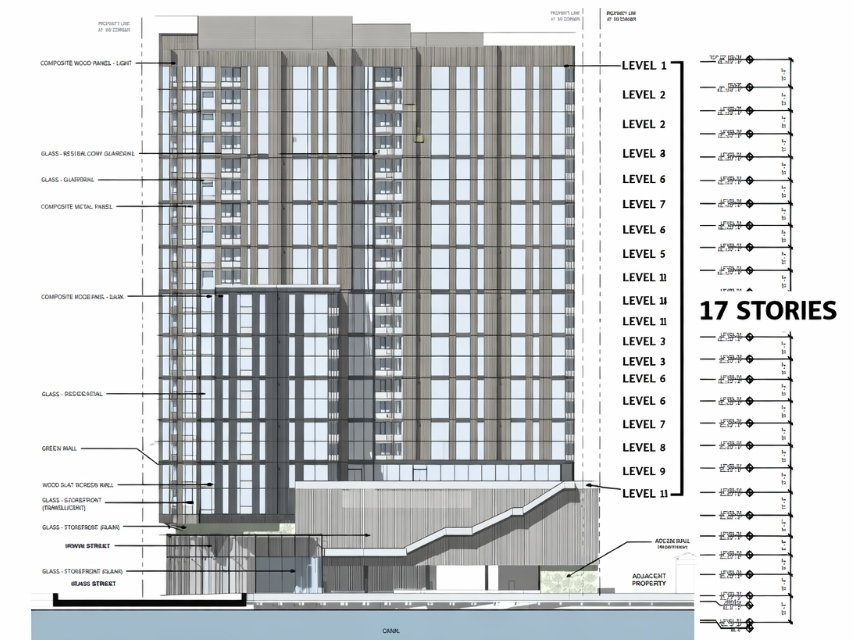
Housing production is not a hypothetical in Marin County. It is happening now, across every jurisdiction. Projects helping cities and the county meet their sixth-cycle RHNA obligations are already in the pipeline or under construction: Mallard Pointe in Belvedere, Magnolia Village in Larkspur, multiple unincorporated county sites including Oaks Senior Living, the Coast Guard property at Point Reyes, and 1501 Lucas Valley Road. Mill Valley has Hamilton Drive and Richardson Terrace. Novato has Landing Court, Wood Hollow Residences, and Habitat Redwood Boulevard. San Rafael is absorbing major infill at 4040 Civic Center Drive, 555 Northgate, Northgate Town Square, 700 Irwin, and 1230 Fifth Avenue. These are just a few among many. The growth is real, it is accelerating, and it is countywide.
That growth is necessary. What is not necessary is the way we are funding the infrastructure it requires.
In California, every new home creates measurable demand on roads, sewers, water systems, fire protection, and schools. The law provides a tool to match that demand to funding: development impact fees, supported by nexus studies that calculate what each new unit actually costs to serve. When done properly, growth pays for growth. When done poorly, or not at all, the cost shifts silently to existing residents through higher rates, new parcel taxes, deferred maintenance, and worn-out infrastructure.
Find out what's happening in Novatofor free with the latest updates from Patch.
In Marin, it is being done poorly. Not out of malice, but because the task outstrips what most local agencies are built to handle.
Consider how the system works in a place like Novato, where a single housing project can trigger fees or conditions from five separate public agencies: the city handles roads, parks, and police; the fire district covers emergency response; the sanitary district manages sewers; the water district manages supply and distribution; and the school district addresses classroom capacity. Each agency sets its own fee schedule, conducts its own nexus analysis, and maintains its own capital improvement plan, all independently and on different timelines.
Find out what's happening in Novatofor free with the latest updates from Patch.
A proper nexus study requires demographic projections, capital facility inventories, replacement cost analysis, legal compliance review, and public adoption. After the U.S. Supreme Court's 2024 decision in Sheetz v. County of El Dorado, even legislatively adopted fee schedules must withstand heightened constitutional scrutiny for nexus and proportionality. Assembly Bill 602 added requirements for square-footage-based calculations, periodic updates, and published documentation. These are not optional. They are the legal baseline.
Now ask a basic question: how many of Marin's small special districts have the staff, budget, and technical capacity to perform that work to current legal standards? Most fire districts, sanitary districts, and water districts in Marin operate with lean administrative teams focused on daily operations. School districts have even less infrastructure for this kind of financial and legal analysis. The result is that fee schedules go years without meaningful updates, nexus studies are either outdated or nonexistent, and agencies default to whatever the state cap allows rather than calculating what growth actually costs.
The numbers illustrate the consequences. In one Marin school district, the adopted residential impact fee is $5.17 per square foot, the state-mandated Level 1 cap. The district's own consultant study found that the actual facility cost of new housing ranges from $6.78 to $17.67 per square foot, depending on whether modernization or new construction is required. The gap between what is collected and what growth actually costs could reach tens of millions of dollars over a twenty-year housing pipeline. That unfunded liability does not disappear. It lands on parcel-tax payers, bond measures, and the general fund.
This pattern is not unique to schools. It repeats across every service category where the agency lacks the resources to properly study, justify, and update its fees. Roads deteriorate faster because transportation fees were set a decade ago. Sewer and water systems absorb new connections without fully recovering expansion costs. Fire stations stretch response capacity without accounting for density they were never designed to serve.
The solution is not to ask each small district to suddenly become an impact-fee shop. The solution is coordination. A shared technical framework, whether structured as a joint powers agreement, a countywide service, or a cooperative staffing arrangement, would allow Marin's agencies to pool resources for nexus studies, share demographic and capital data, standardize legal compliance, and publish transparent, defensible fee schedules that meet current state and constitutional requirements. It would cost less per agency than going it alone and produce a far stronger product.
Impact fees are not just a cost-recovery tool. They are one of the few remaining levers a community has to influence where and how growth actually lands. In a post-SB 35 world where much of traditional zoning discretion has been preempted, a well-designed fee schedule functions as a transparent price signal: full fees in locations where new infrastructure is expensive and capacity is thin, reduced or waived fees in areas where roads, utilities, schools, and fire service already have room. A partial or full waiver in a place like Hamilton, where surplus federal infrastructure and open land can absorb growth at low marginal cost, is a defensible incentive that pulls housing toward the location that best serves the community. The same waiver applied to a constrained downtown block with no surplus parking, no excess sewer or water capacity, and an already-stretched fire response zone is not an incentive. It is a subsidy for harm, quietly transferring tens of millions in real infrastructure costs onto existing residents. The point is not to block housing anywhere; it is to make the fee schedule honest about what growth actually costs in each location, and then use targeted reductions where the community genuinely benefits, such as transit-adjacent infill with existing capacity, family-oriented ownership units, or projects that fill gaps in the local housing stock, rather than granting blanket waivers that reward whichever developer games the system most effectively.
This is not about raising fees. It is about doing honest math. When growth creates costs, those costs should be measured accurately and charged fairly, not deferred until residents wonder why their roads are crumbling, their sewer rates are climbing, and their school boards are asking for another parcel tax.
If impacts are regional, the capacity to measure them should be regional too.
Marc Hunter Lewis is a community policy advocate based in Novato