Community Corner
CA State Senator Jerry Hill - Summary As Legislature Takes A Break
Summary of his bills


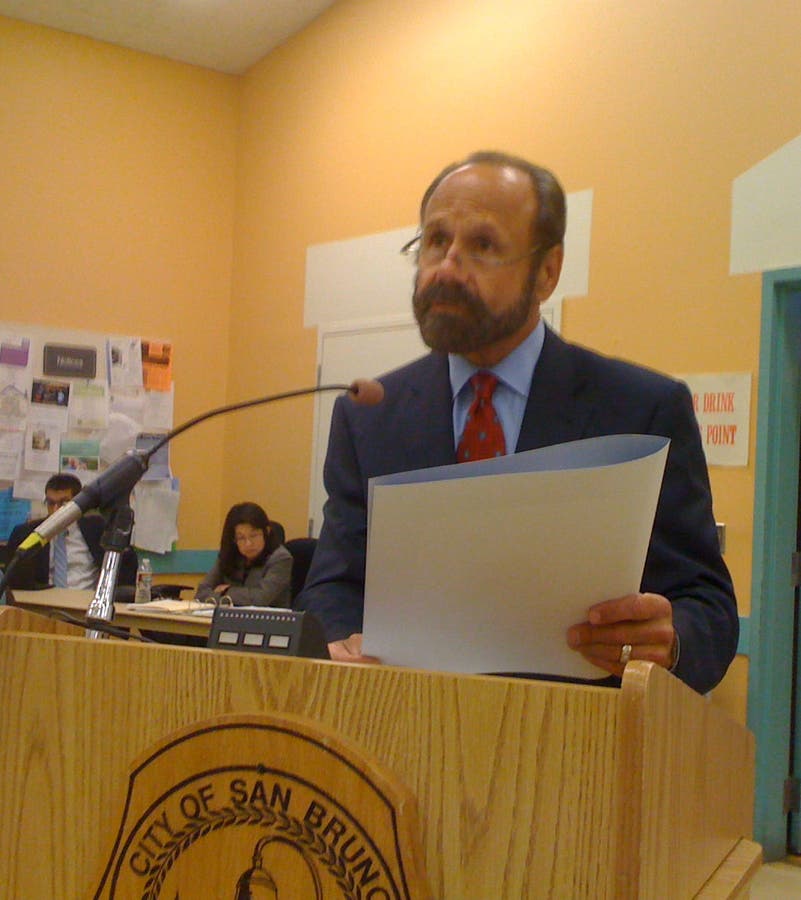
Article Source: CA State Senator Jerry Hill
State Senate Passes Bills by Senator Jerry Hill to Crack Down on Abuse of Disability Parking Placards, Ease the Cap on School Districts’ Reserve Funds, Bring Greater Transparency to Utility Bills, and More
The Legislation Joins Hill’s Bills on Martins Beach, Caltrain Funding, Bus Seat Belt Safety, PUC Reforms, Autonomous Vehicles and Consumer Safety That Await the Governor’s Consideration
SACRAMENTO – The state Senate passed more than a dozen bills by Senator Jerry Hill, D-San Mateo and Santa Clara Counties, this week and sent them to the governor for his consideration as the 2017 legislative year came to a close, ending early this morning.
In all, 16 bills by Senator Hill were passed by the Legislature this month and sent to Governor Jerry Brown for review. He has until October 15 to act on the legislation and hundreds of other bills that were passed.
The governor has already signed one of Senator Hill’s bills, Senate Bill 65, which prohibits smoking or consuming marijuana in any form in a vehicle and makes doing so an infraction, punishable by a $70 base fine. The legislation makes the offense and its punishment align with those for drinking while driving or riding in a car.
“This bill will make our roads and highways safer,” said Senator Hill.
“You should be holding the steering wheel – not a joint or an edible,” said Santa Clara County District Attorney Jeff Rosen, who prompted SB 65. “There is nothing recreational, medicinal or legal about hurting someone in a car accident when you’re high. Please don’t do it.”
SB 65 enhances Proposition 64, the recreational marijuana initiative, which makes it illegal to have an open container of pot in a vehicle but does not address use of marijuana products by drivers or passengers.
Bills by Senator Hill that await the governor’s action include legislation to aid the effort to restore public access to Martins Beach, make it possible to put a regional measure before voters in San Mateo, Santa Clara and San Francisco counties on an 1/8 cent sales tax to stabilize Caltrain funding, and require the driver and passengers in commercial buses that are equipped with seat belts to wear them.
If the governor signs the seat belt safety bill, California would be the first state to enact such a law, heeding the National Transportation Safety Board’s 2015 recommendation that states put bus seat belt laws on the books.
The NTSB underscored its recommendation in its report on the January 2016 bus crash in San Jose that killed two passengers. The vehicle was equipped with seat belts, but the two people who lost their lives were not wearing the safety devices and were ejected from the bus during the crash.
Seat belts are required for all new buses under a rule by the National Highway Traffic Safety Administration that took effect in November 2016. However, neither the rule nor current California law requires that the seat belts be worn.
“This is a common-sense bill that will save lives,” Senator Hill said of SB 20.
Other bills by Senator Hills that are heading to the governor’s desk would:
· Crack down on abuse of disability parking placards. An April 2017 reportby the California State Auditor quantified a long-suspected problem with the DMV’s program for disabled driver placards and license plates. Among other things, the audit found that placards were not cancelled for people who had died, leading to an estimated 35,000 placards that were still in use even though the individuals who were issued them were dead. “Taking unfair advantage of the state’s disabled placard program is an act of fraud,” Senator Hill said. “We must make sure the drivers who need this important program have access to its benefits – and block scofflaws and fraudsters from gaming the system.”
· Ease the cap that severely limits school districts from saving as much as they need in reserve funds. “This bill allows school districts to save for fiscal uncertainties and prevent adverse impacts to students and teachers,” said Senator Hill. “The longer the current cap is in place, the more it threatens the ability of California’s schools to maintain their fiscal solvency and provide students the best possible education.”
· Help curb the wild fluctuations in energy bills during winter months and requires investor-owned utilities to provide information that will help customers anticipate the amount of their next bill so they can act in time to reduce costs. “Ratepayers shouldn’t have to live in fear of what their next utility bill will be,” said Senator Hill.
· Enact reforms to the California Public Utility Commission that were agreed upon last year but not voted upon. “This legislation will help ensure that the CPUC exercises its regulatory role with integrity and with the public in mind,” Senator Hill said.
· Accelerate deployment of self-driving cars. “California has long been a leader in the development of self-driving cars, and my legislation enables our state to retain its leading edge in this developing field without compromising safety,” said Senator Hill.
Bill Summaries:
Senate Bill 19 – PUC Reforms: Enacts further reforms of the California Public Utilities Commission, which were first proposed in 2016 by Senators Hill and Mark Leno and Assemblymember Mike Gatto and reintroduced this year.
SB 20 – Bus Seat Belt Safety: Requires passengers and the driver in commercial buses to buckle up if vehicles are equipped with seat belts. Failure to do so is an infraction, punishable by a fine of up to $20 on the first offense and a fine of as much as $50 for subsequent offenses
SB 42 – Martins Beach: Creates a subaccount within the State Lands Commission’s Kapiloff Fund to be used for public access efforts – such as environmental studies, analyses and assessments – at Martins Beach in San Mateo County. The subaccount can accept money from public, private and nonprofit entities, including San Mateo County which will likely contribute matching funds. The bill provides the commission with the option to transfer up to $1 million of existing money in the Kapiloff Fund into the subaccount, but specifies that other money in the subaccount must be used before Kapiloff funds are used.
SB 65 – Prohibiting Marijuana Consumption in Cars: Prohibits smoking or consuming marijuana in any form in a vehicle and makes doing so an infraction, punishable by a $70 base fine. The legislation makes the offense align with prohibitions against drinking while driving or riding in a car.
SB 145 – Autonomous Vehicles: Eliminates a 180-day waiting period for companies that file an application to deploy driverless vehicles. The bill also strikes a requirement that the DMV notify the Legislature each time such an application is submitted.
SB 464 – Gun Store Security: Tightens existing security for gun stores and requires store owners to choose one of eight further measures to prevent guns being stolen by thieves who try to batter their way into the store or gun storage areas using vehicles or heavy equipment. This bill was suggested by a constituent as part of the senator’s “Oughta Be a Law” contest in response to a rash of gun store break-ins by thieves who used cars are battering rams.
SB 611 –Disability Placards and Plates: Helps the DMV prevent scofflaws and scammers from using disabled placards and license plates so that the program and its benefits are preserved for those drivers who need these resources.
SB 711 – Energy Bill Fairness: Addresses the wild fluctuations in energy bills experienced by many utility customers this past winter and requires that investor-owned utilities provide information to help customers understand what their next bill might be so that they can act in time to reduce it.
SB-751 – Reserve Cap: Exempts basic aid and small districts with average daily attendance of 2,500 or less from reserve cap rules. Modifies the trigger that would require districts to spend down their reserves to the minimum allowed. Raises the cap percentage to 10 percent from the current 6 percent. Clarifies that the cap applies only to General Fund revenue, not other accounts such as construction, cafeteria, charter school or other funds.
SB 793 – Design Build & Value Build: Permits San Mateo County to take advantage of a process that allows public entities to use a method ensuring best value criteria are used in securing construction project contracts. Doing so would expedite the county’s five-year, $500-million capital improvement plan. SB 793 also would allow three special districts – the Peninsula Health Care District, the Santa Clara Valley Open Space Authority and the Midpeninsula Regional Open Space District – to use the design-build method to carry out public construction, repair and restoration projects. Contracting with the same firm to design and build such projects is typical among state and local government entities and schools. But the process, which saves money and time, is not as prevalent among special districts, as many have yet to be granted authority to contract with a single firm to design construction projects and then execute those plans.
SB 797 – Caltrain Funding: Authorizes the counties of San Mateo, San Francisco and Santa Clara to place a 1/8-cent sales tax measure on the ballot to fund Caltrain operations and capital improvements, enabling local voters to decide how they want to improve traffic problems in their community. Before the measure could be put on the ballot, it would have to be approved by a two-thirds vote of the Caltrain board; a two-thirds vote from each of the Boards of Supervisors for San Francisco, San Mateo and Santa Clara counties; and a majority vote of each of the following transit districts: the San Francisco Municipal Transportation Agency, San Mateo County Transit District, and the Santa Clara Valley Transportation Authority. To succeed as a ballot measure, it would need two-thirds vote of all three counties combined.
SB 798 – Medical Board Sunset Bill: Extends the operation of the Medical Board and Medical Practice Act until 2022 and subjects the Osteopathic Medical Board and Osteopathic Act to review by the appropriate policy committees of the Legislature, to be performed as if the Osteopathic Act were scheduled to be repealed as of 2022.
SB 799 – Nursing Board Sunset Bill: Extends the sunset date of the Board of Registered Nursing to January 1, 2022. Also directs the California Research Bureau to study employer reporting of possible violators of the Nursing Practice Act and provide findings by January 1, 2019, so the board can identify ways to receive such data in a timely manner. Also makes other changes consistent with the sunset review report on the Board of Registered Nursing.
###
Leslie Guevarra
Communications Director
Find out what's happening in Pacificafor free with the latest updates from Patch.
Find out what's happening in Pacificafor free with the latest updates from Patch.
Robert Riechel
E=Mail: SanBrunoPatch.Robert@Yahoo.com
My Posts http:/patch.com/users/robert-riechel
Photo Credit: San Bruno CA Patch Archives
Source Credit: CA State Senator Jerry Hill
Web Site: http://sd13.senate.ca.gov/