Schools
Impressions of Cabrillo School
I had the opportunity to tour Cabrillo School with a group of incoming Kindergartner parents and interview Scott Carson, principal.
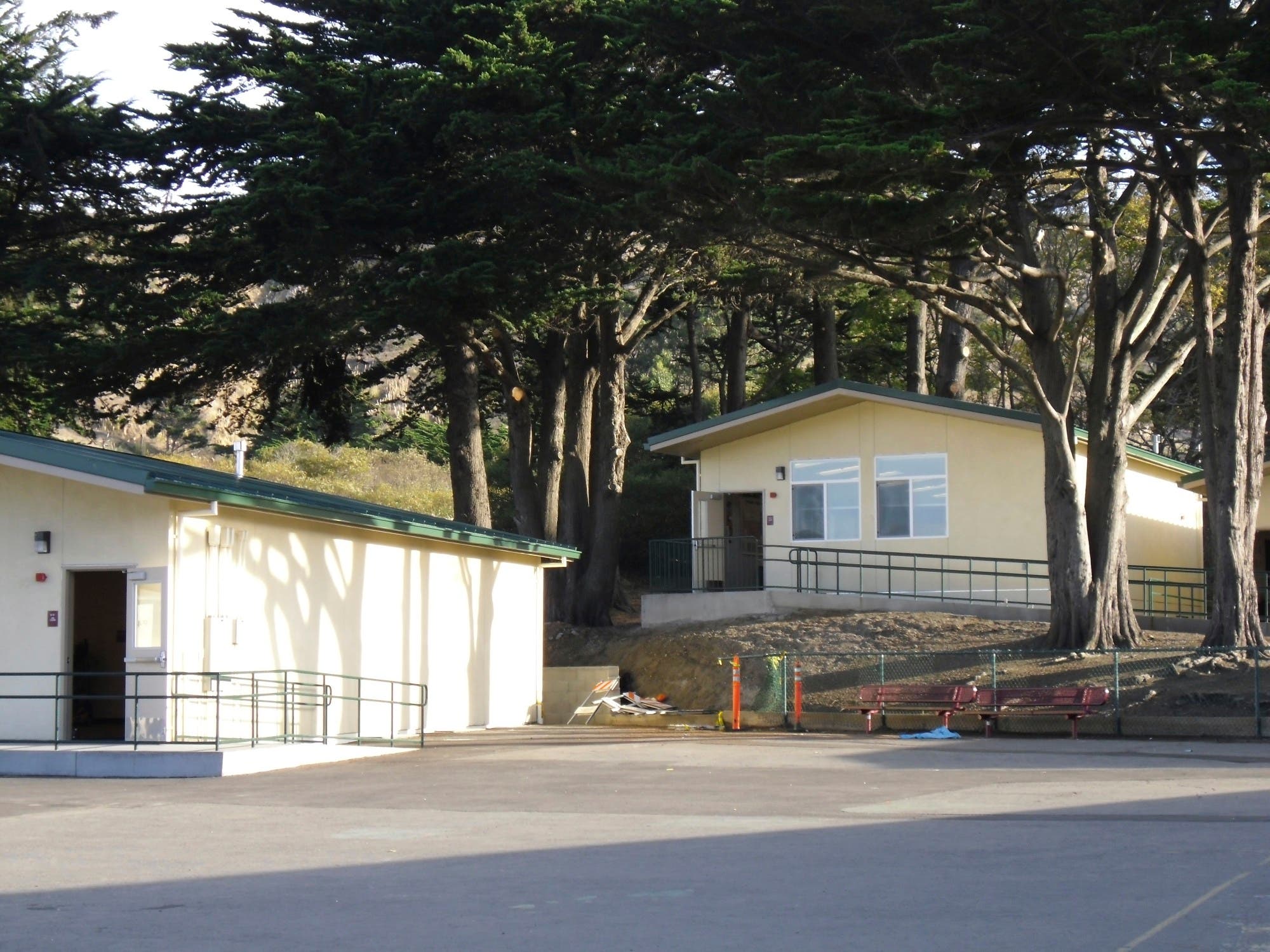


As I walked to the front doors of Cabrillo School, I was immediately taken back to my own elementary school in North Little Rock, Ark. My school had similar red brick, large trees surrounding the grounds, and inviting, oversized glass windows. Cabrillo looks like a happy place; student creativity is evident in the colorful wall displays and door decorations.
Recognized by the State of California as a Distinguished School, Cabrillo, since 1992, has based its educational philosophy on Howard Gardner's ideology of Multiple Intelligences, or that students learn in different ways besides traditional methods.
On meeting Principal Scott Carson, he was busily preparing for an incoming Kindergarten parent tour, one that I was invited to attend. With about 25 parents waiting in the lobby (many with babies in tow), the atmosphere was excited and peppered with overwhelmed parent anxiety and nervous energy.
Find out what's happening in Pacificafor free with the latest updates from Patch.
Carson has been principal at Cabrillo for five years. Previously, he worked at Lowell High School in San Francisco. He enjoys the continuation factor that a K-8 school such as Cabrillo has that a high school doesn't. Many students stay at Cabrillo from Kindergarten through 8th grade.
Though Carson recognizes the draw of Pacifica middle school Ingrid B. Lacy Middle School (IBL)--with its newer, gadget-filled campus that might attract students entering 6th grade--many students at Cabrillo are steadily deciding to stay on through 8th grade.
Find out what's happening in Pacificafor free with the latest updates from Patch.
"We want parents to stay K-8," said Carson as he led the group of Kindergarten parents around the campus. " The K-8 model works well because there is a history—an intimacy between the students in a smaller school environment."
Cabrillo is a "small liberal arts college compared to the big university or IBL," he said.
Carson continues to speak with pride about the closeness the students share with each other. On the last Friday of the month, Cabrillo celebrates "Family Day." One student from each grade level makes up a "family", and these students stay together as a group through their years at Cabrillo, participating in activities and events. As the oldest child graduates, a new Kindergartener is added to the family. Indeed, Carson wants Cabrillo to be like the school parents remember from their childhood, one that flourishes with a neighborhood and where everyone knows each other.
Cabrillo, like other schools in the district, suffers from lack of funds to create a multi-faceted learning environment, so they rely heavily on parent participation. As Carson tells the tour group that 40 hours a year of parent participation is mandatory, there are several glances between parents. Silent questions hang in the air, and Carson is quick to quiet fears.
He recognizes that many parents work full time, so 40 hours doing something other than work can seem daunting at first. However, once he mentions that parents can do work at home with arranging carpools or organizing phone trees, smiles return to parents' faces.
As we tour through classrooms, I notice a plethora of artwork and projects lining the walls. Parents stop to look closer at some of the work, and there are many waves from children who recognize their mom and dad, friend's parents, or neighbors.
We stop by Ms. Skiles 6th grade class. She's an algebra and science teacher. She's using a document camera to teach her lesson, and in between the laughter and obvious camaraderie between herself and the students, Carson asks the students what their favorite subjects are this year and why. One student says that science is her favorite subject because the experiments are "interesting this year" while another says math; both are subjects Skiles teaches daily. She beams a big smile before we file out the door.
In another part of the campus, a 3rd grade classroom is colorfully decorated with posters, math multiplication blocks, toys, brightly colored rugs, and student projects. There are new spelling words on the board, and the students studiously copy them down as we quietly leave them to their work.
One prospective parent on the tour, Russell, told me that the process of finding the right school for his incoming student has been "pretty easy so far." He and his wife like Cabrillo most because of its convenient location to their home, with Ortega being their second choice only because it is second closest. He mentioned that the lottery system, where parents list a first and second choice, can be difficult but he is pleased with the schools and what they have to offer.
Before we end the tour, Carson is quick to tell us about the additional amenities available to Cabrillo students. Parents teach K-5 classes like "art, music, drama, and movement classes with classroom teacher support" and in the upper grades, professional artists and technology teachers teach similar courses.
There is a counselor available to students twice a week, as well as a speech therapist who works with students with mild disabilities. There is not, however, a full-time librarian, and Carson reminds me that because of budget cuts, almost all the "extras" have been nipped from the program.
"It's really just the teachers, me, and a secretary," he said.
Though these comments end my tour, I can only notice that Cabrillo shines with student smiles and engaged, knowledgeable teachers. Cabrillo is definitely a happy, creative space, where students are given the opportunity to learn a little differently and think creatively, while still receiving a quality education.