Politics & Government
Could Glut Of Candidates Sabotage Dems' Blue Wave In California?
Democrats see their hopes of flipping the House of Representatives bedeviled by California's open primaries and a glut of candidates.


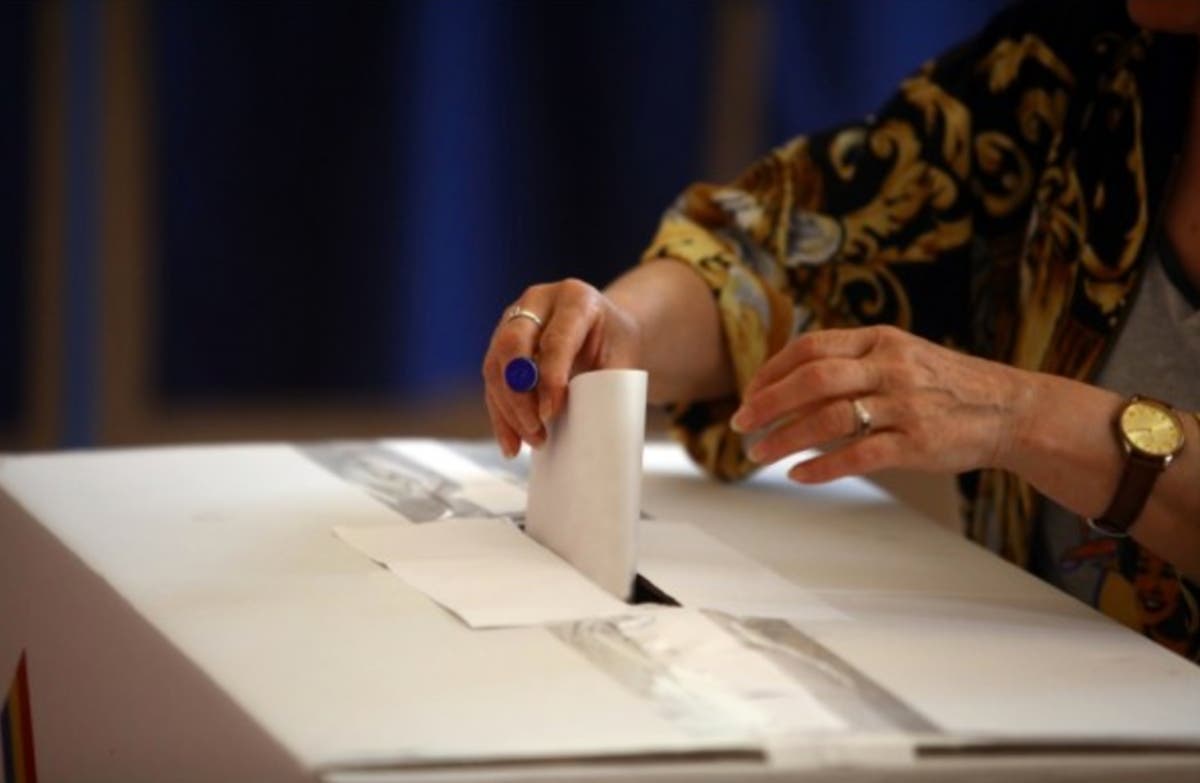
LOS ANGELES, CA — The Democratic dream of taking over the House of Representatives with a blue wave midterm election is quickly turning into a nightmare, and it’s California, the vanguard of the Trump resistance, that could doom the party.
The state’s messy open primary and a glut of California congressional candidates is creating a perfect storm that could split the vote on the left, possibly shutting Democrats out of competitive races come Tuesday’s primary vote.
Nationally, Democrats need to turn 23 seats to take the house, and seven of the most competitive districts currently held by Republicans are in California. The stakes are high but the data is sparse. There aren't any polls that create a very clear picture of what to expect on Tuesday in the state’s 55 House races.
Find out what's happening in Pacific Palisadesfor free with the latest updates from Patch.
“If you have one or two Republicans and seven or eight Democrats running, it’s possible you can end up with two Republicans. It can backfire. That is a price that California will pay for having the open primary. It's a crapshoot,” said said Zev Yaroslavsky, director of the Los Angeles Initiative at the UCLA Luskin School of Public Affairs.
But what happens on Tuesday could largely determine who wins control of the house in November.
Find out what's happening in Pacific Palisadesfor free with the latest updates from Patch.
“As the saying goes, ‘When California sneezes, the rest of the country catches a cold.’ What happens here is going to have big impact on what the rest of the country looks like on Jan. 2,” said Yaroslavsky.
The stakes
There are 55 California races for the House of Representatives on the June 5 ballot, but only about seven are considered truly competitive. At this point, there don’t appear to be any seats currently held by Democrats that seem poised to flip to the Republicans in California. There are however, seven seats currently held by Republicans that Democrats have a chance to flip. They are largely in Southern California where retirements and uncharacteristically vulnerable incumbents open up the playing field. Also, several Southern California districts have traditionally conservative electorates that have been slowly inching to the left to the point where many of the districts went for Hillary Clinton over Donald Trump in 2016.
The Toss-Ups
In Orange County, alone, Democrats have a shot at flipping three seats long-held by Republicans, but support from the left is splintered among numerous candidates. Even the state and national Democratic parties chose differing candidates to endorse.
“I get anxious just thinking about it,” Tara Steele, a member of Newport Beach Democratic Women’s Club, told the New York Times about the possibility that Republican incumbent Dana Rohrabacher, who is leading in the polls, could win in November. "If the disorganization of the Democratic Party is the reason he gets reelected, it will be incredibly disheartening.”
Firmly entrenched in Republican territory, the longtime incumbent sits in a district that went for Clinton in 2016, and he’s garnered negative headlines over the last year for his often-pro Russia/Vladimir Putin stances and affiliations with people involved in the special counsel’s Russia investigation. He faces a challenge to his 48th District seat form Republican operative Scott Baugh, who carries significant name recognition in Orange County for his activism in conservative circles. The two could edge out a whole field of Democratic challengers Tuesday. Democratic challengers Hans Keirstead and Harley Rouda released polls in May that have Rohrabacher comfortably leading the field with around 30 percent of likely voters followed by Baugh, Keirstead and Rouda with 13 to 15 percent of the vote, according to CNN.
The 39th District, the Orange County district where incumbent Republican Ed Royce is retiring after Clinton won his district by 9 points, is largely considered to be the most vulnerable for Republicans. There are seven Republicans and six Democrats in the running for Royce’s seat. Democrat Gil Cisneros released a poll last month showing him in the lead with 20 percent of likely voters, followed by Republicans Bob Huff and Young Kim and Democrat Andy Thorburn ranging between 11 percent and 14 percent, according to CNN.
Also in Orange County sits the 49th District where Republican incumbent Darrell Issa is retiring. Clinton carried his district, and he won his last re-election by less than 2,000 votes. Democrats are gunning for his seat which dips into San Diego County. The Cook Political Report predicts the district will flip to Democratic hands while Inside Elections is predicting the district will stay red through at least one more election cycle. At this point, the playing field in the 49th is a true toss-up, and there could just as easily be a pair of Democrats as Republicans advancing to the November midterms. Polls by Democrat Sara Jacobs and a group urging Democrats to vote for Democrat Doug Applegate show Applegate, Jacobs and Democrat Mike Levin all neck and neck with Republicans Rocky Chávez and Diane Harkey, CNN reported.
California’s other vulnerable incumbents include Simi Valley’s Steve Knight, whose beset by an increasingly liberal electorate, and inland Orange County’s Mimi Walters, who has the same problem. Both face a bevy of Democratic challengers. Democrats Brian Forde, Kia Hamadanchy, Dave Min and Katie Porter are all vying take on Walters come November.
Central Valley’s Jeff Denham is also considered vulnerable because Clinton carried his district. He only has one Republican challenger, but six Democrats are vying to take him on. Also considered vulnerable and from the Central Valley is Republican incumbent David Valadao, who serves a district with more registered Democrats than Republicans.
The Stretch
With just a few days until the primary election, Democrats are pouring money into competitive races aware that their candidates risk dividing the field and getting shut out come November.
“The democratic party interests are not blind to that possibility,” said UCLA’s Yaroslavsky. “In some cases there has been a coalescing around a specific candidate.”
According to the New York Times, Democrats are spending more than $4 million on just three campaigns. The goal: get at least one Democrat past the primaries. The strategy involves everything from supporting a specific candidate to attacking a Republican from the right to dampen conservative voter enthusiasm.
Enthusiasm is the key and the challenge for both parties in these midterm races.
Yaroslavsky said he’s confident Democrats will do well in competitive districts if they can get past the primaries, in which Republican voters typically turnout in higher numbers.
“All of the polling and all the evidence based on special elections held around the country is that there is a high level of intensity and political anxiety among democrats and moderate republicans,” Yaroslavsky said. “If there’s a wave, the wave is going to be in November — not in the primary. I am reasonably confident 7 or 8 districts will be in play then, and there will be robust turnout.”
Photo: Shutterstock
Get more local news delivered straight to your inbox. Sign up for free Patch newsletters and alerts.