

Foodies and film lovers gathered at Wednesday night, as Palisades Cares president Marie Steckmest presented A Farm to Table Evening featuring the film Ingredients.
Laura Diamond of the congregation’s Green Team hosted the evening of documentary, dialog and delicious delicacies. She introduced the screening as in keeping with the Reconstructionist synagogue’s mission of tikkun olam, healing the world. Pacific Palisades Junior Women’s Club underwrote the program.
Steckmest called this the culminating event of a series of programs inspired by her group’s Palisades Reads project, studying and responding to Animal, Vegetable, Miracle by Barbara Kingsolver. Other related evenings included a dinner at Taste prepared with farmer’s market sourced ingredients, discussions at Village Books with gardeners, filmmakers and cooks, and a day of seed planting for kids at Simon Meadow.
Find out what's happening in Pacific Palisadesfor free with the latest updates from Patch.
Ingredients focuses on small, organic farmers and the restaurateurs who revere them. It aims to educate viewers about the nutrition and flavor advantages of local and seasonal produce and meat that are sustainably farmed.
“Our taste buds are there to guide us to better nutrition,” organic farmer Carol Boutard says in the film. She emphasizes that farm fresh food sold hours from harvest is good tasting and good for you.
Find out what's happening in Pacific Palisadesfor free with the latest updates from Patch.
The film’s narrator reiterates the often heard public health warning that today’s children are likely to achieve shorter lifespans then their parents for the first time in recent history. While large-scale agriculture and government subsidies may produce cheap food for Americans, consumers pay costs in food-borne illnesses and for packaging, storage and long haul shipping, she goes on.
“You can pay the doctor or you can pay the farmer,” says one of the scientists in the film. “There’s no country that spends less on food and more on medicine.”
Present at the screening was the film’s executive producer Corinne Bourdeau, of 360 Degree Communications in the Palisades, who also worked on the Academy Award-winning documentary The Cove.
“I’m just a huge passionate foodie,” she told me. “I work on films that…have a social action theme. That’s my mission in life.”
Ingredients’ producers are planning to syndicate the brand. The film we saw focused mainly on farms in the Pacific Northwest. Plans are in the works for Ingredients: Hawaii and Bourdeau is currently in preproduction on Ingredients: California. They plan to create more movies along with books and blogs, all in order to foster dialog about the issues raised.
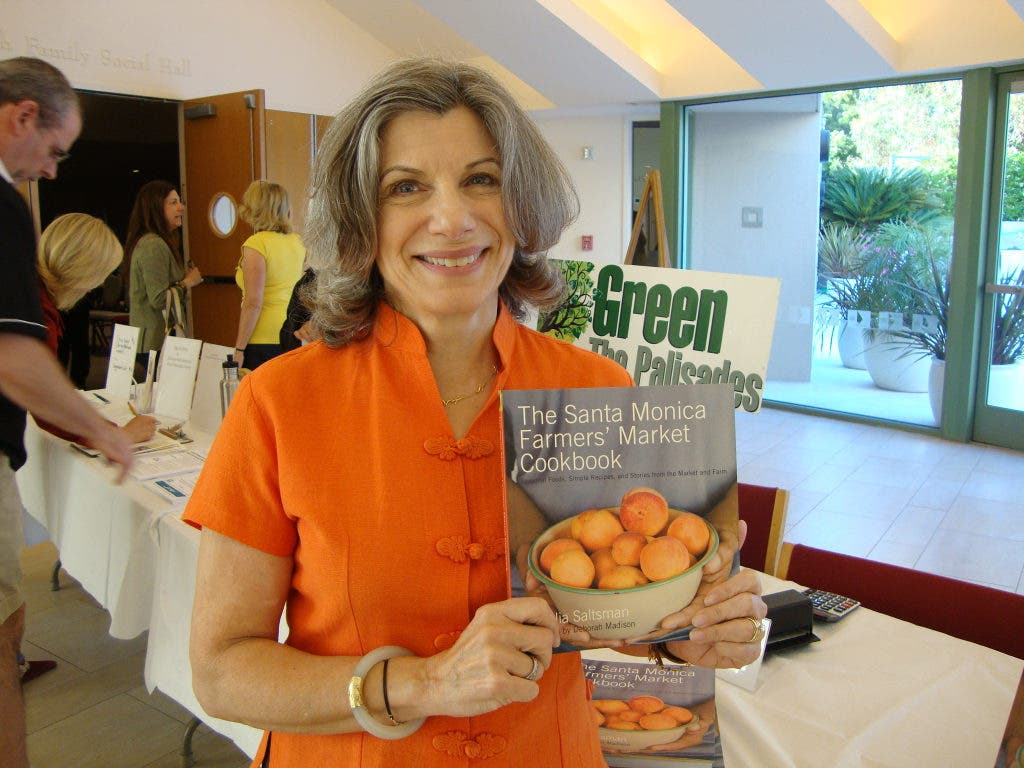
Following the screening a panel of local experts expressed their own support for local and seasonal eating and fielded questions from the audience. Moderating the discussion was Amelia Saltsman, author of The Santa Monica Farmer’s Market Cookbook. Executive Chef Evan Funke of Rustic Canyon Winebar in Santa Monica and Barbara Spencer, owner of Windrose Farms in Paso Robles, also participated.
Spencer talked about biodynamic farming, heirloom seeds and the spiritual content of consciously grown food; Saltsman was rapturous about the flavor of local produce; and Funke emphasized ecological harmony and seasonality.
All of them encouraged shopping at farmer’s markets and doing your own gardening. Funke pointed out that industrial “organic” farming might mean a plot of 100 acres right next to a 5,000 acre spread that’s routinely sprayed. Not what you’d call sustainable or even chemical-free.
The chef illustrated what farmer Spencer called his “fine palette” when he described food grown with Wildrose’s alkaline well water.
“It lends a je ne sais quoi,” he said, to the audience’s amusement, “a very subtle sweetness to everything that she grows.” Funke contrasted that with produce grown at a farm that uses mountain water, which he said “lends a mineral quality.”
Funke buys from 15 to 18 different farms, taking into account water, soil and the various microclimates across California.
“Your cooking becomes much simpler,” said Saltsman, when foods are grown for flavor. “What we are doing is allowing ingredients to speak.”
Before the discussion ended, audience members wanted to share their valuable resources. Sarah Spitz made a pitch for the Learning Garden in Venice, which also supports a seed library called SLOLA.
Finally attendees were treated to tiny and delicious salads prepared by Funke. Sprinkled over a creamy, stretchy mound of Gioia burrata cheese, were sungold tomatoes from Wong Farms, grape tomatoes from Jaime Farms and roasted artichokes from Life’s a Choke all purchased from the Santa Monica Farmer’s Market. A leafy topping was created with wild arugula from Spencer’s Windrose Farm. The salad was lightly dressed with pesto made from fava sprouts, garlic and locally grown olive oil.
Funke’s advice to you readers, “Get to know your farmer.”