Palm Desert, CA|Local Classified|Announcement|

Restless Legs at Night? 5 Signs It Could Be Your Veins

Why aching, cramping, swelling, and restless legs may deserve a closer look
By Dr. Pushpinder Sivia, Vascular Surgeon
Empire Vein & Vascular Specialists empirevein.com
For many people, leg discomfort seems to show up when the day slows down. You take off your shoes and your legs feel heavy, swollen, achy, or impossible to keep still. Maybe you wake up with calf cramps. Maybe your ankles are puffy by dinner. Maybe your legs simply will not settle down when you get into bed. It is easy to blame age, a long shift, or hours in the car. Sometimes that is the reason. But these symptoms can also be a sign of chronic venous insufficiency, a condition in which the veins have trouble moving blood efficiently back toward the heart.
There are five clues that can make a vein problem more likely. Restless legs at night are one. Swelling that gets worse toward the end of the day is another. Heavy, achy legs or nighttime cramping can also point toward venous disease. Visible varicose veins, itching, or discoloration around the ankles may be additional signs. Finally, some people notice that their legs feel better when they walk, change position, or elevate their feet. None of these symptoms alone proves that the veins are the problem, but when several occur together, especially after long periods of standing or sitting, they deserve a closer look.
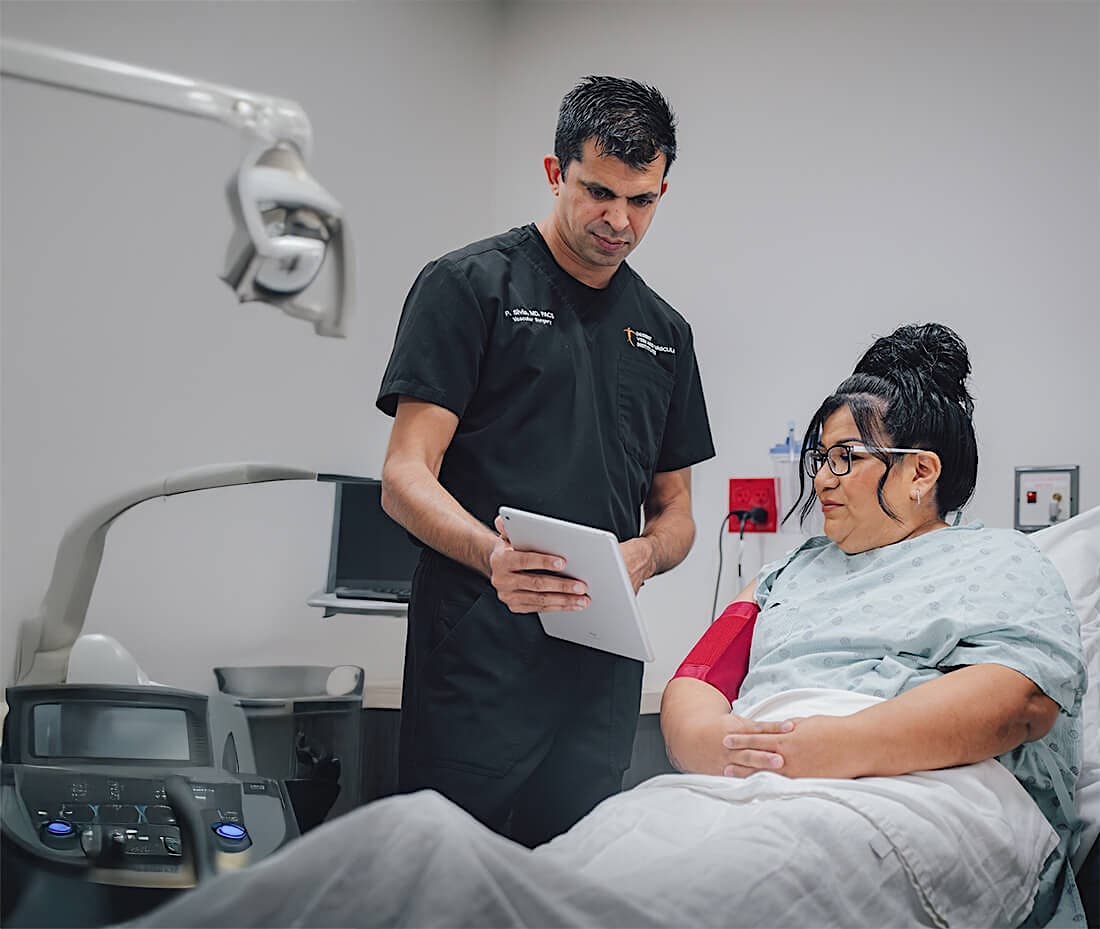
Many patients come in because their legs are restless, cramping, or uncomfortable at night and they never considered that their veins could be contributing. An ultrasound lets us see exactly how blood is moving through the veins and whether abnormal reflux is present.
That is important because restless legs symptoms can sometimes be labeled as restless legs syndrome without anyone checking the circulation in the legs. True restless legs syndrome is a neurologic condition, and vein disease is not the cause in every patient. But studies have found an association between restless legs symptoms and venous disease. When restlessness comes with swelling, heaviness, aching, cramping, or varicose veins, chronic venous insufficiency may be contributing to the problem.
Venous reflux happens when valves inside the leg veins stop working properly and allow blood to pool in the lower legs. For someone who spends much of the day standing, working on their feet, or sitting for long stretches, symptoms can become more noticeable by evening.
If abnormal venous reflux is found, treatment today is very different from the vein stripping procedures many people remember. Modern vein treatments are usually performed in the office and may include VenaSeal, radiofrequency ablation, or ultrasound guided foam treatment. These procedures close unhealthy veins and allow blood to reroute through healthier veins.
Insurance is another area that often surprises patients. Vein treatment is not always cosmetic. IEHP, Medicare, and many PPO and HMO plans may cover treatment when venous disease is causing medical symptoms and coverage requirements are met.
For people who have been told they have restless legs syndrome but have never had their veins checked, there may be one more question worth asking. Could your restless legs actually be a vein problem?
If your legs ache, swell, cramp, feel heavy, or simply will not settle down at night, call Empire Vein & Vascular Specialists at 1 800 VARICOSE to schedule a free vein screening. Finding and treating an underlying vein problem may help your legs feel better at the end of the day and help you finally get a better night’s rest.
#####