Politics & Government
Federal Agencies Partner To Conserve Mojave Desert Tortoises
The desert tortoise was listed as threatened under the Endangered Species Act in 1980.


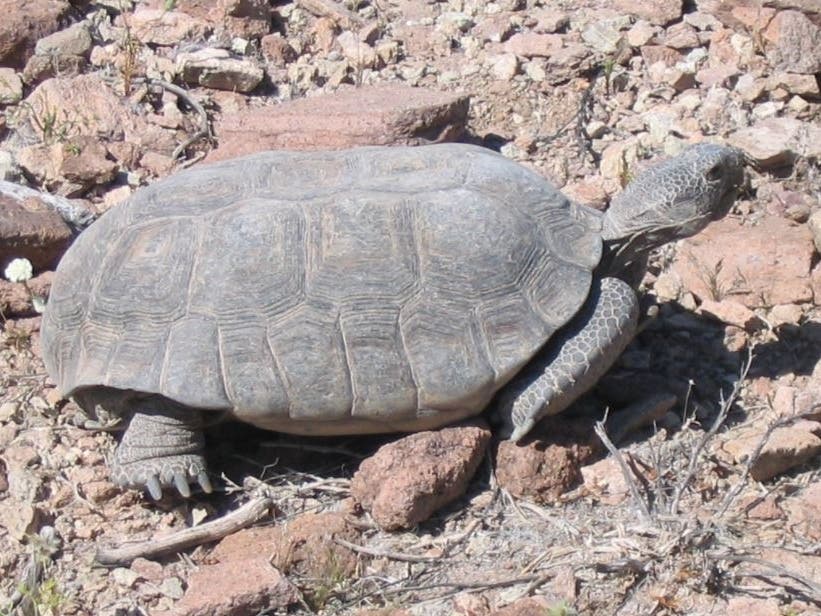
SAN BERNADINO, CA —The U.S. Fish and Wildlife Service announced Wednesday that several federal agencies are teaming up to help conserve the federally threatened Mojave Desert tortoise population in the western Mojave Desert.
The Service said it is working with the U.S. Army, the U.S. Fish and Wildlife Foundation, the Bureau of Land Management (BLM) and other local conservation groups to implement specific recovery actions for the species, which include: improving desert tortoise populations through habitat restoration, improved management of threats within critical habitat, reduction of other mortality sources like roadkill, and strategic use of population augmentation.
In a release, the U.S. Fish and Wildlife Service said that as part of the Endangered Species Act, the U.S Army will receive additional flexibility for military training within the Army's National Training Center and Fort Irwin. Meanwhile, the Army will fund recovery actions for the desert tortoise within areas of critical environmental concern managed by the Bureau of Land Management (BLM).
Find out what's happening in Palm Desertfor free with the latest updates from Patch.
"We are excited to announce this initiative that balances military readiness and species recovery," said Scott Sobiech, Carlsbad Fish and Wildlife Office Field Supervisor. "Fort Irwin has historically worked to protect sensitive species and their habitat, and we are grateful for their continued commitment to conservation."
The desert tortoise lives in a variety of habitats from sandy flats to rocky foothills, including alluvial fans, washes and canyons. It was listed as threatened under the Endangered Species Act in 1980 due to high rates of mortality, and fragmentation, degradation and loss of its habitat, according to the U.S Fish and Wildlife Service.
Find out what's happening in Palm Desertfor free with the latest updates from Patch.
Katrina Symons, from the Bureau of Land Management Barstow Field Office, said her agency is proud to be part of a group teaming up to improve desert tortoise populations.
"The BLM is pleased to be actively involved in the Desert Tortoise Recovery Partnership to achieve targeted conservation goals," Symons said. "This partnership will implement desert tortoise recovery actions, such as habitat restoration, at a larger scale than what any agency can do alone."
Get more local news delivered straight to your inbox. Sign up for free Patch newsletters and alerts.