Politics & Government
Californians Asked To Pitch Ideas For Drought Relief, Respond To Proposed Bill
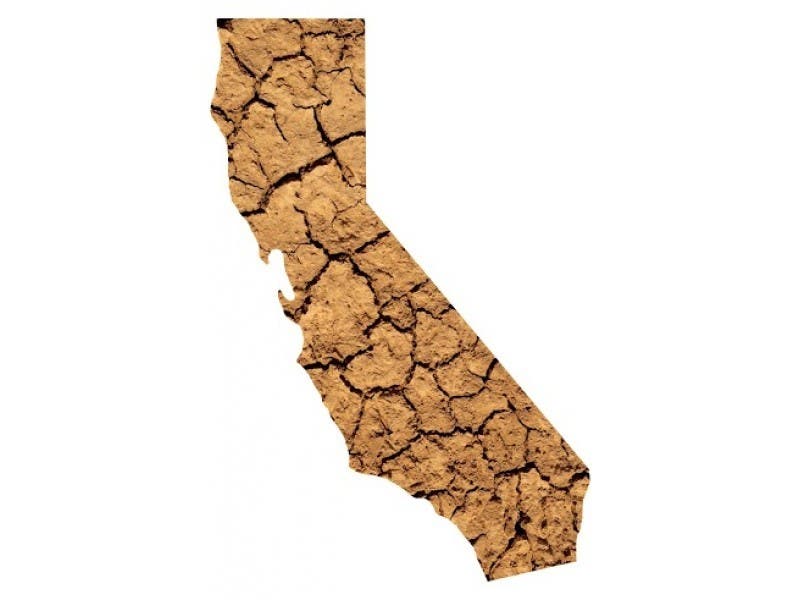
Congressman Jared Huffman seeks public input on his "Drought Response Legislation" introduced last week.


From the office of Congressman Jared Huffman (D-San Rafael):
“California is hurting.
“In response to the worst drought in our state’s long memory, our public institutions—with one unfortunate exception—are stepping up.
Find out what's happening in Palo Altofor free with the latest updates from Patch.
“Governor Brown and the legislature passed long-overdue groundwater and sustainable water investments through last year’s $7.5 billion water bond. Local governments and water districts are launching conservation plans to preserve dwindling water supplies. The Obama administration is providing millions in emergency grants to drought-stricken communities and farmers.
“But some in Congress have treated the drought as a political opportunity instead of a moral imperative. They’ve dusted off the same political agenda they’ve pursued for years: weakening environmental laws, gutting fishery protections, and redirecting water needed by other regions—and tried to sell it as a drought response.
Find out what's happening in Palo Altofor free with the latest updates from Patch.
“Instead, we need to work together to get through this drought. That’s why I developed the kind of serious, comprehensive legislation this crisis demands—and I want your input.
“Download my full bill HERE or read it below and send your input to HuffmanDroughtResponse@gmail.com ”
___________________________________________________
Congressman Jared Huffman (D-San Rafael) serves as the ranking Democrat on the Water, Power, and Oceans Subcommittee, and last week unveiled legislation to respond to the drought and called for public input on the draft bill before its formal introduction. Huffman asked Californians throughout the state to visit Huffman.house.gov/drought to read the draft legislation and give their feedback.
The legislation includes a range of short- and long-term solutions to stretch water supplies and build new clean water infrastructure, creating jobs without undermining environmental protections, preempting state laws, or redirecting impacts from one drought-stricken area to another.
Huffman’s bill is supported by a growing list of state and national organizations, including: The Association of California Water Agencies, the California Association of Sanitation Agencies, the California Water Environment Association, the National Association of Clean Water Agencies, the Water Environment Federation, the Western Recycled Water Coalition, and the WateReuse Association.
Huffman’s bill has attracted numerous original cosponsors, including Reps. Sam Farr (D-CA), Mark DeSaulnier (D-CA), Jerry McNerney (D-CA), Mike Thompson (D-CA).
Huffman’s draft drought response legislation reflects four basic principles:
1. Do no harm—ours is a complex system, and we should not redirect impacts or micromanage it from Washington.
2. No water wars—end attempts to gut environmental laws and take water from other regions. Solutions must respect environmental and water quality laws, and benefit every region impacted by this drought.
3. Think long-term—we should respond not just to the immediate crisis but build drought resiliency for the future.
4. Process matters—successful water initiatives require transparency, inclusiveness, and deliberation. Back room deals and secret water grabs invariably create more problems than they solve.
A PDF of Huffman’s drought response bill can be found HERE.
___________________________________
- Also see:
- Beware, Pet Owners: Another Drought-Related Problem Is Rabies
- ‘Ugliest Yard Contest’ Is One Way To Deal With Drought In California!
- El Nino to Rescue California from Drought?
_______________________________
A section-by-section summary of Huffman’s bill can be found below:
In response to the drought conditions in California and other western states, the draftlegislation includes immediate emergency measures as well as long-terminvestments in water supply reliability.
Title I: Emergency Drought Response Appropriations from Reclamation Fund
This title uses the Reclamation Fund as a source for emergency appropriations forpublic health and safety; for expanding water recycling, reuse, and reclamation; formeeting the emergency needs of communities impacted by the drought; and fordeveloping long term solutions to meet the impacts of climate change on this alreadyarid region of the country. The Reclamation Fund was established in 1902, fundedby public land sales within the western States and territories for the purposes offunding water infrastructure projects. The Fund has historically been supplementedwith additional revenues from federal water resources development and mineral andnatural resource leases on federal lands, and now has a surplus that exceeds $10 billion.
- Emergency EPA Appropriations: $500 million (see below)
- Emergency WIFIA Appropriations: $20 million (see below)
- Reclamation Appropriations: $200 million total, including $20 million forTitle XVI and $20 million for WaterSMART. Remaining funding could also beused for RIFIA (see Section below). Also directs a portion of the emergencyReclamation appropriations to completing Cal-Fed water storage feasibility studies that have the financing and support to be under construction within 10years.
- Army Corps Appropriations: $40 million for Section 5039 of WRDA2007, which was an environmental infrastructure (reuse and recycling)authorization for California that has never been funded.
- Rural Utilities Service Rural Water Program: $5 million (IncludesEmergency Community Water Assistance Grants to assist rural communitiesthat have experienced a significant decline in quantity or quality of drinkingwater)
- Emergency Grants To Assist Low-Income Migrant and Seasonal Farmworkers: $25 million
- Curtailing Water Theft from Illegal Marijuana Grows: $3 million
- Improving Groundwater Recharge and Upstream Watershed Protection for Water Quality and Quantity: $100 million
- EPA Superfund: $300 million for cleanup of contaminatedgroundwater to improve available supplies especially in urban areas.
- GAO Report on Duplication and Fragmentation in Water Agencies.
Emergency EPA Appropriations Funding: An emergency appropriation forEPA’s Clean Water and Drinking Water State Revolving Funds of $500 million withpriority for drought response projects. Increases repayment period to reflect the full life of the capital investment.
Emergency WIFIA Appropriations Funding: An emergency appropriation of $20 millionfor WIFIA, a new pilot water infrastructure financing program established by the recentlypassed WRRDA, with the additional change allowing the program to work with tax-exemptmunicipal financing for projects in areas with drought declarations.
Title II: New Water Infrastructure Program Authorizations
New Water Recycling and Reclamation Program Through EPA: Would establish a newEPA grant program to support water recycling projects. Designed to establish a nationwideprogram, not just in the Reclamation states, to support water recycling and supplementReclamation’s Title XVI program.
Reclamation Infrastructure Finance and Innovation Act (RIFIA): Three-part program of expanding the Bureau of Reclamation’s toolbox in financing water infrastructureprojects.
· Innovative Financing: Modeled after the successful and popularTransportation Infrastructure Finance and Innovation Act (TIFIA) program, thistitle would offer long- term, low-cost financing for eligible water infrastructure projects directly and indirectly associated with a Bureau of Reclamation(Reclamation) project. Funds, under the Act ($50 million a year), would beavailable to finance the planning, design and construction as well as the acquisitionof real property or an interest in real property if the acquisition is integral to an otherwise eligible project.
· Integrated Regional Water Management, Reclamation, and RecyclingProjects: Would allow Reclamation to participate as a technical and financial partner with state and local water management entities to develop storage andconveyance associated with regional integrated water management, and waterrecycling projects. Provides authority for Reclamation to participate in these projects with cost-shared grants of up to $15 million, and funds would beavailable to be expended for up to five years—program would be authorized at$150 million.
· Local and Federal Coordination on Improvements to ReclamationFacilities: Would authorize the Secretary of the Interior, under specificconditions, to transfer ownership of a small Reclamation project to a non-federal entity. This will allow for the non-federal operating entity to obtain a loanguarantee that would not constitute a “third-party” financed obligation and wouldbe favorably “scored” under congressional budget rules.
Innovative Stormwater Capture Program: Incorporates Congresswoman Edwards’s bill,the Innovative Stormwater Infrastructure Act, to establish new approaches to manage andcapture stormwater runoff.
Title III: Improved Infrastructure and Water Management
Restoring America’s Watersheds and Increasing Water Yields Act: IncorporatesSenator Heinrich’s bill, Restoring America’s Watersheds Act, to develop a Water SourceProtection Program within the Forest Service to protect and restore watersheds.
Reservoir Operation Improvement: Incorporates Congressman Huffman’s bill,FORECAST Act, to give the Secretary of the Army authority to review the operation of areservoir, at the request of its non-Federal sponsor, and determine if a change in operationusing improved weather forecasts and run-off forecasting through National Oceanic andAtmospheric Administration would improve authorized project benefits.
Reclamation Projects for Renewable Energy to Reduce Evaporation Loss: Establishesprojects to improve water supply by reducing water loss from evaporation. Allows theBureau of Reclamation to conduct lease sales for solar and wind energy projects onReclamation land, reservoirs, canals, and other infrastructure. Also, promotes conservationby creating a fund for Fish and Wildlife Restoration supported out of royalties paid by theprivate developers of the projects, with royalties also shared with states and localities.
Improved Reclamation Crop Data: Instructs the Secretary of the Interior to immediatelysurvey Bureau of Reclamation agricultural water contracts to determine if the contractorshave converted annual crops to water-intense permanent crops during periods of state-declared drought, which hardens demand for water. Within ninety days from enactment,report back to Congress the acreage put into production, the types of crops, and the impact these new water- intense permanent crops have on Bureau of Reclamation’s ability to meet competing water demands.
--Image via Shutterstock
Get more local news delivered straight to your inbox. Sign up for free Patch newsletters and alerts.