Business & Tech
Council Unanimously Rejects South Palo Alto Housing Development
SummerHill Homes wanted to rezone site on San Antonio Road.

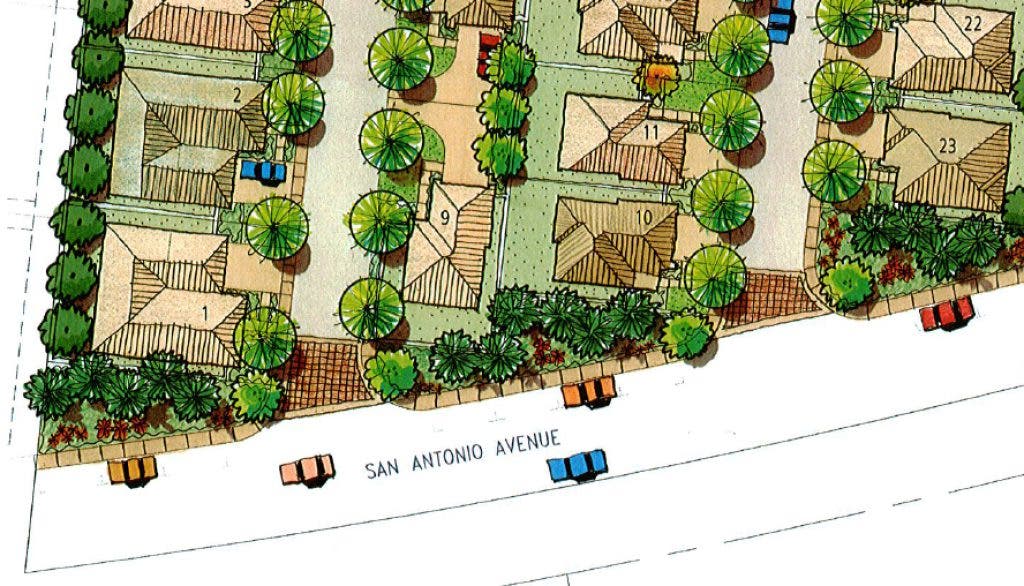
Heeding the concerns of a riled group of South Palo Alto residents, the City Council voted unanimously Monday night to deny a housing developer its attempt to rezone and build out a 2.65-acre parcel on San Antonio Road.
About 35 residents from Greendell and adjacent neighborhoods went to City Hall armed with PowerPoint presentations, ready to do battle against . The developer wanted the city to convert the lot at 525 San Antonio Rd. from R1-8000 to RM-15, a higher-density zoning designation, so it could build 26 homes there.
“I just don’t see any community benefit to this,” said Councilman Greg Scharff, who questioned how the project would increase the quality of life in the city given the council’s concern over the diminishment of city services during a decade of growth. A large day care center would have been demolished to make room for the new homes.
Find out what's happening in Palo Altofor free with the latest updates from Patch.
Katia Kamangar, managing director of SummerHill, was disappointed by what she characterized as last-minute interference by residents and by the Palo Alto Unified School District, which she claimed sabotaged the process by publicly expressing its own desire to buy the land.
“We’re here before you under some very unusual circumstances,” she told the council, “namely that we’re looking at .”
Find out what's happening in Palo Altofor free with the latest updates from Patch.
Kamangar described a lengthy and agreeable series of discussions with the commission prior to that date, however, in which she was led to believe that the proposed zoning change would actually benefit the neighborhood by creating a gradual transition between the light density lot on the east side of the property and a higher density lot on the west side.
“Staff indicated that village residential [RM-15] would be an appropriate designation here, because it is between two very different zoning densities on either side,” said Kamangar.
The property at 525 San Antonio is zoned R1-8000, which requires each subdivided lot to be a minimum of 8,000 square feet. If SummerHill’s application had been approved, the housing density would have gradually increased from 4.1 units per acre on the east-bordering property to 8.6 units per acre.
The first public speaker against the proposal, a South Palo Alto woman, spoke melodically about how building a good home is like having a relaxed hand.
“Human beings are beings of balance,” she said reverently. “If you hold your hand in a really tight fist, you won’t be able to hold it very long. Likewise, if you spread your fingers apart, you won’t be able to hold it very long.”
Council members smiled as the woman drove the point home: “You want homes to be the right size so that people stay there a long time.”
The Goldilocks argument then gave way to a series of data-driven PowerPoint slides, narrated in sequence by members of the Greendell Neighborhood Association, including its president, Srini Sankaran, who pointed out that their homes directly border the proposed development site.
Sankaran noted that 850 housing units have sprung up in South Palo Alto in recent years and that the city’s infrastructure has yet to catch up.
“We just don’t have the public facilities down in South Palo Alto to handle this kind of housing increase,” he said. “If you even want to get a playing field reservation at Cubberly you have to wait a few months.”
Other Greendell residents complained that the development would drive down home prices, and that it violates city rules that require higher density developments to be located within a half mile of a train station.
Still others pointed out that Mountain View has authorized the development of 1,300 new homes up and down the south side of San Antonio Road—in and of itself enough to wreak traffic havoc.
Councilman Pat Burt, during council deliberations, said, however, that the real motivation behind the backlash against the development had more to do with a general feeling that South Palo Alto development had gone unchecked for far too long.
“It’s an open wound over what has happened in South Palo Alto,” he told the crowd, “and this is something that people feel they can control.”
Mayor Sid Espinosa closed with a conciliatory tone, telling the representatives from SummerHill Homes that the council’s vote should not be misconstrued.
“From my perspective,” he said, “the vote tonight is not about being anti-development, but that this is not the right project at the right time.”
Get more local news delivered straight to your inbox. Sign up for free Patch newsletters and alerts.