Business & Tech
Former Google China President Analyzes China's Innovation Trends
Dr. Kai-Fu Lee, former Google China president and founder of Innovation Works, gives an insider's view of the China market.


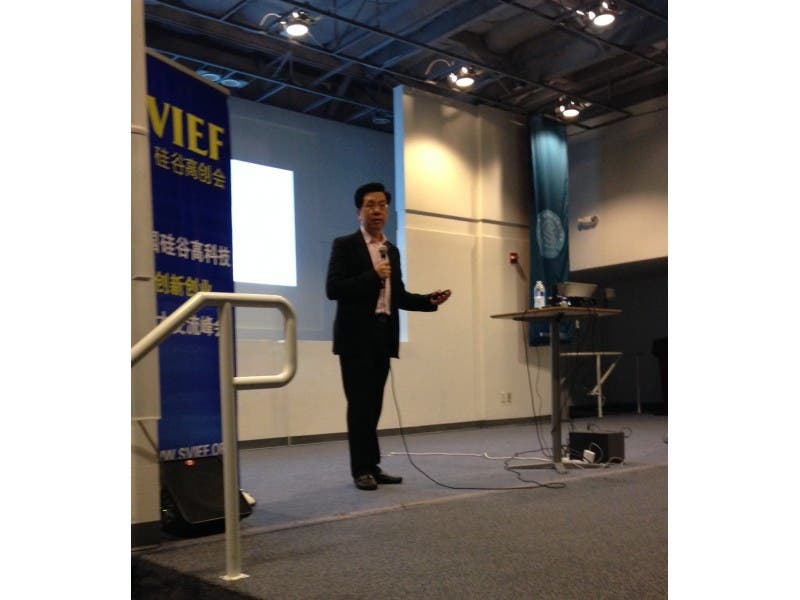
If anyone wonders what makes Xiaomi the world’s third largest smartphone vendor with only five years of company history, Dr. Kai-Fu Lee has provided three reasons in his latest speech during his business trip in Silicon Valley.
According to Lee, former Google China president and founder of Innovation Works in China, the first reason for Xiaomi and other Chinese high-tech companies’ quick success is hard work.
Find out what's happening in Palo Altofor free with the latest updates from Patch.
“If you go to Shenzhen, you’ll see taxis outside of high tech companies at 2 am, taking engineers home,” said Lee at a lecture organized by the Silicon Valley Technology Innovation & Entrepreneurship Forum ( SVIEF) on Wednesday.
”Chinese engineers don’t think out of the box as much as their American counterparts, probably because education in China doesn’t do so much to inspire creativity,” Lee explained. ”But they are extremely hardworking to make up for that.”
Find out what's happening in Palo Altofor free with the latest updates from Patch.
The second reason Lee gave is ”execution with speed.” He said a Chinese company usually can move very fast to make an idea become reality, because the boss assumes a strong leadership role to get things going.
“Tenacity and focus” is the third reason pointed out by Lee. He said a Chinese company usually concentrates on one product first before getting into other fields, and in the beginning stage, doing just one thing tends to be more productive.
Given the three Chinese factors for success and China’s more than one billion mobile users (more than three times the US number), Lee encouraged high-tech investors to enter the China market. In the meantime, he advised those interested to study new changes of China’s national policies, because the Chinese government tends to move fast in legislation, and entrepreneurs may benefit from a new policy. For instance, those familiar with Shanghai Free-Trade Zone may find business opportunities in it.
While China is full of opportunities, entrepreneurs face extremely fierce competition. There are still many copycats in China and it’s hard to stop them, according to Lee.
“If your unique idea turns into a good business, you’d better expand fast,” Lee said. “Or other people may move faster in doing the same thing and leave you in the dust.”
According to Lee, high tech companies in China usually expand in the early stage by offering free services to attract users. They wait until building a large enough clientele to figure out how to make money through other channels, which could be advertising or something else.
Lee named WeChat as a success story. WeChat began as a free messaging service released by an innovative Chinese firm called Tencent, but as it evolved to offer more functions and won over more than 500 million active monthly users, Tencent has integrated it with money-making services such as on-line payments and on-line banking. WeChat users also pay Tencent for gaming, which generates a substantial amount of income for the company.
Speaking of the China market’s ecosystem, Lee said it’s easier for newcomers to rise in China than in the US, even in fields unrelated to high tech. He used writing as an example, saying it’s possible for a new writer in China to start out with publishing on line to build readership and then get a best seller in print within one year, perhaps with the novel adapted into a movie in two years.
Given the fast pace of the China market, Lee said some college students are dropping out to start up their own companies. He said he recently met a 23-year-old serial entrepreneur who had founded five companies after only one year of college, and this would have been unheard of just five or six years ago.
Lee’s own company, Innovation Works, is an incubator for start-up companies, with more than $500 million in assets. It provides new entrepreneurs not only venture financing but also assistance in areas such as product design, user experience, marketing, recruiting, legal counseling, government relations, and trend spotting.
Innovation Works doesn’t limit itself to China. The company invests in Silicon Valley start-ups, too. At the end of Lee’s speech, he said he welcomes Silicon Valley entrepreneurs to contact his company.
Get more local news delivered straight to your inbox. Sign up for free Patch newsletters and alerts.