Business & Tech
Indian Ambassador Visits Business Leaders in Palo Alto
Meera Shankar, ambassador, said technology innovation is at the forefront of U.S.-India economic relations in her talk with business leaders on Friday.
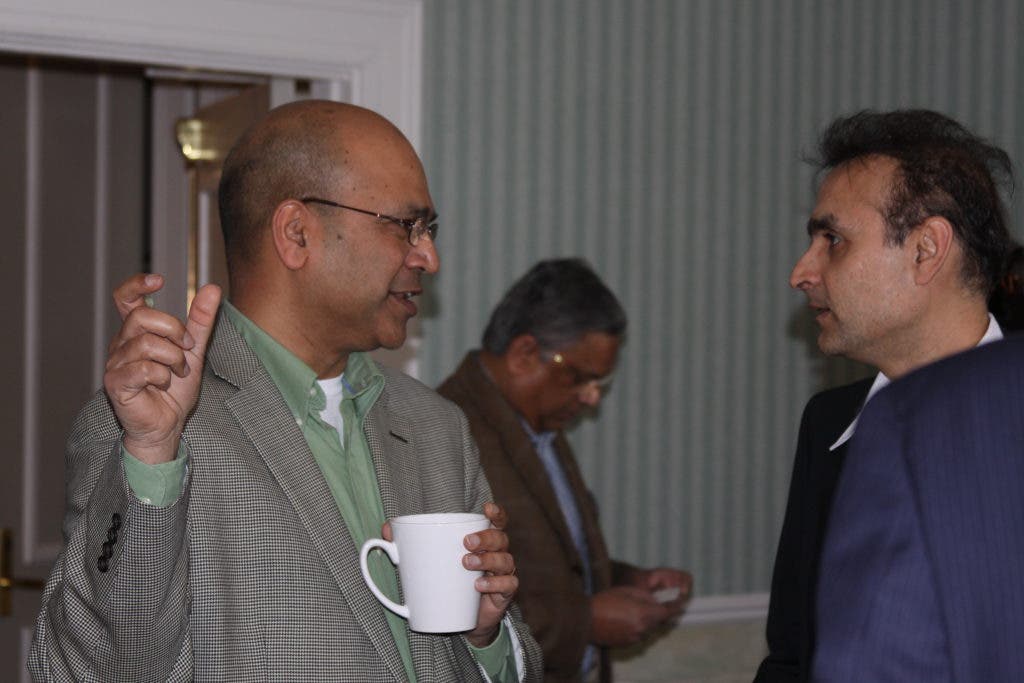


India-U.S. Ambassador Meera Shankar spoke to a crowded room of about 70 business leaders in Silicon Valley on Friday evening at the Garden Court Hotel in Palo Alto.
Technology innovation drives the economic relationship between the U.S. and India, she said.
“The many ties that there are driven by the information technology sector here in Silicon Valley will continue to be a critical instrument in bringing our two countries closer together,” she said.
Find out what's happening in Palo Altofor free with the latest updates from Patch.
The Indian economy weathered the global economic crisis better than most, she said. During 2008, India’s economy grew at 6.8 percent, she said. At the height of the economic boom, India’s economy grew at about 11 percent. Although there was a slowdown, “we did not go into recession,” she said.
Since then, growth has bounced back. “In 2010, we were poised to grow at 8.6 percent. For 2011, the prediction is for growth to be about 9 percent,” she said.
Find out what's happening in Palo Altofor free with the latest updates from Patch.
The Indian government is making it easier for foreign companies to invest in the country, she said. The Indian government is investing billions in expanding infrastructure, medical care, education, agriculture and bio-technology. There are great opportunities for public-private partnerships in these areas, she said.
She hoped that there would be more reciprocity in investments from the U.S. The recent U.S. protectionist rhetoric over outsourcing was a concern for some in the audience.
“There is a degree of creeping protectionism, which constrains the ability to have meaningful growth in trade in this sector [the service sector]," she said. “We hope that this is a temporary phenomenon and is not something that is becoming entrenched."
The service sector comprises one of the largest portions of India’s Gross Domestic Product, she said.
In 2010, U.S. and India trade in goods was $48.75 billion dollars going both ways, she said. In 2008, the services trade, going both ways, was $38 billion—$19 billion of which was in U.S. exports to India and $18 billion, which was Indian exports to the U.S., she said. She emphasized the U.S. holds a surplus in exporting services to India. But service exports “is a two-way street,” she said.
India was the second-fastest growing investor in the United States, she added. From 2005-09 India invested $25.5 billion in the U.S. she said. Of that, $5.5 billion went to green-technology ventures while $20 billion went to “mergers and acquisitions in steel, manufacturing, pharma, information technology and hotels,” she said. “India continues to deposit faith that the U.S. economy will bounce back."
Indian companies expanding their global reach beyond the Indian market, she said. Having a presence in the U.S. is key, she said.
Enhancing local economies is the goal of many foreign Indian investors in the United States, she said. “Wherever Indian investors have gone, they have helped to turn around the economies,” she said. “They have not invested with a view to crushing the competition." Indian companies want access to additional markets and technologies, and hope to integrate with operations back home in India, she said.
The Indian economy has a different growth model from the East Asian economies, she said. The East Asian economies center growth more around exports and domestic demand, she said. Total contributions of exports to the Indian Gross Domestic Product is less than 25 percent, she said. While India has a deficit, “we buy more goods from the world than we sell to the world,” she said.
“I do hope our deficit doesn’t reach U.S. levels, but it does mean that India will consumer more as we prosper and that will provide opportunities for U.S. companies to position themselves in the Indian marketplace,” she said.
The invitation-only event was hosted by the the U.S.-India Business Council, an advocacy organization whose interest is to promote trade and investment between the two countries.