Business & Tech
Live Intentionally With Palo Alto Startup's App
Chronos is the brainchild of two Stanford grad school buddies.


How many times have you gotten to Friday and wondered where the week went. Or to Labor Day and you practically shouted, “But I’ve only been to the beach once!”
Too often the minutes and hours, days and weeks slip through our fingers without us being mindful of time trickling away.
The goal of living mindfully has met its 21st century solution—there’s an app.
Find out what's happening in Palo Altofor free with the latest updates from Patch.
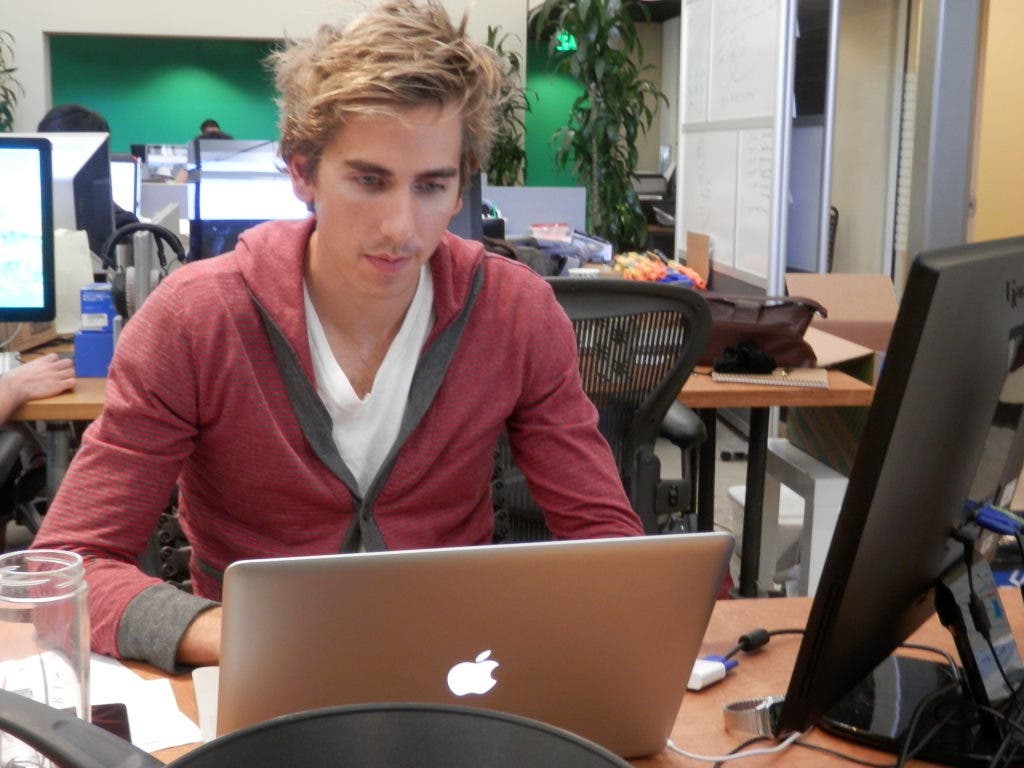
Chronos is the brainchild of Stanford Graduate School of Business grads Charlie Kubal and Dylan Keil. They work out of Dogpatch Labs at Lytton and High in Palo Alto.
There’s lots of love about Chronos. First, it’s free. Download it from the App Store.
Next, it’s passive. If you’re trying to live mindfully—such as spending more time with friends and family—you don’t want to constantly be messing with an app that’s sucking away your time.
Find out what's happening in Palo Altofor free with the latest updates from Patch.
And finally, it reaches out to you via a weekly email praising you for your successes and pointing out areas in need of improvement. “We help hold you accountable to your own goals,” said Kubal.
In a spare conference room at Dogpatch, Kubal talks about his background, including receiving an undergrad degree in psychology. The motivations of people played a big role in the development of Chronos. “The idea of Chronos is that too often people get to the end of their lives and have a lot of regrets. They didn’t spend as much time with family or friends as they wanted. They were too busy with work or commuting.”
So how does Chronos work? You activate it through Facebook. You tell the app how you want to spend your time and with whom. Then, just carry your phone with you. Since it’s passive, it logs where you are—at home, at work, in a restaurant or elsewhere. If your friends carry their phones, it also notes that you are with them. At the end of each week you’ll receive an email showing how much time you actually spent pursuing your stated goals. You clearly see yourself advancing toward your goals, or time slipping through your fingers.
If you think the email is scolding you, think again. “We’re using positive psychology,” said Kubal, “to help you set goals for the next week.”
And what is Chronos going to do with all of the info it’s collecting about you? “Privacy is a major component of Chronos,” Kubal emphasized. “Your data is your own. We don’t sell it to anyone.”
So how does Chronos, a free app, make money? Its revenue stream is through recommendations. If your stated goal is to try more restaurants on University Avenue or attend more concerts, restaurants and concert promoters will pay Chronos to deliver recommendations for their businesses.
Kubal continues to offer reassurances about privacy, “We don’t reveal real-time locations. We don’t write on (Facebook) walls.”
Kubal and Keil are the founders of Chronos. They have one part-time employee, a Stanford grad student. They also work with a contract developer who works remotely in Phoenix. When their six month stint at Dogpatch ends, they'll evaluate office space in Palo Alto and elsewhere.
The last word
When there are hundreds of thousands of apps vying for your attention with hundreds more released each day, why Chronos?
Kubal responds, “One, it’s entirely passive. Two, a lot of apps don’t look at the social aspect of people’s lives—we want people to live more intentionally.”
Don't miss important news Subscribe to our daily newsletter.
Get our daily newsletter | Like us on Facebook |Blog for us | Follow us on Twitter|