Crime & Safety
Police Speak Less Respectfully To Blacks Than Whites: Stanford Study
Stanford University researchers analyzed more than 150 hours of body camera footage.


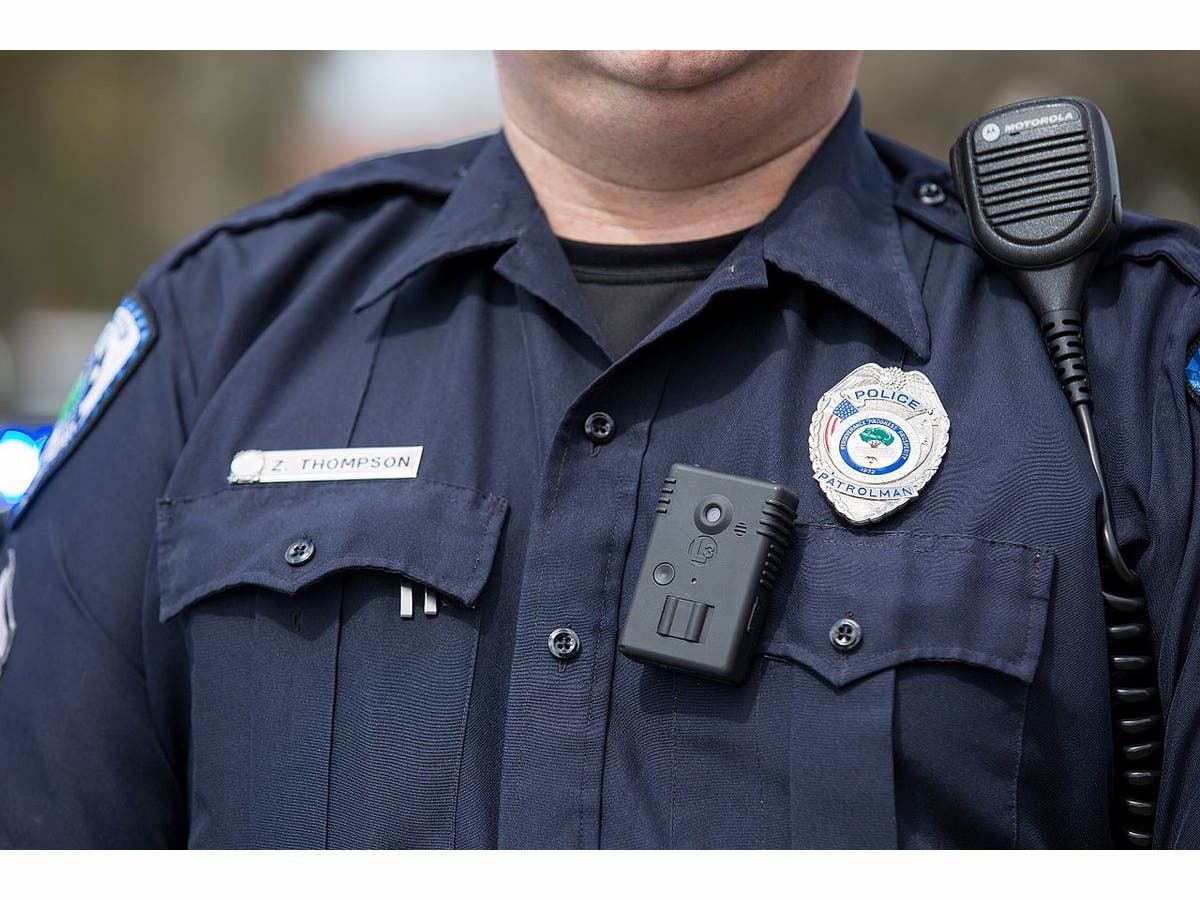
PALO ALTO, CA -- In what was billed Monday as the first systematic analysis of police body camera footage, research conducted at Stanford University showed that police officers consistently use less respectful language with black community members than with white community members, according to a news release from the university.
Although they are subtle, these widespread racial disparities in officers’ language use may erode police-community relations, said the researchers who conducted the study, published June 5 in Proceedings of the National Academy of Sciences.
“Our findings highlight that, on the whole, police interactions with black community members are more fraught than their interactions with white community members,” said Jennifer Eberhardt, co-author of the study and professor of psychology at Stanford.
Find out what's happening in Palo Altofor free with the latest updates from Patch.
The racial disparities in respectful speech remained even after the researchers controlled for the race of the officer, the severity of the infraction, and the location and outcome of the stop.
To analyze the body camera footage, a multidisciplinary team from Stanford’s psychology, linguistics and computer science departments first developed a new artificial intelligence technique for measuring levels of respect in officers’ language. They then applied this technique to the transcripts from 981 traffic stops the Oakland Police Department made in a single month.
Find out what's happening in Palo Altofor free with the latest updates from Patch.
The researchers’ novel technique demonstrated that white residents were 57 percent more likely than black residents to hear a police officer say the most respectful utterances, such as apologies and expressions of gratitude like “thank you.” Meanwhile, black community members were 61 percent more likely than white residents to hear an officer say the least respectful utterances, such as informal titles like “dude” and “bro” and commands like “hands on the wheel.”
“To be clear: There was no swearing,” said Dan Jurafsky, a study co-author and Stanford professor of linguistics and of computer science. “These were well-behaved officers. But the many small differences in how they spoke with community members added up to pervasive racial disparities.”
“The fact that we now have the technology and methods to show these patterns is a huge advance for behavioral science, computer science and the policing industry,” said Rob Voigt, a Stanford linguistics doctoral student and lead author of the study. “Police departments can use these tools not only to diagnose problems in police-community relations but also to develop solutions.”
Via Stanford News Service; to read the full report, click here
Image: Ryan Johnson/Flickr
Get more local news delivered straight to your inbox. Sign up for free Patch newsletters and alerts.