Politics & Government
State Sea Otter Population Grows Slightly
Scientists tracked the sea otters from San Mateo County to the Santa Barbara area.
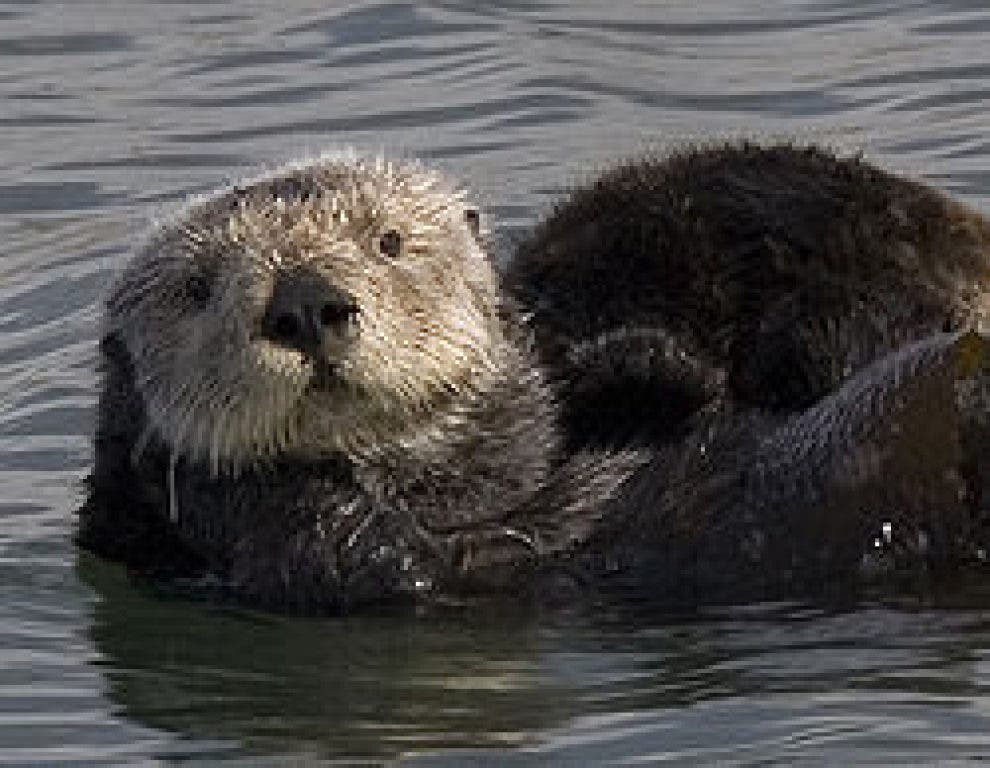
For 30 years, the U.S. Geological Survey's Western Ecological Research Center has been tracking sea otter populations along the California coast and this year's annual census is complete, the project leader said this week.
The spring 2012 sea otter count was carried out by observers on the ground and in the air. It began in April and was completed in mid-June, said Tim Tinker, project leader for sea otter studies at the USGS
Western Ecological Research Center.
Based on the count, the three-year-average figure for 2012 was
2,792 sea otters. The center measures population trends with average figures, rather than raw numbers, because an individual year's count can be affected by weather and other factors.
Scientists tracked the sea otters from San Mateo County to the Santa Barbara area. Since the count, scientists have been able to compile data and ascertain trends within the sea otter population.
However, the scientists are more focused on longer-term trends, and analyze three-year population averages to account for measuring errors and other mistakes in counting the animals, instead of a year-to-year analysis.
Find out what's happening in Palo Altofor free with the latest updates from Patch.
Along the coast population numbers this year varied with "some areas growing, others stagnant, others decreasing," Tinker said.
In the last count in 2010, the three-year-average was calculated as 2,711 sea otters.
An increase in sea otters north of Monterey was recorded this year, and overall the marine biologists are "cautiously optimistic" about an up-tick from 2010.
Find out what's happening in Palo Altofor free with the latest updates from Patch.
The central coast had no growth while south of the Morro Bay area saw a population decrease, Tinker said. Compared to other Western coastal areas, "the pattern of recovering doesn't look so healthy" for sea otters, Tinker said.
The animals were once poached for their fur in the 19th and parts of the 20th century and have since worked to repopulate.
Tinker noted incremental population growth over time, but by small percentages such as 2 or 3 percent. Sea otters are an "excellent indicator species," according to Tinker.
The marine mammals provide information about the California coastal environment, especially since they are highly susceptible to stressors.
"The narrow coastal band where humans spend most of our time is hard to study," Tinker said.
Therefore the sea otters are used as a "keystone predator species" that can be tracked and observed as they consume urchins, marine snail, abalone and other invertebrates which limits kelp forest growth.
"We tend to see an ecosystem shift when sea otters recover," the biologist said.
The annual census was a collaboration with the state Department of Fish and Game's Marine Wildlife Veterinary Care and Research Center, the Monterey Bay Aquarium, the University of California at Santa Cruz, the U.S. Bureau of Ocean Energy Management and other volunteers, creating about a 30-person team, Tinker said.
-- Bay City News
Would you like to blog for us on ocean mammals? Or perhaps you have another niche. Share your voice with Palo Alto.
Get our daily newsletter | Like us on Facebook |Blog for us | Follow us on Twitter |