Business & Tech
Mischievous Muse Press: A 21st Century Publisher with Old-Fashioned Habits
Founders of the publishing company call it "a throwback to another era."
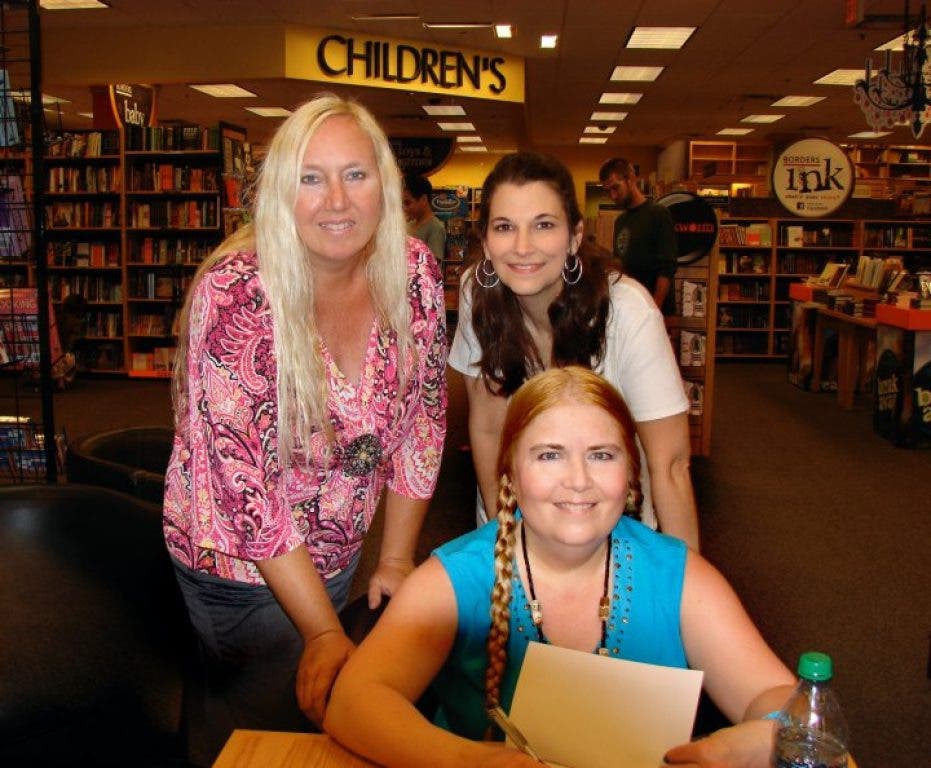

Mischievous Muse Press, a small publishing company, started here on the Peninsula in 2009. Within a year The Writer Magazine picked Mischievous Muse as one of six boutique presses that were "pushing literary boundaries" and "focusing on publishing outside the status quo."
Cat Spydell and Gineve Rudolph—the muses of Mischievous Muse Press—pointed out that today, big publishers want only "celebrity books written by ghost writers, numerous sequels and series books, vampire stories ad nauseum. ... Publishers are reluctant to take risks on new writers."
"Our press is a throwback to another era in that we hold the hand of our writers, and we help them every step of the way," Spydell said.
Find out what's happening in Palos Verdesfor free with the latest updates from Patch.
The big publishers cut editorial and PR services throughout the decades. They depend on literary agents to cull through thousands of submissions, so many writers pay editors to polish their manuscripts and make a better impression.
Even after being published, authors find they must handle their own publicity or hire a professional.
Find out what's happening in Palos Verdesfor free with the latest updates from Patch.
Spydell listed services the company provides for its authors: editing, formatting, publishing, holding launch parties and book signings, and marketing in a variety of ways.
"Everything a major publishing house may have done for an author fifty years ago," she said.
Of course, there is still a submission process. Prospective authors must email Mischievous Muse Press, and send their manuscript only when invited to do so.
In addition to Mischievous Muse Press, Spydell and Rudolph also own World Nouveau, a company that explores book-related business beyond publishing.
“We are starting to create short trailers or videos to advertise our books,” Spydell said.
Spydell and Rudolph, both writers, met in 2007 at the Millie Aames Writing Workshop at the Peninsula Center Library and became friends. One evening over dinner, as they tell the story, they made a list of all the qualities and services they wished publishers offered to writers.
“We realized we had an outline for a new kind of publishing company,” Spydell said.
Throughout the last few months, Borders declared bankruptcy, and ebook readers such as Kindle often outsell hardcover books.
But the two entrepreneurs stressed they started their business because the industry was changing so dramatically.
“The old ways are failing,” Rudolph said. “That’s our jumping off point.”
And, Rudolph pointed out, more writers are being published than ever before.
A small publisher like Mischievous Muse Press bridges the gap between two extremes writers face: Going it alone by self-publishing, or being handled (or—more likely—ignored) by the big publishers.
Like self-publishing companies, Mischievous Muse Press allows a writer to retain rights to their work, to be involved in every decision, to earn greater royalties and keep their books in circulation longer.
Self-publishing can be expensive, though. Writers selected by boutique presses like Mischievous Muse do not have to put out any of their own money.
Instead, like the big publishers, Mischievous Muse covers the expenses of publishing, keeping overhead low by utilizing print-on-demand sources and working with the largest book distributor in the world, Ingram.
Because they're new, the muses said, they can ride along with the changes.
"We are immune to trends," Spydell pointed out. "Our bottom line is, if we like a book, we'll publish it."