Business & Tech
Living in Dutra's Shadow
Leang "Lee" Yee, who lives next door to the Dutra site off Petaluma Boulevard South, is terrified of losing his home if the plant is built


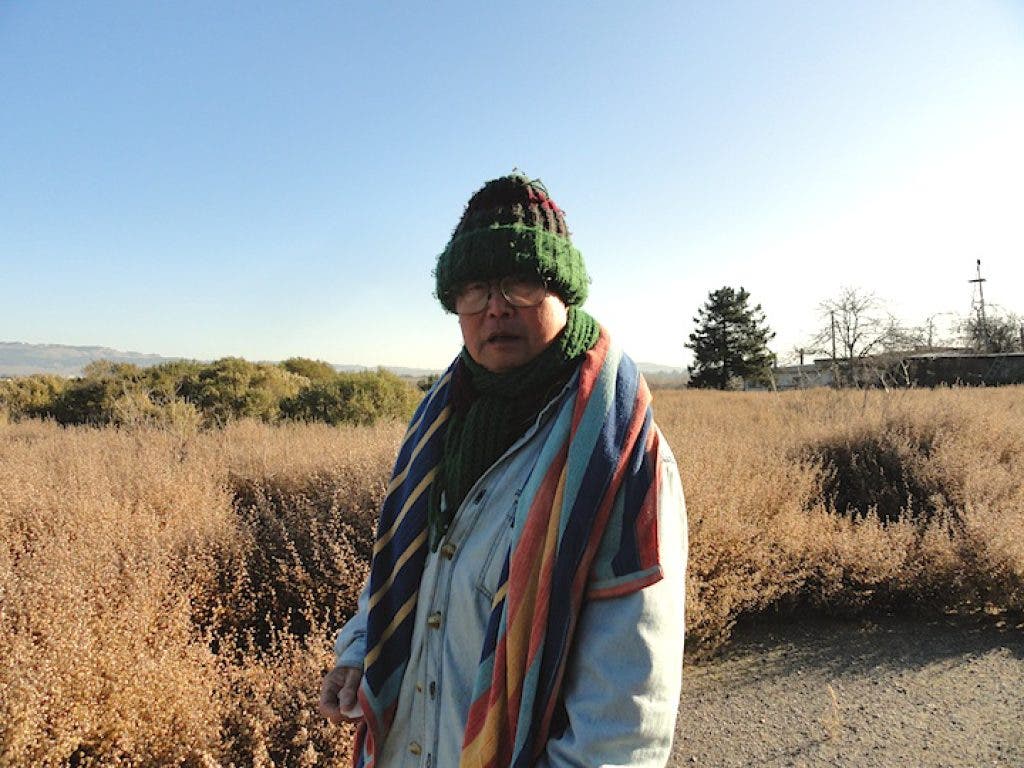


In order to get to Leang Yee’s home, on the edge of Petaluma River, you have to get off the beaten path.
First, follow Petaluma Boulevard South out of town until you hit the northbound onramp and then continue on the shoulder, watching out for cars getting off the freeway. From there, turn left onto a dirt road, cross the railroad tracks and make a left past the fishing boat sitting in the yard.
This is where you’ll find Yee, a diminutive 76-year-old fond of collecting war vehicles, which are piled in his front yard. There’s a scout car from World War II (the same kind driven by General George Patton), a small tank, a canon pointed at the river and at least a dozen old cars.
Find out what's happening in Petalumafor free with the latest updates from Patch.
But what Yee (everyone calls him Lee) values most about his humble home, which has no heating and is located just across from Shollenberger Park, is the peace and quiet. The birds that chirp in the morning; the sweeping views of the river and wetlands; the fishermen who come by occasionally to drop off their crab nets and fishing rods and share stories of the day’s catch.
Yet this rivertown idyll may soon be interrupted by an asphalt plant that San Rafael-based Dutra Group wants to build next to Lee's home. Dutra already owns the land and is planning to break ground by the end of this year. The facility will include four 100-ton capacity silos where asphalt is stored, a 500-gallon fuel tank and eventually a conveyor belt that will transfer materials from the nearby Shamrock facility to the Dutra facility for processing into asphalt.
Find out what's happening in Petalumafor free with the latest updates from Patch.
“I love my life,” Lee says, adding that he’s concerned that the company will try to relocate him once it moves in. “I don’t want to bother anyone and I don’t want anyone to bother me. No matter how far you get away from people, they still find you.”
To be fair, the land where Lee has lived since the 1960s has long been zoned “Light Commercial,” and was changed to “Light Industrial” after Dutra applied for a permit from the county in 2004. But Lee says the edge of the river and less than half a mile from town is simply the wrong place for the facility.
“All those chemicals…I’ll be breathing them in every day. And so will all the people who come to the park.”
A message left for Dutra spokeswoman Aimi Dutra asking about whether the company was interested in acquiring Lee’s land, was not returned.
Lee was born in China and came to the United States as a 16-year-old. Conditions were harsh in his country, recently ravaged by the Sino-Japanese War and then the Communist Party that sought to outlaw private ownership and "reeducate" the citizenry. Some forty years earlier, Lee's grandfather had lived in California, where he helped build the railroad and worked at laundries. But he returned to China and had a family.
Lee arrived in San Francisco in 1952 and a decade later moved to Petaluma, where he became a butcher’s apprentice. He took night classes at Santa Rosa Junior College, studying electronics and later worked as an electronics technician at San Francisco State University. In fact he was so good that the Petaluma Police Department even asked him to repair some police radios.
Feeling a strong sense of loyalty to his adopted country, Lee tried to enlist in the U.S. Army three times, but was not allowed because he’s partially deaf in one ear, he said. Barred from serving, he decided to pour his patriotism into military vehicles, restoring them for use in Petaluma’s annual Veterans’ Day parade.
“I’m very civically minded and have done a lot for the community,” he says. “But now the community is doing me in.”
Get more local news delivered straight to your inbox. Sign up for free Patch newsletters and alerts.