

I did a double take the other day when I noticed a bale of hay was going for $15 at a local feed store.
Seems like just five years ago it was five bucks a bale.
So I asked feed industry guru Paul Lewis, 78, what happened to make hay prices skyrocket. You know Paul. His family came from the Azores and settled in the Liberty District in the 1880s. He was an FFA star at and after serving in Korea, he studied dairy genetics and nutrition at University of California, Davis.
Find out what's happening in Petalumafor free with the latest updates from Patch.
As a young man he and his partners built up Santa Rosa Feed by addressing the nutritional values of livestock feeds. He’s still part of the Bar Ale family operation and serves on the board of directors for run by his extended family.
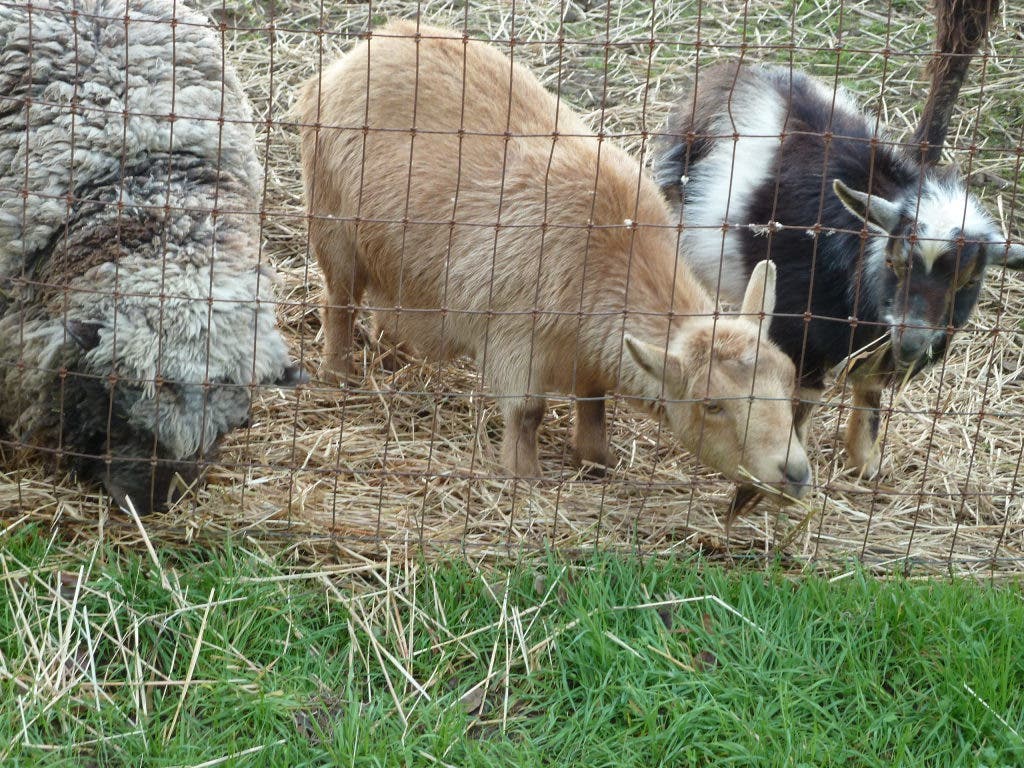
He raises goats now.
Find out what's happening in Petalumafor free with the latest updates from Patch.
“I got into goats because they don’t eat hay!” he said with a laugh before giving me a five-minute-masters-degree in Sonoma County hay.
“In 1960, there were over 400 dairies in Sonoma-Napa-Marin counties. This region was known for growing vetch hay considered one of the highest quality hays around. Purple vetch. It’s gone now. Extinct,” Lewis said.
Some of those dairies are extinct too. Today there are 89 dairies in Sonoma County, according to the University of California Cooperative Extension, Marin County. The North Bay Dairywomen say there are actually 82 dairies still operating in Sonoma County, with about 38 in Petaluma.
Sure grapes replaced some hay acreage, but the biggest factor was growth.
“Urban sprawl took over hay land. Rohnert Park spread out. Penngrove, Cotati and even Petaluma grew out on the East side. City folks moved in and voted in a lot of things into practice that made farming here not practical,” said Lewis.
Checking the Field Crops reports from the Sonoma County Department of Agriculture for the years 1998 through 2009, it’s clear that hay production took a nosedive.
There are many types of hay including oat hay, green chop, oats grain, silage, straw, and pasture and rangeland types of hay. I just looked at the largest category topping the list Hay, Oat.
In 1998 there were 6,705 acres in use, but by 2009 only 4,090 acres were still in production – a loss of 2,615 acres. The unit price per ton rose from $78.82 in 1998 to $125.85 in 2009 and it’s still going up, up, up. Acreage goes down and the price goes up. I get that, but what were the contributing factors? Did some hay producers go bust? How many acres were converted to grapes? How many acres were developed to make room for new homes and strip malls?
That’s going to take more reporting and probably a few rounds at . Feel sorry for me.
But here’s what I’ve learned so far. When you see big double bed hay trucks on 101 loaded eight feet high and 30 feet long that’s not our hay going out, that’s hay coming in from the Sacramento Valley or even farther away. It’s expensive and it costs more to transport. Rising gas prices tack on ever-rising costs to the buyer.
“That’s $350 a ton, probably 28 tons on a 65-foot-long trailer? You’re talking $10,000. Any dairyman paying $10,000 for that delivery to feed his cows is going to go broke,” said Lewis.
But what are you going to do?
Just three weeks ago most hay sellers in Petaluma were down to dregs and had to buy hay from Oregon, which isn’t so unusual in spring I’m told. But this year they had to go even farther into Oregon to look for hay – which costs more to transport…. Well, you get the picture.
I also learned our nation exports lots of hay, which doesn’t keep prices low.
How does this shake out in our community? There are many examples.
Here’s a little one. Many women who grew up in Petaluma had their own horses to ride when they were teens. Too bad their daughters won’t.
“It can cost you $300 to $500 to board a horse – per month. Even if they have a field where you can turn your horse out to graze, its still going to cost $150 a month,” said Andy Myles, a former hay dealer.
Why cares about hay prices when gas prices seem more relevant to more people? We all have cars but not everyone has cows or horses. In a community the size of Petaluma, which was built on agriculture, if you care about your neighbors making a living, nearby dairies continuing to produce milk or the humane treatment of livestock, you should care about the price of hay.
When times are good, people can afford to pay higher hay prices. When times are bad, you find abandoned horses, all skin and bones. In 2009, one of the American Red Cross Heroes for Sonoma County was Veterinarian Grant Miller who founded CHANGE, a non-profit that rescues and rehabilitates abandoned horses.
You can find their donation buckets on the counter at most feed stores. Whether you put in a dime or a buck, it all adds up to hay for a hungry horse.
“Here’s the thing about hay right now. You either buy hay or you sell livestock. That’s it. These prices are going to put some horse ranches out of business, some more dairies out of business,” said Myles.
Which makes me wonder, can hay rustling be far off?
For Paul Lewis, whose family fortunes have been tied to hay for generations, hay prices record the past and predict the future.
“Hay is like gold now and it’s going to force more dairies out of the area. To me, it’s like people have forgotten about rural America,” he said.