Neighbor News
Local origami master folds a 6 ft paper crane on the anniversary of Hiroshima bombing on August 6
Mayors for peace poster exhibit, origami workshop, Japanese calligraphy workshop, food and music is free and open to public at Putnam Plaza

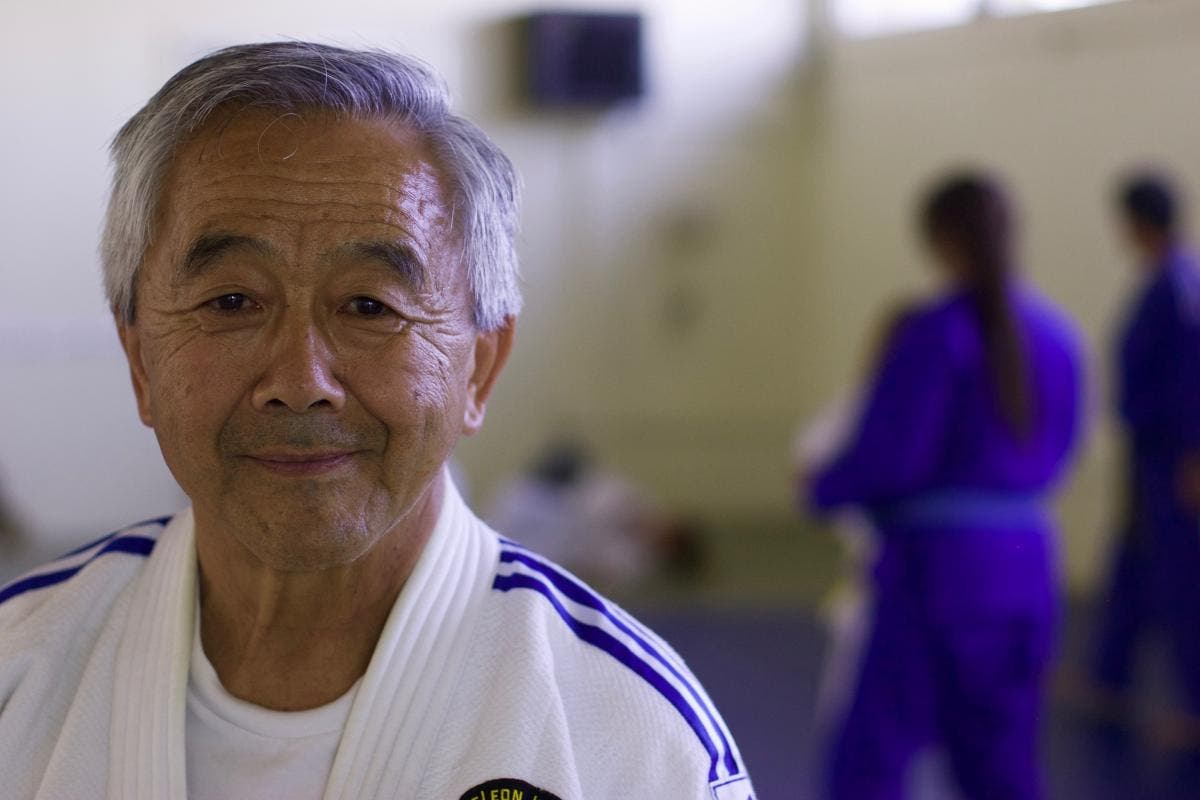
Origami Master, Henry Kaku, a 67 year old long-time Petaluma resident and a head instructor at DeLeon Judo Club, always keeps busy. He takes out his origami paper and starts folding whenever he has a moment, while sitting in the doctor’s waiting room, waiting for a haircut, or relaxing and watching TV.
"Origami is deeply embedded in Japanese culture and my childhood." He says. Henry, who spent the first 8 years of his childhood in Japan, knew how to fold a crane ever since he can remember. “As a child, origami was the pastime of choice for Japanese children, the way perhaps cell phone games are for children these days.”
As an adult, Henry folds origami cranes for relaxation and also to share the story of a thousand cranes and peace in the world.
Find out what's happening in Petalumafor free with the latest updates from Patch.
Henry’s family experienced first hand, the impact of war on both sides of the ocean in Japan and the United States. Henry’s father Keige Kaku, born and raised in Fresno, California, was 25, serving the US military at the time when the Japanese military attacked Pearl Harbor on December 7, 1941. Because of Keige Kaku’s Japanese ancestry, Henry’s father was immediately dismissed from the army. Just a few months later, he and his family were sent to Poston Relocation Center, Arizona.
Henry’s family was among 120,000 people of Japanese descent living in the western part of the United States, forcibly removed from their homes, transported in buses and trains guarded by armed soldiers, and then incarcerated in what President Roosevelt called concentration camps. While in Poston, Arizona where they were first sent, Henry’s father met his mother, Sumiko, from Calexico, fell in love and got married. They had two children, Joyce and Stanley, Henry’s older sister and brother, while incarcerated, Joyce in Poston and Stanley in Tule Lake.
Find out what's happening in Petalumafor free with the latest updates from Patch.
During that time, all internees 17 years and older were given a loyalty questionnaire. “My father was what they called a ‘no-no boy’ because of the way he answered the infamous questions #27 and #28 in this questionnaire.” Henry explained. Question #27 asked "Are you willing to serve in the US military? “Most young Japanese American men and women did not hesitate to say ‘yes’ because they wanted to prove their loyalty to the United States. They wanted to fight for the army even though they were taken away from their homes, stripped of everything they owned, and put in prison.”
“My father, on the other hand, who was already serving in the military and was kicked out of the army when Pearl Harbor was attacked, and a few months later, sent to prison, was very angry. So when the question came to him, my father said ‘I am not going to answer that question. I was like you. (talking to a soldier who was conducting the interview) I was in your shoes just a couple of years ago and now you are asking me’ he said. ‘Look at my history, look at my record and that should tell you that I am willing to serve. I was in your army to be kicked out. I lost my farm, my family, my possessions to be here.’”
As a result of this response, Henry’s parents were deemed disloyal or even “dangerous", and relocated to high security Tule Lake Relocation Center in northern California. After the war ended, the family was stripped of US citizenship, leaving them stateless, and then deported to Japan, even though, they had lived in the US for their entire lives. And that is where Henry was born. Eventually, only after filing a legal suit against the government action for the unjust treatment they received, Henry’s family was able to regain citizenship and return to the United States in 1956. Henry was eight years old.
Across the ocean in Japan, Henry Kaku’s cousin Hideki was just a toddler living in a town called Kure, 15 miles away from the epicenter, when President Truman ordered the first Atomic bomb used in a warfare to be dropped in a densely populated city of Hiroshima on August 6, 1945. The bombing killed over 120,000 mostly civilians who were going about their morning routine including children, women, and elderly, but there were also an estimated 20,000 Korean slave workers and thousands of Japanese Americans who were living in Hiroshima at that time, and a dozen or so American prisoners of war who were killed. Many more people survived the blast but with psychological and health impact from the bombing experience that forever changed the course of their lives, and others, for generations to come.
Thankfully, the hills shielded the town of Kure from the epicenter in Hiroshima, sparing it from total devastation. It was years later when Hideki found out that he may not have completely escaped the widespread effects of radiation poisoning from the bombing. After Hideki married a woman from the neighborhood, their second born child, Koji was born with a birth defect, rendering him unable to walk. Although a conclusive statement cannot be made regarding the correlation of exposure to radiation poisoning of the mother with birth defects, at the time of Koji’s birth, his mother recalls how the hospital in Kure was filled with children born with birth defects.
When Henry and his wife Phyllis visited Japan in the 1970’s, they saw Koji crawling on his stomach, from room to room. The couple managed to bring Koji from Japan to have an operation, but he was never fully able to walk normally.
Folding a thousand cranes, is an activity which became a symbol of peace after people learned about the story of Sadako Sasaki, a Japanese girl who fell ill with leukemia after being exposed to radiation from the atomic bombing of Hiroshima. Sadako tried to fold a thousand cranes, an old Japanese tradition for good luck, in hopes that she would live and no other children would suffer from war. This act of folding cranes caught on with school children and churches across the globe as a tradition of sending messages of peace and hope for a world free of nuclear weapons.
“For me, folding a thousand cranes is about promoting peace.” Henry said. “The bomb that the US dropped in Hiroshima and Nagasaki didn’t discriminate whether you were a little child or an 80 year old man or a woman. So many were killed. I know how to fold and I want to share that with the general public. It is something I’ve been doing for a long time.”
This year, on August 6, the 71st anniversary of the bombings of Hiroshima and Nagasaki will be commemorated at the Nuclear Remembrance event put on by Peace Crane Project in Helen Putnam Plaza in downtown Petaluma, Henry will be folding an oversized paper crane from a 6 foot sheet of paper. He will also be teaching anyone who wants to learn how to fold a crane.
The Nuclear Remembrance Event is free and open to the public, and will feature a poster exhibit from the Mayors for Peace collection, calligraphy and origami workshops, shakuhachi music, a Geiger counter demonstration, and pie tasting from Petaluma Pie Company. The event will be held on August 6, 11am- 3 pm in Putnam Plaza 129 Petaluma Blvd. N., Petaluma, CA 94954.