Sports
Pedaling Against Parkinson’s A Personal Fight In Bay Area
People affected by the disease are racing (literally and figuratively) to battle one of the fastest growing diagnoses in the world.


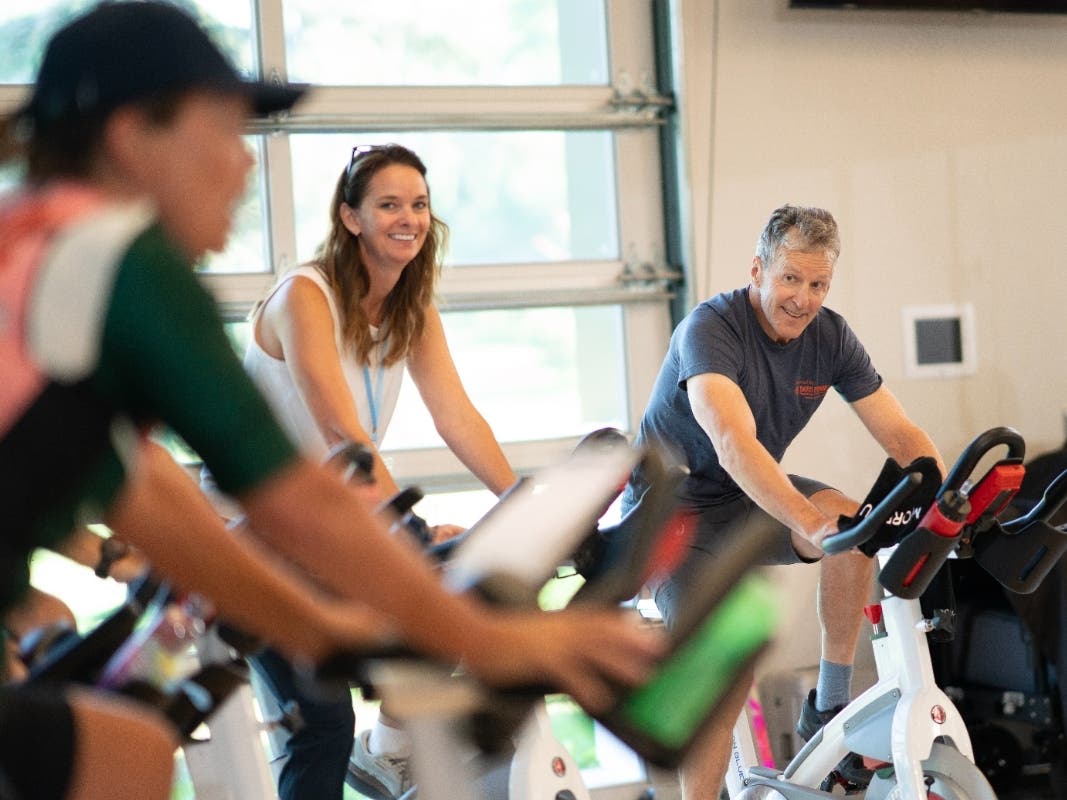
BAY AREA, CA — As diagnoses rise and science races to understand the disease, one local class is turning pedals into resistance — and resistance into hope.
The room hums before the workout begins. Seats are adjusted. Resistance dials click. Riders compare notes on cadence, heart rate, and how much tension is enough to feel the climb, without losing control.
Banter carries the easy rhythm of people who know each other, and of people learning what their bodies can still do. Then the instructor, Baddoura Carte, calls the class up to 80. The climb begins.
Find out what's happening in Petalumafor free with the latest updates from Patch.
For Pedaling for Parkinson’s — a cycling program developed by the Davis Phinney Foundation and offered at Petaluma's Active Wellness Center — exercise is not framed as therapy in the abstract. It is immediate. It is measured in breath, balance, muscle fatigue, and whether a rider comes back stronger next week.
Research cited by the foundation shows people with Parkinson’s who cycle three times a week may reduce symptoms by as much as 35 percent. For riders in Petaluma, the evidence is not only in studies but in the lived routine of showing up, clipping in and pushing through intervals.
Find out what's happening in Petalumafor free with the latest updates from Patch.
“Relax the shoulders. Take it up,” Carte calls as the class shifts from warmup into a hard effort.
Riders pedal through climbs and sprint intervals designed to raise heart rates and challenge endurance. They monitor resistance, talk through perceived exertion and encourage one another when the work bites. “Keep adding tension,” the instructor says.
The class, adapted specifically for people living with Parkinson’s disease, blends cardiovascular conditioning with something harder to quantify but no less central — connection.
That matters in a disease that can shrink a person’s world. But numbers are of no comfort in this case.
More than 10 million people worldwide are estimated to be living with Parkinson’s, and that number is projected to more than double by 2050. In the United States, Parkinson’s is the second most commonly diagnosed neurodegenerative disease after Alzheimer’s.
Researchers are still trying to determine why the disease develops, but exercise has emerged as one of the clearest tools available now to help preserve function.
The Parkinson's Foundation has found early and sustained exercise may help support the body against motor decline. Scientists are still sorting out exactly why.
Cycling has drawn interest because of its rapid, repetitive rhythm and high-cadence pedaling to improve motor function, reduce tremors, and decrease rigidity. The forced, fast-paced pedaling (80–90 RPM) helps retrain the brain, boosts aerobic capacity, and improves balance, according to the Phinney Foundation.
In Petaluma, that science is personal. Participants speak of stronger legs, steadier movement, and the emotional lift that comes from not facing Parkinson’s alone.
One rider, diagnosed in December, described coming to the class as both physical training and emotional anchor.
“It helps you feel less alone,” he said. “And I need someone telling me what to do or I’m not going to do it.” He said medication helped dramatically, but exercise changed something else. “It makes you dig in and stay in shape.”
That determination runs through the room. A regular jokes about being “the laziest person in spin class,” then powers through another interval. Another talks about adding hiking and boxing outside class. During recovery stretches, riders swap stories about spouses in bands, mountain biking, choir.
Less is known about how exercise may affect symptoms, but advocates point to the demands on balance, coordination, concentration as reasons to explore its possibilities.
Still, the strongest evidence remains here, with feet on pedals. During Parkinson’s Awareness Month, organizers say the Petaluma class reflects a larger shift in how people are approaching the disease — not simply managing symptoms, but pushing back against them.
That push can look modest from the outside. A rider adjusts a seat. A hand reaches for the resistance knob. Someone holds 80 RPM a little longer than last week.
But inside the room, those moments carry weight. Because in a disease often defined by what is lost, this class keeps returning to what can still be built.
Get more local news delivered straight to your inbox. Sign up for free Patch newsletters and alerts.