Community Corner
Petaluma Planners Weigh Scott Ranch Pool-Hot Tub Ban And Building A Business Hub
The Planning Commission is set to consider two high-profile proposals: lifting a swimming pool ban and a Lakeville business incubator.


PETALUMA, CA — The Petaluma Planning Commission is set to consider two high-profile proposals and their potential impacts on wildlife, neighborhood character, and future growth.
The proposals involve lifting a ban on pools, hot tubs, and spas at a 28-home subdivision and approving a small-business incubator designed for artisans, makers, repair shops, and light manufacturers.
Hot tubs, pools, spas
The first proposal would remove a unique restriction at the Scott Ranch subdivision and allow future homeowners to build swimming pools, hot tubs, and spas on their properties, a change city staff says would bring the development in line with residential neighborhoods across Petaluma.
Find out what's happening in Petalumafor free with the latest updates from Patch.
The proposed amendment would eliminate a section of the Scott Ranch Planned Unit District standards that currently prohibits swimming pools and would instead list swimming pools, hot tubs, and spas as permitted accessory uses for the project's 28 single-family homes.
The change would apply only to the residential portion of the development and would not affect adjacent parkland or open-space areas, according to staff reports.
Find out what's happening in Petalumafor free with the latest updates from Patch.
City planners are recommending approval, arguing the amendment responds to buyer demand and aligns Scott Ranch with citywide regulations that already allow pools in residential zones.
Staff also concluded the change would not increase housing density, generate additional traffic, or require new environmental review because impacts were previously analyzed in the project's environmental impact report.
According to the staff report, the subdivision sits in Petaluma's West Hills area and includes 28 approved single-family homes, private open-space parcels, and land associated with the Putnam Park extension.
The amendment would allow homeowners to seek building permits for pools under the same standards that apply elsewhere in the city, including setback requirements, fencing rules, water-conservation regulations, and drought restrictions.
Staff noted that not every homeowner is expected to install a pool. Based on aerial surveys of similar neighborhoods, planners estimate only about 10% to 20% of comparable homes ultimately add pools. Since January 2023, the city has issued 52 permits for pools, hot tubs, and spas citywide, with 40 already built or installed.
The proposal has also drawn criticism from at least one resident. In written comments submitted ahead of the hearing, Petaluma naturalist Susan Kirks argued the Scott Ranch development lies within important wildlife corridors and said pools should be evaluated in relation to wildlife movement through the area.
Kirks also contended that additional public outreach meetings should have been held before the amendment moved forward.
Swimming pools, hot tubs, and spas can create a range of environmental impacts. Although the scale varies depending on their size, location, maintenance practices, and local climate, the most frequently cited concerns involve water and energy consumption, wildlife and habitat impacts, and stormwater and water quality.
Planning staff reported finding no evidence that the original prohibition on swimming pools was requested or discussed during the project's extensive public review process, which included neighborhood meetings and multiple hearings before the Planning Commission and City Council.
If commissioners endorse the amendment, the recommendation will advance to the Petaluma City Council for final consideration.
Incubator
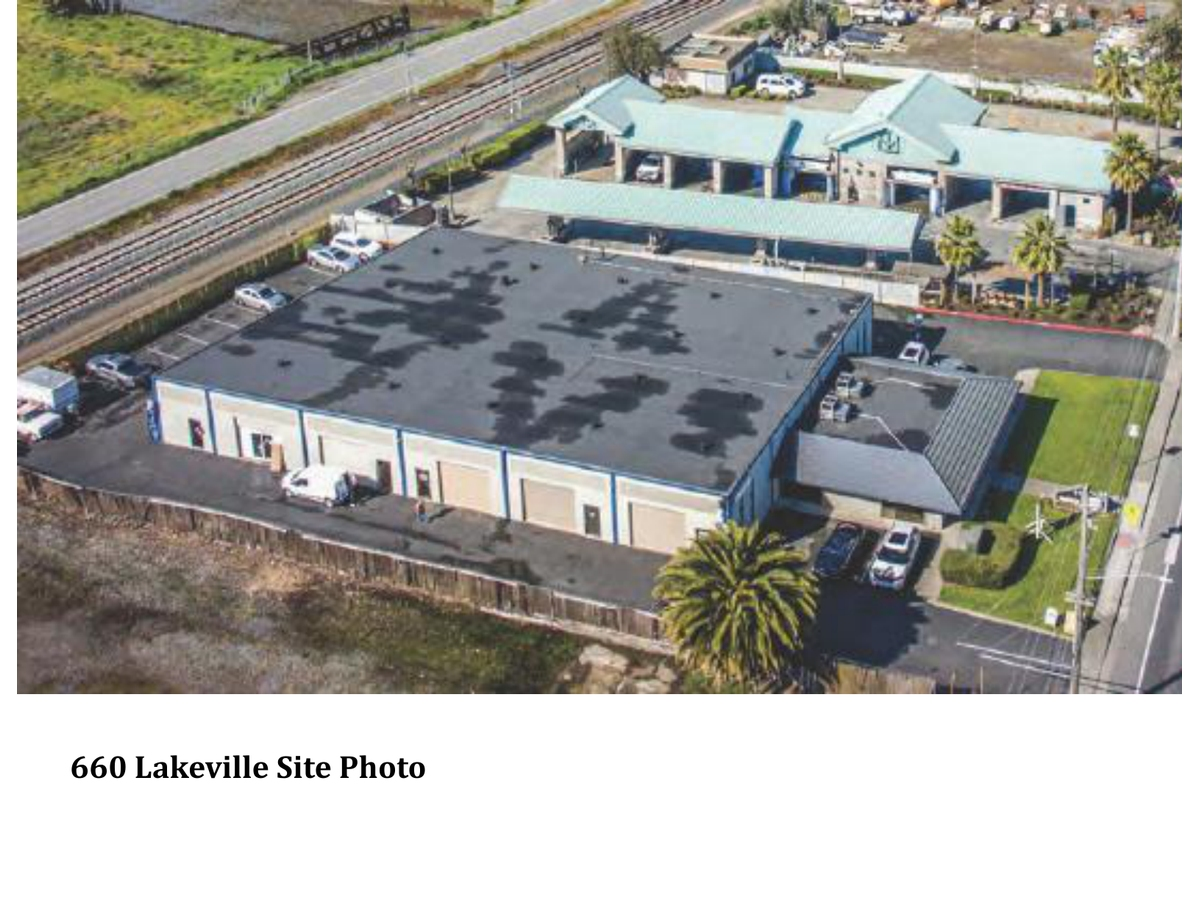
Petaluma's Planning Commission will also consider a proposal that could create a permanent home for small-scale manufacturers, craftspeople, and service businesses inside an existing industrial building on Lakeville Street without adding new construction or expanding the site's footprint.
A Petaluma property owner wants city officials to approve a new small-business incubator at 660 Lakeville St., a move that could open the door for artisan manufacturers, cabinet makers, coffee roasters, metal fabricators, wholesalers, repair businesses, and tasting rooms to operate under a single master permit inside a long-standing industrial building near the SMART rail corridor.
City planners say the proposal could help local entrepreneurs grow beyond home-based operations while preserving industrial space in a market where vacancy rates remain low.
The proposal would establish a Conditional Use Permit covering a defined list of small-scale industrial, commercial service, and artisan production uses within the existing 12,840-square-foot multi-tenant building at 660 Lakeville St.
The property contains seven suites and has housed industrial and automotive-related businesses for decades. No new construction, exterior alterations, parking changes, or landscaping modifications are proposed.
Under the plan, tenants could include artisan and craft manufacturers, food and beverage producers, cabinet shops, metal fabrication and welding businesses, textile manufacturers, auto parts retailers, equipment repair services, wholesalers, and a tasting room with a maximum occupancy of 50 people. Existing minor vehicle repair operations would be allowed to continue under the new permit structure.
The incubator model aims to give small businesses a predictable pathway into commercial space. Project documents state the site is intended to help home-based businesses expand, allow entrepreneurs to test products and operations, and reduce the need for repeated discretionary city approvals when tenants change.
To keep operations small in scale, the proposal would cap tenant spaces at 5,000 square feet, prohibit any tenant from occupying more than half of the building, and limit each business to an owner plus five employees.
All production, storage, repair, and manufacturing activities would be required to occur indoors. Operating hours would generally be restricted to weekdays from 7 a.m. to 8 p.m.
Planning staff concluded the proposal aligns with Petaluma's economic development goals by supporting business retention, job creation, artisan production, and skilled trades while reactivating existing industrial space rather than constructing new facilities.
The city's staff report also notes the site sits within a mixed-use corridor already characterized by automotive, industrial, and commercial businesses.
Fire officials initially raised concerns about the project's broad range of potential uses and differing hazard classifications. In response, the applicant narrowed the proposal, removing higher-intensity uses and limiting future tenants primarily to business, factory-industrial, and mercantile occupancies. Fire officials emphasized that every future tenant would still undergo separate building and fire-safety reviews before opening.
According to city records, the applicant conducted a neighborhood outreach meeting in May, drawing one participant who expressed support for the project. Staff reported receiving no written objections before the public hearing.
If approved, the permit would establish a long-term framework for future tenant turnover while keeping city oversight in place for building, fire, and safety requirements.
Get more local news delivered straight to your inbox. Sign up for free Patch newsletters and alerts.