Business & Tech
Consultants Say Deer Creek Would Be Built on Wetlands and Increase Greenhouse Gases
Supporters say hundreds of jobs and tax revenues still outweigh risks


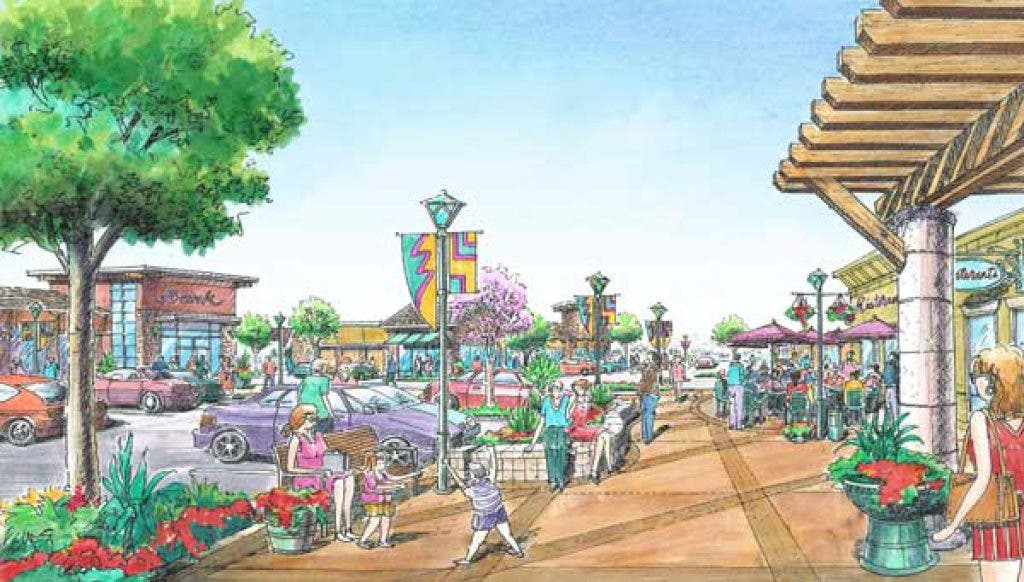


It was a packed house at City Hall Tuesday night as the Planning Commission met to discuss the environmental impacts of Deer Creek Village, the proposed development on North McDowell Boulevard and Rainier that would build restaurants, medical offices and a sports facility anchored around Lowe's, the home development store, by 2013.
The meeting was the first step in a lengthy and often complex process to evaluate how the 344,000 square foot development would impact traffic, air quality, wildlife and noise. Backers of the project say it is desperately needed to boost sales tax revenue and development fees, and would create as many as 800 jobs.
Geoff Reilly, a consultant from WRA hired by the city to conduct the environmental review (Read the full EIR), said the project did have several “significant and unavoidable impacts” including higher greenhouse gas emissions and increased traffic at the McDowell and Washington intersection.
Find out what's happening in Petalumafor free with the latest updates from Patch.
However, alternatives were also suggested including scaling the project back by fifty percent, but keeping the Lowe’s. Another option would be to scrap the office space and restaurants entirely and build a 50-bed residential facility in addition to the home improvement store.
The commissioners, for the most part, appeared unimpressed with the report and said there were too many unknowns. Commissioner Marianne Hurley pointed out that the argument about needing a home improvement store in town was not a very strong one, considering there is another Lowe’s just six miles away in Cotati.
Find out what's happening in Petalumafor free with the latest updates from Patch.
“Sometimes you have to stop and say, ‘Where do we stop building?,’ Hurley said. “I find the argument that we don’t want to get on the freeway to shop problematic, considering 70 percent of people in Petaluma commute to get to work,” meaning they would pass stores on their commute where they could make purchases.
Another concern is the city’s high rate of office vacancies, estimated at 40 percent.
“Yes, we need a home improvement store here, but we just have too many vacancies as it is,” Commissioner Alicia Kae Herries said. “This project is just asphalt to me. It’s clearly auto-centric and outdated.”
Others raised the point that the project would be located on seasonal wetland and in a flood plain, meaning it would be prone to flooding in the rainy season. The property flooded during heavy storms of 2005 and environmentalists say could happen again--at any time.
"In the last 40 years, Petaluma has seen over $100 million in flood losses and in flood management project costs," said David Keller, director of Friends of the Eel River and a former Petaluma city councilman. "For the development community, flooding is always a fluke, somehow not due to any human choices or actions, and will never happen again."
Marko Mlikotin, a spokesman for the developer, Merlone Geier Partners, said
the drainage capabilities of a fully developed shopping center with a
restored creek and wetlands could not be compared with an underdeveloped
dirt lot.
"The environmental review process is to the community's benefit and it gives them the opportunity to learn from objective analysts about the project's benefits and how impacts will be mitigated," he said.
Despite the issues raised in the EIR, Councilman Chris Albertson, the council represenative on the commission, said that the economic benefits still outweighed the environmental concerns.
"As someone who will be working on balancing the budget, I want to see our fiscal situation improved," Albertson said.
Monica Soiland, vice president of Midstate Construction, also said the project was badly needed in Petaluma and already approved in the General Plan.
However, Curtis Johansen, the Planning Commission Chair, said he wasn't convinced the proposed project fit the guidelines set out in the General Plan. Johansen, a contractor, said it would be beneficial to define exactly what the term "mixed use" meant.
"In the industry, mixed use is defined as more than throwing up some big box store; it’s residences and stores in an area, not just office spaces," Johanses said. "The idea is to reduce auto dependency."
The issue is open for public comment through middle of April, after which it goes before the City Council.
Get more local news delivered straight to your inbox. Sign up for free Patch newsletters and alerts.