Business & Tech
Shoddy Home Construction Means Huge Energy Bills, Says Petaluma Energy Auditor
But there is hope, with new countywide initiatives that give homeowners and residents rebates for energy retrofits


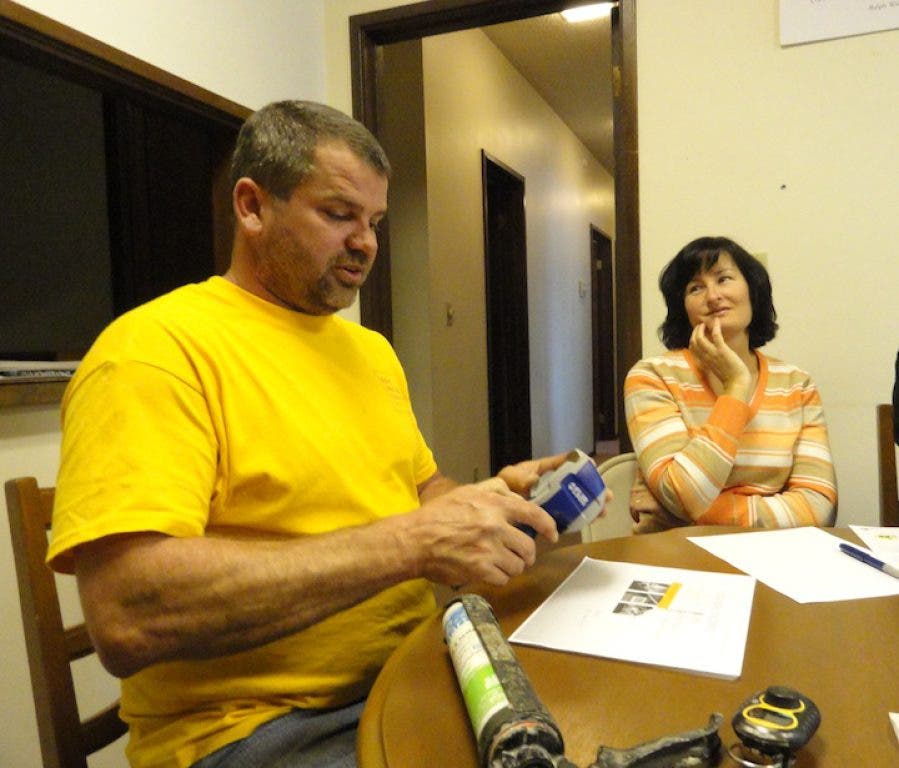


Many Petalumans are paying hundreds of dollars each month to heat their homes. But what many don’t realize is they are actually wasting energy, through leaky air ducts, exposed crawl spaces and drafty windows and doors, says John Rising, owner of Rising Design & Construction in Petaluma.
For the past three years, Rising has been performing energy audits on homes and businesses, helping people figure out ways to use their energy more efficiently and reduce their energy bills in the process.
“Energy reduction is the greenest thing we can do as a society,” Rising says. “People say, we want bamboo floors while their inefficient heater is running 24 hours a day, dumping tons of unneeded carbon into the atmosphere."
Find out what's happening in Petalumafor free with the latest updates from Patch.
On Sunday, Rising conducted an energy assessment at the new offices of , a local nonprofit that encourages Sonoma County residents to find small ways to conserve their resources. He began by doing a walk through with a thermal camera to identify cold airflows into the building, pointing out the big difference in temperatures at doorways, windows and electric sockets, all of them sources through which cold air enters a home.
Although Rising is remiss to name names, he says many construction companies built shoddy homes using cheap materials in order to turn around projects quickly and save money. This was especially true in the construction craze that began in the ‘90s where a home could be built in a matter of weeks.
Find out what's happening in Petalumafor free with the latest updates from Patch.
Developers saved money, but residents are now paying the price with expensive energy bills.
“Guys were flipping houses and the materials they used were really cheap,” he said. “Inherent in cheap materials was a lot of off-gasing and chemicals and people didn’t think about any of it. They didn’t understand what formaldehyde was or (the effects) of cheap carpet, cheap vinyl flooring or cheap paint. And to this day, people still don’t understand.”
Today there is a law that requires new homes in California to be net-zero energy by 2020, meaning they will produce all the energy they utilize through solar panels, smart ventilation and planting trees to provide shade in the summer.
But what to do now?
The first step to figuring out how much energy a home is wasting is conducting an energy assessment. It begins with a walkthrough, during which the auditor tests for natural gas leaks and other kinds of leaks coming from pipes, air ducts and the crawl space under a home, which is the source of much of cold air.
An estimate is then given and leaks plugged up, the air ducts and crawl space sealed off. The cost of the work varies but ranges between $5,000 and $20,000.
To help offset the costs, Sonoma County has unrolled a new incentive program that will give residents up to $4,000 to retrofit their home. Called Energy Upgrade California, it was created by PG&E and local agencies and funded by federal stimulus monies. The hope is that residents will spend a bit of money upfront to make their homes more energy efficient in years to come.
“It’s a scientifically proven approach because it looks at the home holistically,” said Mike Sandler, climate protection program manager for the Regional Climate Protection Authority, one of the organizations working on California’s Energy Upgrade Initiative.
“Whereas before people would look at changing one thing, like windows or the water heater, this concept involves the entire home,” Sandler said. “We all know energy prices are going up, so this is a sustainable investment in the future.”
One of the attendees of Sunday’s workshop was Kelly Sturgeon, who came with her husband Berkley, to learn how they could cut down their energy consumption. The couple is in the process of converting a part of their Eastside home to an assisted living facility. By law, assisted living facilities have to have a temperature of 74 degrees, so the Sturgeons are concerned about how they can run the business while keeping energy costs down.
“We are going to do an assessment, but we know we won’t be able to do the whole plan,” Kelly Sturgeon said. “We’ll look at what makes the most sense now and do that first... Small businesses like us have to take it piece by piece.”
The couple's top priority is insulating the attic and closing up the crawl space under the home. Last year, the couple converted their lawn into a fruit and vegetable garden and plans to install a water cachment system to use rainwater to irrigate their plants.
“We would really like to be a model for green assisted living and put these energy savings into paying our employees more,” Sturgeon said.
The home energy assessment was part of the 350 Challenge, a Daily Acts campaign meant to inspire residents to grow their own good, conserve water and save energy, in which nearly 600 Sonoma County residents—including 92 from Petaluma-- pledged actions meant to reduce energy consumption.
Get more local news delivered straight to your inbox. Sign up for free Patch newsletters and alerts.