Politics & Government
Home Carbon Monoxide Detectors Now Required
A new state law mandates CO monitoring.

By
Starting Friday, July 1, most homes in Piedmont—and throughout the state—will be required to install carbon monoxide (CO) detectors. The requirement was established under state Senate Bill 183, now California law in the state Health & Safety Code §13260-13263.
According to the American Medical Association, carbon monoxide is the leading cause of accidental poisoning deaths in the United States. A person cannot see or smell carbon monoxide. At high levels carbon monoxide can kill a person in minutes, and extended exposure to carbon monoxide can lead to headaches, amnesia, psychosis and even Parkinson's disease.
Find out what's happening in Piedmontfor free with the latest updates from Patch.
Carbon monoxide is produced whenever any fuel, such as gas, oil, kerosene, wood, or charcoal, is burned. Experts estimate that equipping every home with a CO detector would cut accident-related costs by 93 percent. CO detectors are believed to provide highly effective and low-cost protection against carbon monoxide poisoning.
This new law applies to single family California homes that utilize fossil-burning fuels (like gas stoves, water heaters, furnaces or dryers), or have a fireplace or an attached garage. In other words, unless you live in an all-electric home with a detached garage, you are covered by this law.
Find out what's happening in Piedmontfor free with the latest updates from Patch.
Other categories of properties (such as apartments or hotels) must be equipped, if applicable, with CO detectors by Jan. 1, 2013.
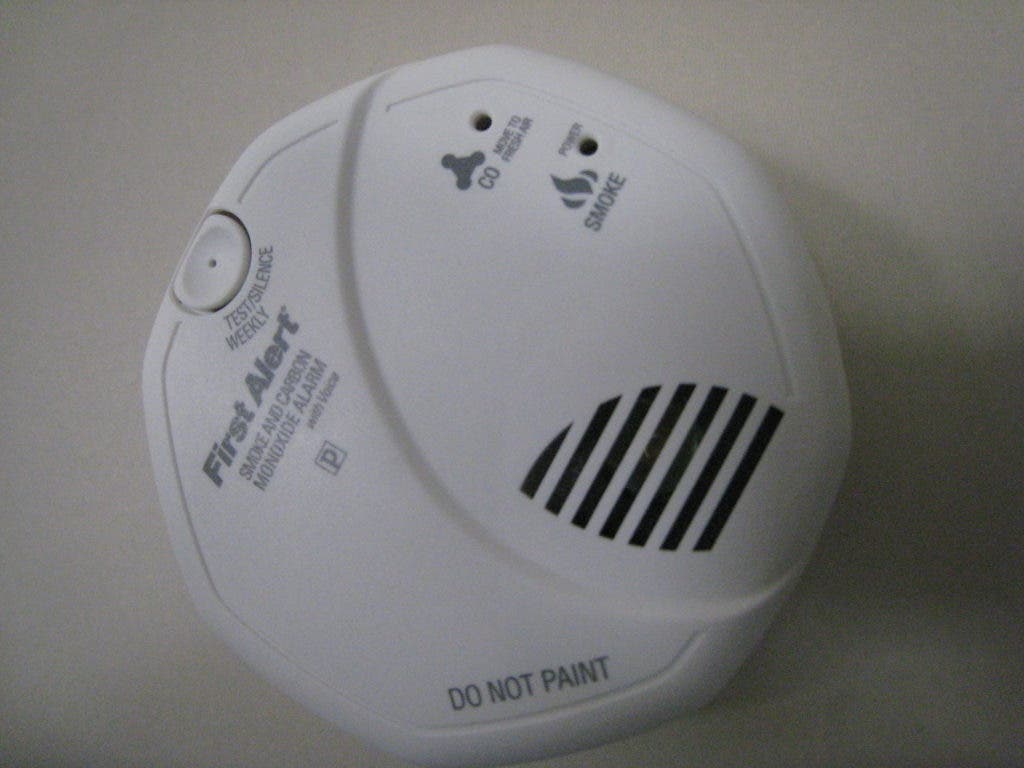
Proper placement of a CO detector is important. Experts advise that CO detectors be installed in a manner consistent with building standards applicable to new construction. The Consumer Product Safety Commission (CPSC) recommends CO detectors be located near each bedroom where they can wake you if you are asleep, ideally within 10 feet of each bedroom. Additional detectors should be placed on every level of a home and in any attached garage to provide extra protection against carbon monoxide poisoning.
The CPSC suggests avoiding installing CO detectors near heating vents, in kitchens or above fuel-burning appliances, or in locations that can be covered by furniture or draperies. A detector should not be placed near very humid areas such as bathrooms. CO detectors may be installed into a plug-in receptacle or high on the wall. Hard-wired or plug-in CO detectors should have a battery backup.
Get more local news delivered straight to your inbox. Sign up for free Patch newsletters and alerts.