Crime & Safety
Oakland Police Made More Ferguson Protest Arrests Than Any Other City in U.S.
169 protestors were arrested in three days.


Oakland police arrested 169 protesters in the span of three days last week, more than any other police department in the country during nationwide protests over a Missouri grand jury’s decision not to indict a Ferguson police officer who shot and killed an unarmed black teen in August, police Chief Sean Whent said today.
About 350 police officers responded each night last Monday, Tuesday and Wednesday to large marches of as many as 2,000 people that shut down freeways and eventually turned destructive, with fires, spray paint, broken windows and looting, Whent told a meeting of the Oakland City Council Public Safety Committee this evening.
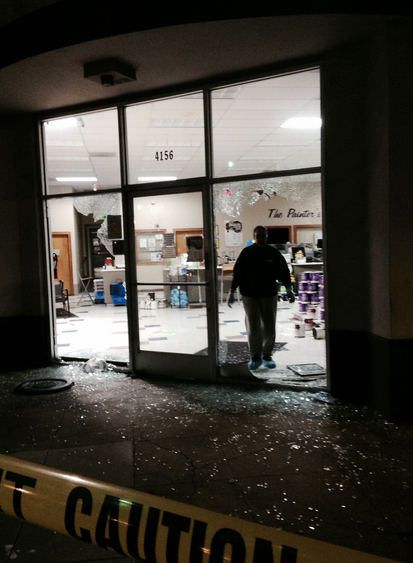
The marches protested a grand jury’s decision announced on Nov. 24 not to indict Ferguson, Missouri police Officer Darren Wilson, who is white, in the on Aug. 9 death of 18-year-old Michael Brown, who is black. Whent said that the speed of the protesters prevented officers from being more proactive in stopping them from breaking the windows of 23 businesses, five of which were looted.
Find out what's happening in Piedmontfor free with the latest updates from Patch.
“We absolutely attempted to minimize any vandalism from occurring, however we were also challenged by... the fact that these were very, very fast moving crowds,” Whent said. In one instance, a smaller group of protesters and officers was left behind on Telegraph Avenue as police tried to make a mass arrest of a larger group occupying the freeway nearby. The quick-moving protesters were able to get ahead of the officers, leaving a line of burning dumpsters behind them that further obstructed police movement. Several businesses were then vandalized before the police could catch up, Whent said. He suggested adding more bicycle police officers to protest staffing to help keep up with demonstrators.
Of the 169 arrests, 48 percent were Oakland residents and the majority was for misdemeanors such as blocking the street, obstructing a police officer and spray-painting buildings, Whent said. There were 10 arrests for vandalism, four burglary arrests of suspects who were charged today, one arrest for battery on a police officer and one for arson. Police used force a total of 18 times during the three nights, Whent said, mainly tackling protesters while making arrests but also using tear gas on Monday and Wednesday. But he said that police have to be careful to walk a fine line between facilitating the demonstrations and overreacting in response to criminal activity, something that risks expensive payouts from the city down the line as it did during Occupy Oakland demonstrations and protests over the police shooting death of Oscar Grant.
Find out what's happening in Piedmontfor free with the latest updates from Patch.
Councilwoman Lynette Gibson McElhaney pointed out just how delicate that line has become as the recent protests have grown from the deep distrust between minority communities and the police.
“There’s an epidemic in this country of too many black men, brown men, being killed in their interactions with police officers,” McElhaney said. “It’s about more than Mike Brown, it’s about more than Ferguson. It’s about an egregious practice that we have to wrestle with in this country.” She asked Whent what he was doing to foster community trust and limit racial profiling. Whent said an Oakland police officer has not shot a suspect in the last 18 months, while the department previously averaged seven or eight shootings per year. There was an unarmed suspect shot and killed during a search in August, 23-year-old Jacorey Calhoun, but he was shot by an Alameda County sheriff’s deputy who was assisting Oakland police.
In an effort to diminish use of force, Whent said the department has implemented new policies and improved training. Officers train with paint bullets and foam batons and later must explain why they decided to use the force they did. Officers have also been trained in de-escalation tactics and laws regarding use of force, Whent said.
Foot pursuit policies have changed as well, and when officers are following a suspect, rather than following into a backyard, they create a perimeter in the area to tactically make an arrest and hopefully reduce the risk of a surprise encounter, Whent said. To improve community relations, Whent touted elements of the city’s Ceasefire program, targeting particular individuals determined to be involved in violent crime through intelligence and offering them better options. This is a better approach than targeting particular neighborhoods where there may be criminal activity, Whent said, because when officers frequently stop innocent people, it creates the impression the department is either “incompetent or corrupt.” The department is also gathering demographic data on police stops but has not yet gathered enough accurate data to be useful, he said.
Councilman Dan Kalb expressed dismay at the protesters who broke windows, set fires and looted buildings, actions he said were taken by “pseudo-protesters.” While he said he supports the protests, there was a small group of “violent, maybe even disturbed people who are doing this” and rely on large crowds to hide in. Peaceful protesters “wind up unwittingly allowing those other things to occur,” Kalb said. He wondered whether the department’s limited staffing -- its current force of 718 remains well below its recent peak of 830 officers -- could leave the officers more prone to overreaction.
“We all want to avoid the violent behavior, we want to avoid the possibility of some overreaction,” Kalb said. “An overreaction could happen when you try to do something but don’t have enough people to do it.” Whent said that better coordination with mutual aid agencies, such as with the California Highway Patrol when making arrests on the freeway, could also help police respond to protests more effectively.
McElhaney also denounced the more destructive elements of the recent protests, calling some people’s behavior “opportunistic.” “Even if these people claim to have Oakland addresses they do not have Oakland spirit,” she said. “We do not destroy and trash this town to save lives. It does not accomplish that goal.”
By Bay City News
Photo caption: Damage caused to local business during protests in Oakland. Photo courtesy Bay City News
Patch coverage of the Ferguson protests:
- ‘Blackout Black Friday’ Protesters Arrested After Chaining Themselves, Blocking BART Trains
- UPDATED: Protesters Blocking Traffic on I-5 in La Jolla Walk Off
- Oakland Police Call in Additional Help for Third Night of Protests
- Police Arrest, Cite Protestors Who Blocked Part of I-580, Vandalized Property Tuesday
- Oakland Police Chief Says Officers Performed ‘Well’ During Ferguson Verdict Protests
- Police Arrest More Than 40 Vandals During Oakland Protests Monday Night
- Protestors in Oakland Arrested After Announcement on Fatal Missouri Shooting
- No Indictment for Officer Wilson in Shooting Death of Michael Brown
- Stanford Students Walk Out Of Classes Today For Ferguson Protest March
Get more local news delivered straight to your inbox. Sign up for free Patch newsletters and alerts.