Politics & Government
Hercules Off the Hook
State says the city's $53 million debt to developer is legitimate.
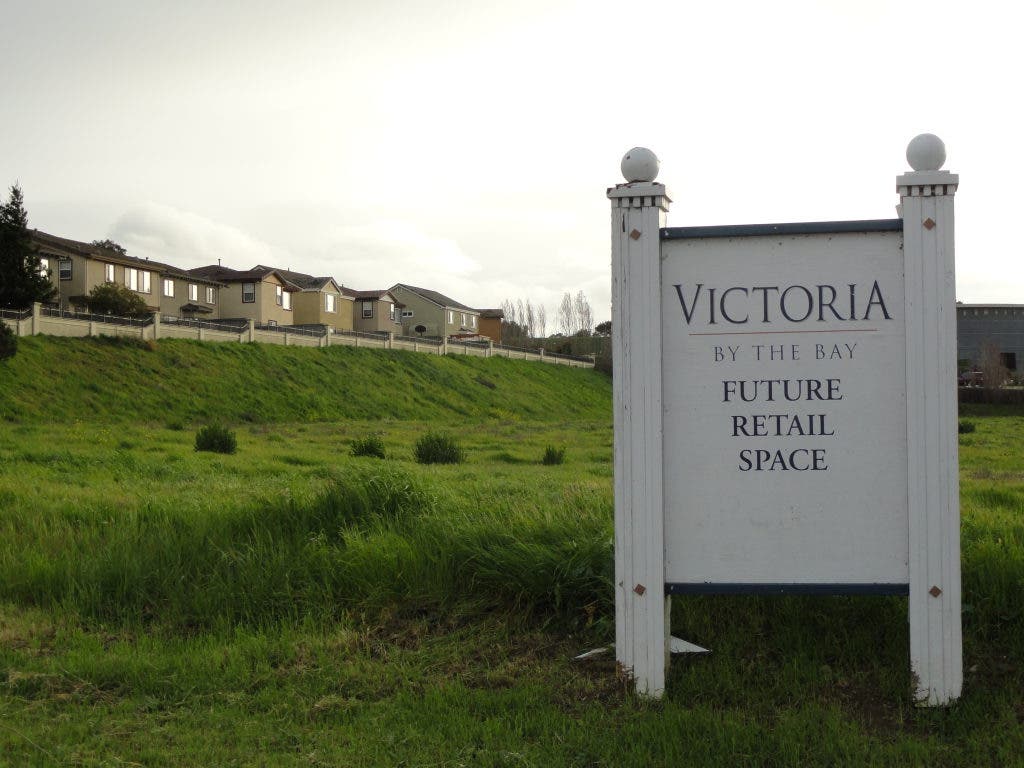
In a dramatic about-face, California's Department of Finance has announced that Catellus Corp., one of the state's largest developers, is entitled to continue collecting a share of property taxes from one of Hercules' priciest subdivisions.
Hercules LLC, a unit of Catellus, sued the city and the state Department of Finance last week to defend its interest in $53.3 million worth of payments accruing from the development of the , a subdivision of 880 homes with million-dollar views of the San Pablo Bay.
The deal was one of many that had been "disallowed" in recent weeks as the state Department of Finance rifles through the remains of some 397 redevelopment agencies in California.
Find out what's happening in Pinole-Herculesfor free with the latest updates from Patch.
For Catellus, the finance department’s abrupt reversal means the company will receive its $825,000 payment scheduled in August. For Hercules, the state's action means future tax revenues that previously flowed to the city's former redevelopment agency will not be diverted elsewhere, forcing the city to find other sources for payment.
Andrew B. Sabey, an attorney with the law firm of Cox, Castle & Nicholson in San Francisco who represents Catellus, told Patch his client had not authorized him to discuss the matter.
Find out what's happening in Pinole-Herculesfor free with the latest updates from Patch.
Redevelopment, a throwback to the post WWII-era, allowed California cities to essentially cast a net over entire neighborhoods or even, in some cases, cow pastures. Property tax collections in these redevelopment areas were then frozen at a base level and all taxes on the increase in assessed value of that property created by new development -- the so-called “tax increment” -- was reserved for affordable housing and reinvestment in the community.
In theory, redevelopment was aimed at scouring urban blight while creating jobs and affordable housing. In practice it was a developer's dream -- a merry-go-round of borrowing and spending. But when the music stopped this year with a state Supreme Court decision upholding a law that abolished redevelopment agencies, Californians found themselves with some complicated math to sort out.
Homeowners were still shelling out their property taxes as usual, but the money wasn't going into the same pockets. For many cities that had banked on that money to repay massive debts incurred by their redevelopment agencies, the loss of this income was like an overleveraged homeowner who had just found himself without a paycheck.
The 2011 law abolishing redevelopment agencies required each municipality to designate a “successor agency” and establish an Oversight Committee responsible for winding down a former development agency’s affairs and making certain all debts, including bond payments and contracts – or so-called “enforceable obligations” were paid.
A Penny Saved is a Penny Earned
State officials desperate for money to close a $16 billion budget gap for the next fiscal year interpreted the complex law as giving the Department of Finance authority to question and/or disallow enforceable obligations. Every obligation disallowed contributes to a “residual," or surplus of money – the difference between tax increment revenue what would have been distributed to the former redevelopment agencies and the amounts needed to repay debts. This surplus is distributed to other taxing entities within the former redevelopment areas such as school and community college districts. Every dollar distributed in this manner can be removed from the state’s general fund budget.
As of Wednesday, $733 million of these obligations have been disapproved by the finance department, triggering a flurry of lawsuits statewide, including the Catellus case against the state and City of Hercules.
In a separate lawsuit, nine cities, including Hayward, sued the finance department last week over the same issue.
That lawsuit, filed in Sacramento County Superior Court, alleged the state was attempting to force county auditor-controllers to redistribute millions of dollars in property taxes that should be sent directly to cities to allow them to pay the debts of their former redevelopment agencies. Without this money, they said, many cities would be forced to default on bond payments and agreements with private developers.
The lawsuit sought an injunction to stop county officials throughout the state from handing out the money on Friday.
Sacramento County Superior Court Judge Timothy Frawley denied the petition on Wednesday afternoon following arguments from both the state and attorneys representing the plaintiffs in the case. Neither party returned requests for comment, and it is unclear at this point if an appeal will follow.